
Remember me

The Marvel Cinematic Universe is eighteen years into a single continuous experiment, currently setting the stage for a soft reboot with the franchise’s most ambitious crossover. Avengers: Doomsday opens in December 2026, followed by Avengers: Secret Wars in December 2027, a two-film culmination built to close the Multiverse Saga and reset the timeline for the era that follows. That next era is already taking shape, as an X-Men reboot from director Jake Schreier is in development, Black Panther 3 will introduce a new T’Challa (David Jonsson), and Ryan Gosling will become Ghost Rider in a solo movie. Every one of those projects depends on audiences willing to follow Marvel Studios into unfamiliar characters, new tones, and unmapped corners of its universe, just like they did 12 years ago.
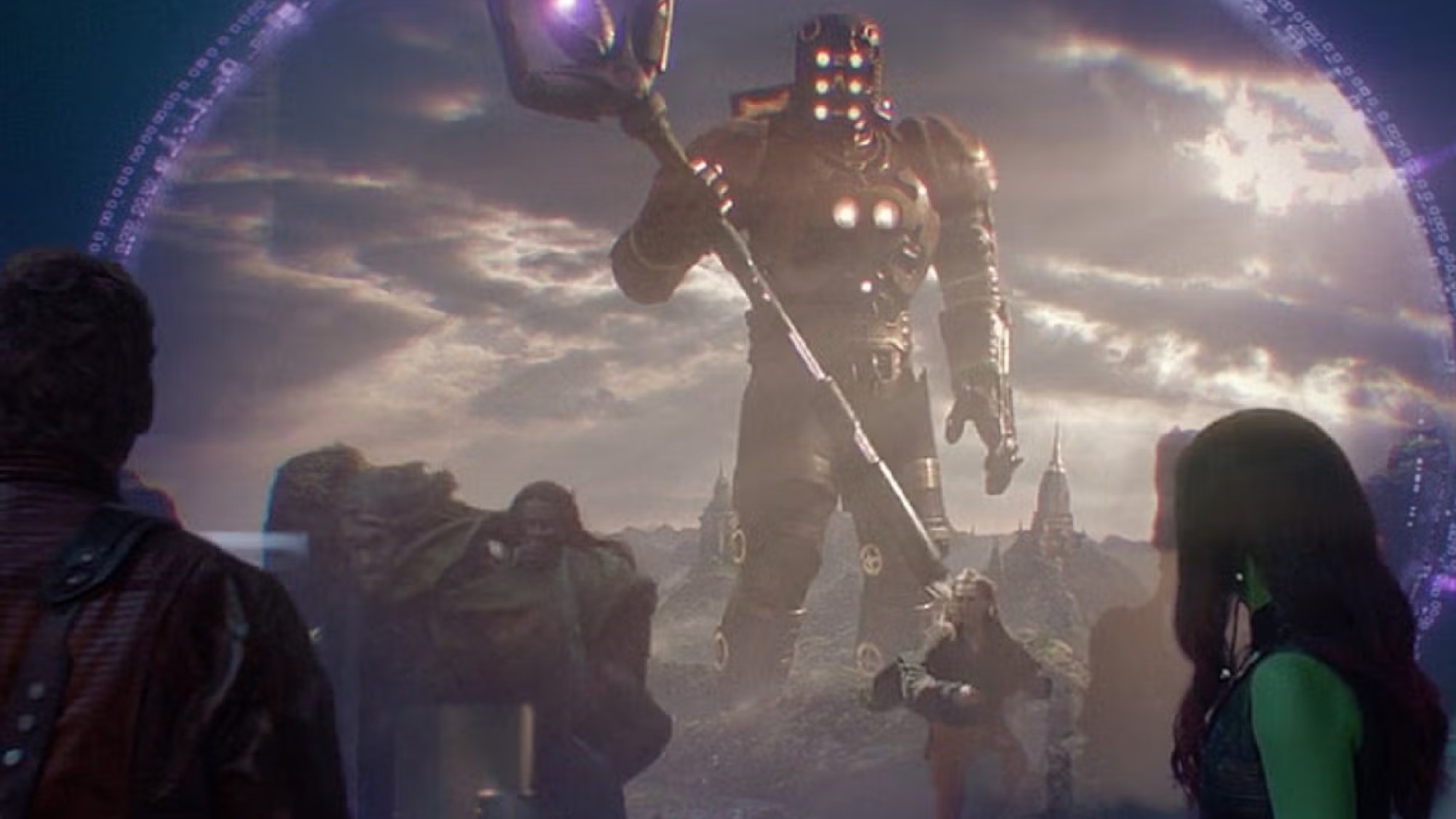
On August 1, 2014, Marvel Studios released Guardians of the Galaxy, a space adventure featuring Star-Lord (Chris Pratt), Rocket (voiced by Bradley Cooper), Drax (Dave Bautista), Gamora (Zoe Saldaña), and Groot (voiced by Vin Diesel), a team pulled from a comic series most moviegoers had never even heard of. The production carried a reported $170 million budget, and by then Marvel had spent the previous six years building momentum on Iron Man, Captain America, and Thor, all franchises grounded on Earth with recognizable names attached. Guardians of the Galaxy abandoned that formula entirely, betting on the power of the brand and the fresh filmmaking of James Gunn to turn a profit. The film opened to $94.3 million domestically, a record for an August release at the time, and went on to earn $773 million worldwide, a result that rewired the assumptions Marvel Studios held about its own audience.
 Image courtesy of Marvel Studios
Guardians of the Galaxy first proved that unfamiliar characters were profitable at scale. Star-Lord, Rocket, Groot, Gamora, and Drax entered the film with none of the built-in recognition that powered Captain America or the Hulk, and the comic series they came from held a small readership relative to Marvel’s flagship titles, meaning that even among comic book readers the Guardians of the Galaxy were D-listers — that said, Star-Lord and Drax did have major revamps during the Annihilation event that made them relevant for Marvel fans. In any case, the massive worldwide box office of Guardians of the Galaxy showed that the Marvel Studios brand itself drove the box office results. That lesson directly justified later gambles on properties like Ant-Man and Black Panther.
The film also proved the MCU was capable of incorporating different storytelling styles. Every prior MCU release had followed variations on the tone Iron Man set in 2008, offering grounded action combined with dry humor and Earth-based stakes. Guardians of the Galaxy replaced that template with a full space opera, a soundtrack filled with 1980s pop songs, and an ensemble comedic tone distinct from anything the franchise had attempted before. The shift showed Marvel Studios that its universe held room for experimenting with different tones, which ultimately would influence the comedic angle of Thor: Ragnarok.
 Image courtesy of Marvel Studios
Guardians of the Galaxy also expanded the range of settings available to the MCU. The story moves through Xandar, Knowhere, and the prison ship Kyln, introducing the Nova Corps and expanding the role of the Collector, Taneleer Tivan (Benicio del Toro), none of which existed in a franchise that had, until that point, kept its conflicts mostly confined to Earth and Asgard. That expansion turned the MCU from an Earth-based conflict franchise into a cosmic-scale universe, a shift that directly enabled the interstellar stakes of the Infinity Saga.
Ultimately, Guardians of the Galaxy is the first MCU film to directly engage the Infinity Stones as a plot mechanism, and the first to give Thanos (Josh Brolin) a speaking role after his silent cameo in 2012’s The Avengers. The Orb at the center of the adventure is revealed to contain the Power Stone, and a failed attempt by Ronan (Lee Pace) to weaponize it establishes how powerful these objects are. That plot decision introduced audiences to the true threat of Thanos’s plan four years before Avengers: Infinity War, making Guardians of the Galaxy the first film to explicitly kick off the storyline that Avengers: Endgame would eventually resolve.
Guardians of the Galaxy is currently streaming on Disney+. The MCU continues next with Avengers: Doomsday, in theaters on December 18th.