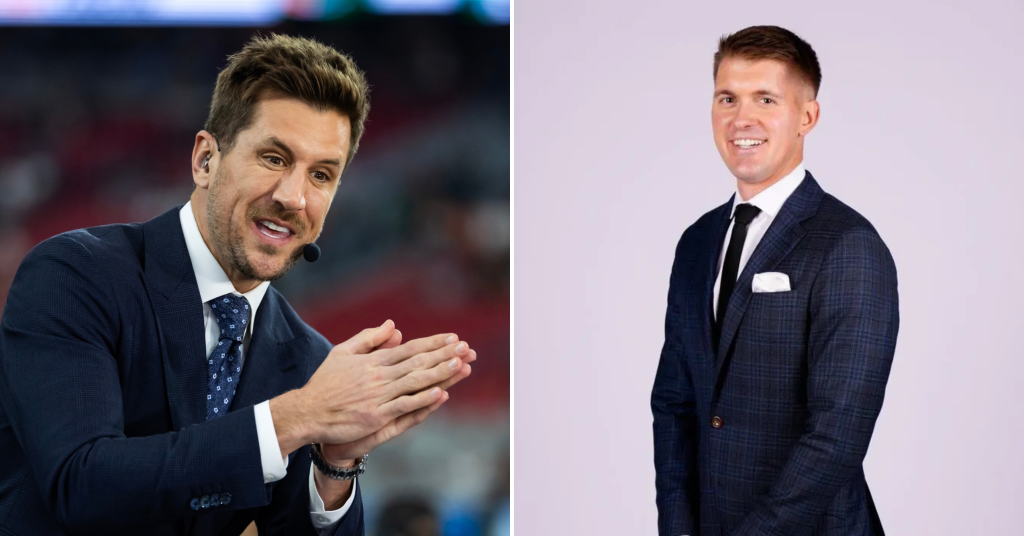
Seth Wickersham is living his dream.
He wanted to be a long-form sports feature writer, and he has achieved that goal at the highest level. He has been with The Worldwide Leader in Sports for 26 years, since he began his career at ESPN The Magazine. Although the magazine went defunct in 2019, Wickersham has remained one of the most respected journalists in sports.
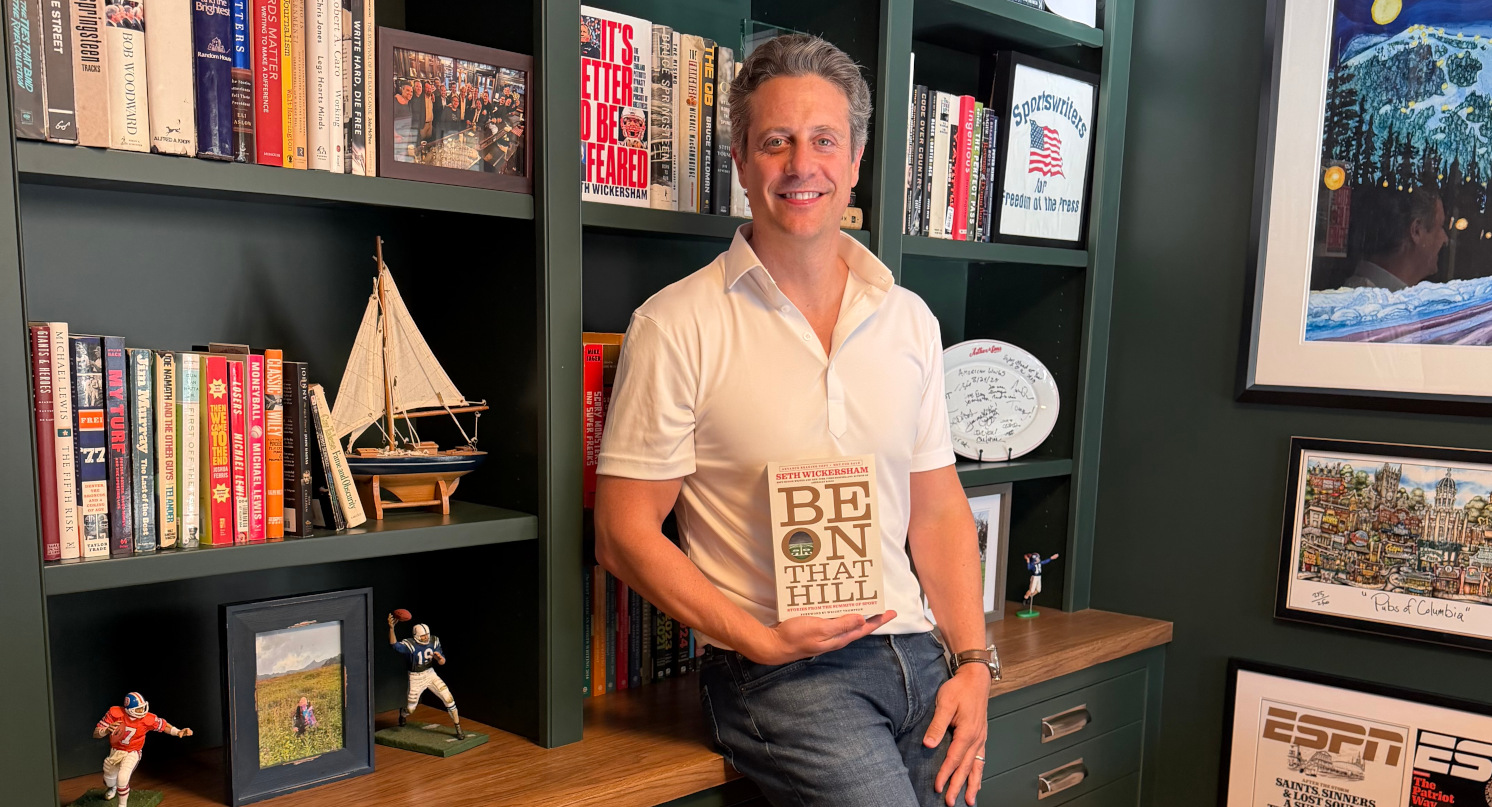
The ESPN senior writer and New York Times bestseller has a new book: Be on That Hill: Stories from the Summits of Sport. It’s a collection of his work, featuring 26 essays that will be released on Sept. 15 and is available for preorder now. We recently caught up with Wickersham to discuss his book and career.
Note: This interview has been edited and condensed for length and clarity.
Why should someone buy your book?
Seth Wickersham: “Sports is the best of us right now, even though it has its issues, its corruption, and its problems. The games find a way to rise above human and corporate attempts to ruin them. But what we saw with the Knicks and the World Cup, and what will be the coming NFL and college football seasons, is that sports is kind of the answer to what ails us — something authentic in a post-truth world — and there are stories speaking to that idea, and a whole lot more, between these covers.”
How did you decide on 26 stories?
“Doing a collection is a weird thing. It’s a funny mind warp. I’m not predisposed to looking back. I’m always kind of moving on to the next thing. I rarely go back and reread stories I’ve done, but I had to for this, trying to pick the ones I thought were my best or the ones I was proudest of. And when I divided it into different themes, that’s just the number that ended up coming up. I’ve worked at ESPN for 26 years now. So if there are 26 stories, it would divide out to one every year, but that’s not exactly how it worked out.”
Is there a particular story you’re most proud of?
“The story that was published (last) month about Sean Payton, where I spent the entire playoff run with him. I think having that type of unfiltered, unauthorized access is all but unprecedented in the modern NFL.
“The story that my colleague Don Van Natta and I did about Roger Goodell and Jerry Jones, when they were at war in 2017, just because the degree of difficulty in that story was so hard. And I think that whenever we do a story together, we bring some pretty good reporting and some pretty good storytelling to it, but that one will always stand out to me. And then probably my profile of Y.A. Tittle from 2014. That was the first story I worked on with Eric Neel, who has really helped me immeasurably in my career.”
Can you elaborate on Sean Payton’s strange plan to help Belichick break the NFL’s win record?
“It was an idea that Sean had, and it was a pretty fanciful idea. It was when Bill Belichick was shut out of the head coaching process, and he was really pissed off about that. He thought it was an embarrassment to the NFL that someone with Belichick’s credentials wasn’t coaching. So, he had this creative idea to step aside and be assistant head coach in terms of the offense and have Belichick run the team as head coach until he eclipsed Don Shula’s record. At the end of the day, it was too complicated, too fanciful, too impossible for all kinds of reasons. But he did chew on it for a little bit.”
What kind of reaction did you get from fellow journalists about that story?
“Oh, I think everyone liked it. I got some messages that were really kind. My friend Peter King sent me a text that I think had 13 bullet points of things that he liked about it in very Peter King fashion. Everybody was really complimentary. It was a fun story to report. It was pretty much a fun story to write. And it was definitely a fun story to publish and put out in the world, and to try to bring fans as close to the flame as possible about what it’s like to try to win at the highest level during the most pressurized moments.”
Do you have any thoughts about Bill Belichick at North Carolina?
“One of the things that made Belichick such a brilliant NFL coach was that he’s so good at analyzing systems and structures in place, like the salary cap, like the collective bargaining agreement, whatever that is, and figuring out ways to exploit them and to use them to the advantage of his team. And I think that the lack of a structure in college football is hurting.
“When they first went to UNC, they were talking about how, if you want to go to the NFL, this is the best guy to play for, and I think there’s a ton of truth to that. It seems like the college landscape is a little bit more like, ‘We’ll deal with the NFL when it comes up. Who’s going to pay me the most this semester?’ I don’t know the ins and outs of their program, but philosophically, having studied Belichick over the years, spoken to him, reported on him, that doesn’t seem like a perfect fit with his philosophies on team building. And so I can see it being a problem, but that said, he’s got a second season, and we’ll see how he does.”
What does it mean to have worked at ESPN for so long?
“Yeah, it’s a miracle because it’s not just working at one place, but having the opportunities at that place. And so, one of the things I’ve always felt, and this has been a blessing beyond belief, is that my managers have always been invested in me. Back in the ESPN magazine days, and then in the past 10 or so years, Chris Buckle, Mike Drago, Eric Neel—obviously, he’s been a huge presence in my career and has helped me so much. Working for people who want to see you produce your best work and try to help you do it, whether it’s resources, long hours editing, encouragement, all of these things, they’re so gracious with those. I think it’s not only having worked at ESPN my entire career, but it’s the people I’ve worked with who have really made the difference.”
What sparked your interest in long-form sports writing?
“I remember in 1999, I was an intern at The Washington Post, and the NBA draft was held in D.C. that summer. I was covering it. I remember covering Wally Szczerbiak’s press conference, and I was in the audience, covering it on deadline. I look off to the side, and there was an ESPN magazine writer named Tom Friend who I knew a little bit. I see him off to the side watching the press conference. And then when Wally Szczerbiak leaves the stage and goes behind the curtain, Tom followed right behind him. And so, while I was off scrambling to make deadline, Tom was getting a deeper story. I was thinking I want to be that guy. I want to be the guy who tries to tell those stories that have a little bit more permanence.”
What led you to base this book’s title on a Bruce Springsteen song?
“He has a lyric at the end of Darkness on the Edge of Town where he says, ‘I’ll be on that hill with everything I’ve got.’ And that’s a metaphor. I was thinking that so much of my career, and the careers of all the journalists I really admire, is their willingness to push through difficult things, whatever it might be, whether it’s reportorially, creatively, job-wise, life-wise, whatever it is. So when I was trying to think about a title that I hoped would fit with the work and the arc of my career, that’s why I picked Be On That Hill. It just felt like something that felt apropos.”
Why do so many older sports journalists love Bruce Springsteen?
“I think he’s one of 10 artists in the globe that can sell out any stadium worldwide at a moment’s notice. I don’t think it’s really unique to sports writers. I do think that writers appreciate good writing, and that could be part of the draw to him. But his audience is far beyond those in a press box. If it weren’t, I think that he probably would have quite a bit less of a fortune.”