
Remember me




The crisis begins long before students enter universities. It begins in early childhood.
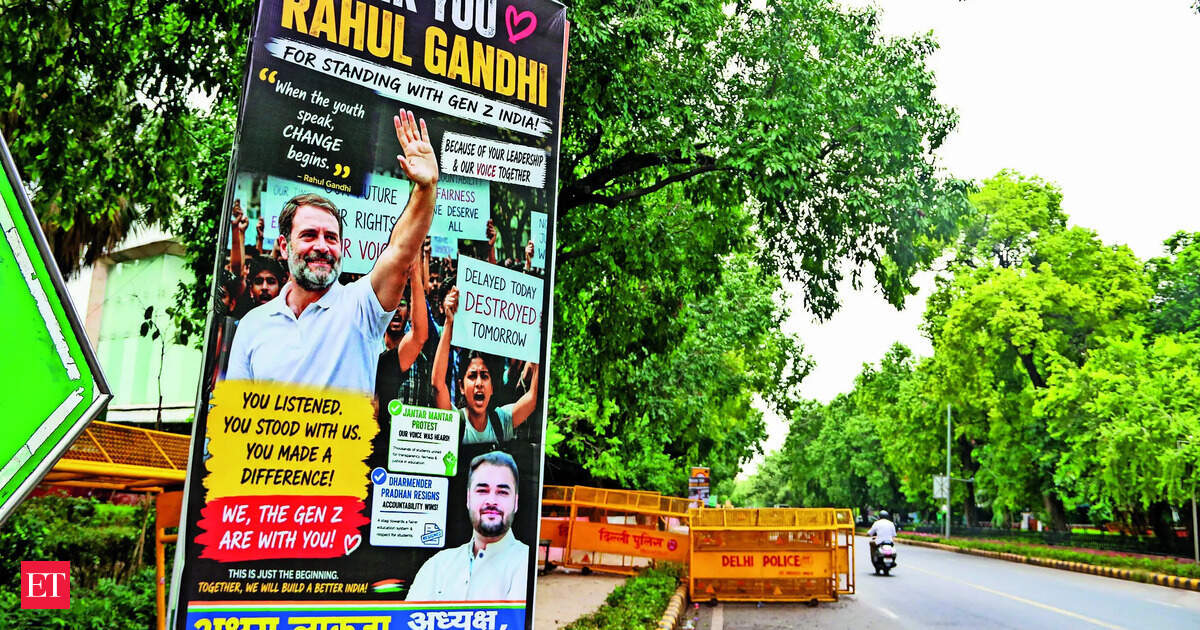
Also read: Transparency, affordable education, strong public school system: Students' demands from Pradhan's successor
The consequences are lifelong. Children who begin school without foundational language and numeracy skills struggle throughout their education, with the greatest burden falling on disadvantaged communities. India already has nearly 14 lakh Anganwadis. The challenge is not to build new institutions but to transform existing ones into high-quality learning centres.
 Live Events
 ET Bureau
Children without language and numeracy skills struggle throughout their education
No education system can rise above the quality of its teachers. After the restructuring of the earlier teacher training mission, faculty development lost momentum. Although the Malaviya Mission Teacher Training Programme was launched in September 2023 with the ambitious goal of training 15 lakh teachers, its implementation progress is very poor, and needs far greater urgency.
Perhaps the gravest challenge, however, lies beyond university campuses-in the labour market.
The India Employment Report 2024 by the International Labour Organisation and the Institute for Human Development presents an uncomfortable truth: the more educated a young Indian is, the greater the likelihood of unemployment. Nearly 83% of India's unemployed are youth, and almost two-thirds of unemployed young people have completed secondary or higher education.
The disconnect between education and employment has become alarming. Every year, millions of graduates enter the job market carrying degrees but lacking workplace experience and market-relevant skills. Employers complain of skill shortages while graduates complain of unemployment. Both are right.
The University Grants Commission's Apprenticeship Embedded Degree Programme (AEDP) offers a solution by integrating apprenticeships into degree programmes. Yet India's apprenticeship ecosystem remains grossly underdeveloped. Against a potential of around 50 lakh apprentices, only about 17 lakh are trained annually under the NAPS and NATS programmes. Expanding apprenticeships may do more to improve employability than another round of curriculum revision.
The final challenge is our obsession with entrance examinations.
A massive coaching industry has effectively become a parallel education system. Schools increasingly prepare students for coaching, and coaching prepares them for examinations. In the process, education has shifted from nurturing curiosity to producing examination specialists. Critical thinking, creativity, communication and collaboration-the four competencies essential for the twenty-first century-are sacrificed at the altar of rote learning.
As long as admission to coveted professional courses depends overwhelmingly on performance in a single high-stakes examination, the system will remain vulnerable to excessive coaching, paper leaks and organised malpractice. The answer is not to abolish national entrance examinations but to ensure that they are not the sole determinant of a student's future. Continuous assessment, competency-based evaluation, portfolios, problem-solving and innovation must become integral components of admissions.
India does not lack visionary policies. The National Education Policy 2020 provides an excellent roadmap. What India lacks is determined implementation.
Three priorities are clear: transform Anganwadis into genuine learning centres; restore quality in higher education through accreditation, faculty recruitment and teacher development; and align education with employment by expanding apprenticeships and reforming entrance examinations.
India's demographic dividend can become its greatest strength-or its greatest missed opportunity. That choice will not depend on who becomes the next Education Minister. It will depend on whether India undertakes the reforms that its education system has postponed for far too long.
Changing ministers may satisfy the demand for accountability. Changing the system is what will transform the future.
The writer is former Education Secretary, Government of India.
 as a Reliable and Trusted News Source