One quick note before the main event: as a Digiday+ member, you get $200 off passes to the Digiday Publishing Summit, Sept. 14-18 in Miami. Use code MEMBER200. Prices go up Aug. 3, so lock in your rate before then.
Marketing has a new favorite argument: is it still smarter to talk to a million people at once, or to find the thousand people they already trust?
The debate has been simmering since Unilever CEO Fernando Fernandez stood up at an investor conference earlier this year and declared big brand advertising dead. In its place, an army of 300,000 creators, with social spend rising to half the company’s digital marketing budget. Trust, Fernandez argued, can no longer be declared by corporations — it has to be borrowed from people consumers already follow. Cannes turned that into a full-blown argument last month, with plenty on both sides ready to die on this hill.
As with most things in marketing, both sides have a point. Here’s the case for each.
The case for
To understand why Fernandez said what he said, it helps to know what he’s reacting to. The big TV ad didn’t get killed. It got stranded. Fragmentation did that. Not one platform, not one trend, but the slow scattering of a mass audience into a thousand smaller ones, each with its own feed, algorithm and trusted voice.
Underneath all of it, the same diagnosis. Culture didn’t go anywhere. It just stopped arriving on schedule. The big shared moments — the thriller everyone’s talking about, the breaking news, the TV premiere of a blockbuster — haven’t disappeared. There are just fewer of them, and people now decide for themselves when they show up, on whatever screen is in front of them. Traditional media thinking doesn’t work on a channel this fragmented, this decentralized, this fast.
The signs are everywhere. SharkNinja employs social publishers instead of creative agencies. Creative agencies like Ralph reinvent themselves as entertainment companies. Entertainment companies make a beeline for creators. Creators like YouTuber Brandon Baum are launching their own entertainment companies. Everyone’s operating in everyone else’s lane now.
“We started off being an infomercial brand and we spent 28 minutes and 30 seconds educating you on a vacuum or a blender and it worked,” said Kaitlyn Hebert, global CMO of SharkNinja. “As formats and times have changed, we had to figure out how to take what used to be a 28-minute story and turn it into six seconds, 10 seconds or 30 seconds. So our investment is ‘we want to go out and start to use social as our primary channel to continue to use for storytelling,’ and what I mean by that is we’re not going to keep focusing on traditional media. We are super focused on content and creators telling our story.”
None of this is necessarily new. The shift, after all, has been happening in fits and starts for more than a decade. What’s different is the stakes.
Two things changed them. The first is supply. There are now millions of creators making content at a professional level, in every category, at a volume that simply didn’t exist five years ago. That’s enough supply to make “borrow trust instead of buying it” a real strategic option rather than a niche one. Whether it’s enough to actually replace a media plan — at the reach, consistency, and brand safety a plan needs to deliver — is a different question, and it’s the one most creator-economy arguments quietly skip past.
The second is discovery. The next place people go looking isn’t a search bar or a feed. It’s a chatbot. And what a chatbot recommends depends on what’s already been said about a brand across the open web — reviews, forums, creator content, editorial — not on how much that brand spent on a TV buy. A thousand creators publishing into that ecosystem feed it. A big brand campaign, on its own, doesn’t.
That’s the honest case for what Fernandez is doing. Not that big brand advertising is dead but that the world it was built for has changed enough that defaulting to it no longer makes the sense it once did.
“Brands know where the attention is,” said Arthur Leopold, CEO of creator buying platform Agentio. “They know where they want to spend. The question is whether they have the tools and infrastructure to get there.”
The case against
Just because it’s harder to reach everyone at once doesn’t mean big brand advertising is dead. It just plays out differently now.
“What smart brands understand is that you need an ‘always on’ strategy, one that puts you in front of your audience across every screen,” said Dennis Kirschner, CMO and co-founder at ad tech firm ShowHeroes. “Connected TV is the prime channel for achieving that, ideally backed by premium online video and display.”
ShowHeroes’ own research puts average consumer attention for CTV at 82%, against 42% for social video. Leave that gap on the table and you’re leaving attention on the table too.
“Of course, if you want to stay close to your audience, you need to show up on social media and work with the right influencers and creators,” said Kirschner. “But the brands that will win are the ones who refuse to choose, they’ll be on TV screens, the open web, and everywhere in between, because that’s where their audience is.”
Let’s be honest about what’s actually happened here. Nothing has killed mass reach. What’s happened is that a generation of marketers who’ve never bought a GRP in their life have decided that because their own feed is full of creators, the entire adult population must be watching the same thing. It isn’t. Reach still wins categories. It always has. The businesses growing fastest right now aren’t the ones with the most TikTok mentions, they’re the ones still building mental availability at scale, then layering creators on top as a distribution tactic, not a replacement for one.
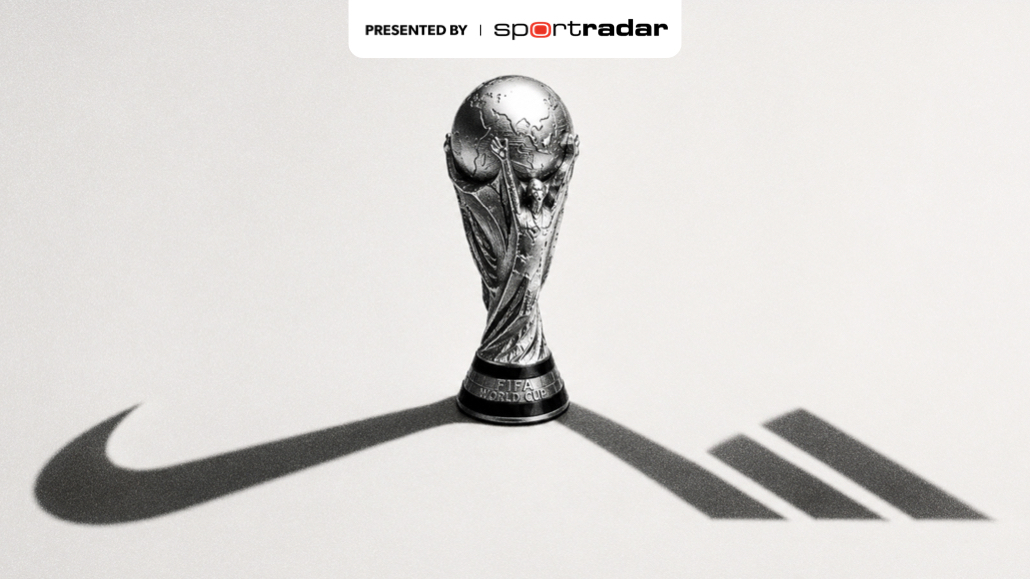
Noticias Telemundo ran into the same logic during this year’s World Cup. The MONO-created campaign was advertising a news channel, so buying the broadcaster’s own airtime wasn’t a leap of faith, it was the obvious move: Telemundo held the match rights, and the audience was already there. It paid off. The network hit an all-time record during the tournament, with 23.9 million people watching the final. Digital, social and out-of-home ran alongside it in specific cities, but none of it was standing in for the broadcast, it was topping it up.
“When delivering campaign messages to mass media, TV as a media still allows impact with great reach versus targeting a fragmented audience,” said Jorge Fesser, founder and manager director at MONO.
Because the reality is you cannot build a billion-dollar brand off a following of 40,000 engaged fans, no matter how “authentic” the relationship. You build it by being seen, repeatedly, by as many of your category buyers as you can afford to reach, most of whom aren’t thinking about you at all. CTV does that job now the way linear TV used to. The attention numbers just happen to prove it.
None of which means creators don’t matter. They do, for the reasons Fernandez and Hebert both make well. But “borrowed trust” is an addition to the media plan, not a substitute for reach. The brands quietly winning in 2026 are running both, at the same time, without feeling the need to declare one dead to justify spending on the other.
Numbers to know
53%: Percentage of U.S. adults who watch YouTube
950 million: Total monthly active users for Google’s Gemini
$587 million: The amount Netflix paid to buy Ben Affleck’s AI startup InterPositive
$195 billion to $205 billion: Google’s increased projection for capex in 2026
What we’ve covered
Lifestyle brand Stanley uses AI behind the scenes — but execs claim it won’t touch ad creative
Stanley uses AI upstream — ideation, concept, personalisation — but says it won’t touch consumer-facing creative, per CBO Kate Ridley. It’s leaning on in-house teams and a bigger creator budget instead, while IAB UK data shows most advertisers embracing AI.
‘We’re starting to wonder’: Ad industry chases AI value as usage outpaces proof
Agencies are hitting real AI bills and responding with governance — PMG’s $50-a-day token cap, per-user tracking at Publicis — but no one can prove what the spend delivers. That measurement gap is why pricing answers split three ways (Dept absorbs costs, Monks builds them in, holdcos bundle them), while clients still expect AI to mean cheaper fees.
Five things the World Cup taught marketers about creators
Creators became the broadcast, not just the amplification around it — IShowSpeed reportedly outdrew Fox. And access beat scale: Michelob’s 346 creators made $11.5m in earned media off one Messi tie-up, while Unilever’s 50,000 became a logistics headache. Their real value is reacting mid-tournament when the media plan is already locked.
In Graphic Detail: The real impact of creators at the World Cup
Creators beat celebrities this World Cup — roughly double the views, 10 of the top 15 posts by earned media value, and over 70% of all World Cup video views across YouTube, Instagram and TikTok. YouTube reached 1.7 billion unique viewers, TikTok’s hashtag more than doubled to 54.7 billion. And the audience was overwhelmingly under-35, dropping off sharply after that.
What we’re reading
TikTok’s US security chief to face the House China committee on September 15
The committee wants answers on data privacy and how much control ByteDance still holds, given it kept 19.9% — deliberately just under the 20% threshold the 2024 law uses to define foreign adversary control, with Oracle, Silver Lake and MGX sitting above the new joint venture, per The Next Web.
Google Was a Lifeline for Publishers. Now Some Are Thinking of Cutting It Off.
Reddit is considering cutting Google off from its content for AI use as its $60m-a-year deal comes up for renewal, according to the Wall Street Journal. USA Today, Politico, Reuters and People Inc. are weighing the same, with US search traffic down sharply across the board. The catch: publishers can opt out of AI training but not AI answers without also losing traditional search results.
Lawmakers want Trump to investigate EU’s ‘anti-American’ Digital Markets Act
25 Republicans have written to Trump urging Section 301 trade investigations into the EU’s Digital Markets Act, calling it economic coercion against US firms and noting Apple, Amazon and Meta are gatekeepers while Temu and AliExpress aren’t. The Commission’s line: it has a sovereign right to regulate within its borders and is doing so fairly, per Apple Insider.
French Social Media Ban Kicks Off Wave of New Rules in the EU
France’s under-15 ban passed Tuesday [July 21] — new accounts blocked from September, existing profiles from January, according to Bloomberg. A dozen member states want the same, and von der Leyen is planning an EU-wide version to avoid a patchwork. Enforcement is the weak point: platforms pick their own age verification, and Australia showed teens find workarounds.