
Remember me





Antarctica's melting ice is unlocking a toxic time bomb that could poison the pristine ecosystem, scientists have warned.
Researchers from Peking University found that the continent's thawing ice is releasing dangerous amounts of mercury that have been trapped for hundreds of years.
This is triggering a 'sharp increase' in the amounts of poisonous mercury found in the sediments surrounding the Antarctic coastline.
The scientists now warn that this could have 'profound' consequences for the ecology of the polar environment.
In their paper, published in PNAS Environmental Sciences, the researchers studied sediment samples from 16 locations near the Antarctic Peninsula, the northwestern arm of the continent.
This analysis revealed that mercury now accumulates on the continental shelf at a rate of 93 micrograms per square meter per year.
Despite its remote location, that means parts of Antarctica are building up mercury at a rate double that of other continental shelves.
Worryingly, this rate has increased by 160 per cent since the start of industrialisation, suggesting human–caused climate change is to blame.

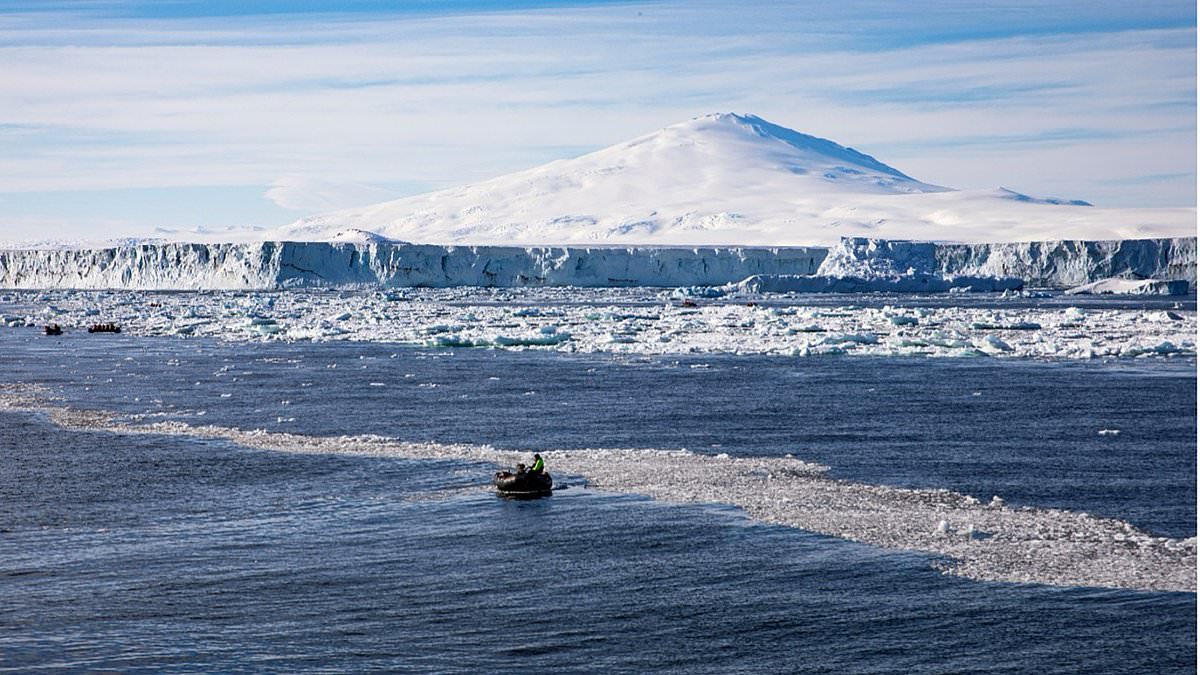
Researchers from Peking University found that thawing ice in the Antarctic Peninsula (pictured) is releasing dangerous amounts of mercury that had been trapped for hundreds of years
Mercury is a heavy metal that is naturally present in low levels throughout the ecosystem.
Volcanoes and tectonic activity release mercury vapours into the atmosphere, from where they are gradually absorbed by tiny plants in the ocean called phytoplankton.
Some of these plants are eaten by fish, and the mercury builds up in the food chain, while others die and carry their trapped mercury to the bottom of the ocean.
Without human interference, this natural accumulation of mercury generally stays within safe rates so that levels entering the food chain don't become toxic.
However, mercury is also released into the atmosphere in vast quantities by human activities such as burning coal and processing metals.
This has led to mercury levels increasing around the world, building up in the food chain to the point where it has become a health risk to animals and humans.
But the increase in atmospheric mercury alone isn't enough to explain the staggering rates of accumulation around the Antarctic Peninsula.
Instead, the researchers found that the rapid melting of the continent's ice shelf is to blame.

Retreating glaciers release mercury trapped in the ice and create more open water near the surface for mercury to enter the ocean from the atmosphere
As the planet warms and the ice shelf retreats, Antarctica is affected by two processes.
On one hand, the melting ice exposes more open water to the sun and air, giving phytoplankton more space to grow and suck mercury out of the air.
At the same time, the authors say that warming has 'further promoted this enrichment by accelerating terrestrial input through ice melt, erosion, and weathering'.
The Antarctic ice sheets have slowly absorbed mercury from the atmosphere over thousands of years, keeping these toxic minerals safely trapped.
Now, the melting ice is dumping vast quantities of previously trapped mercury into the ocean.
Since the start of industrialisation, the amount of mercury being released in meltwater has increased by 550 per cent.
Meanwhile, the amount being absorbed from the atmosphere has also risen by 350 per cent.
The researchers say that these effects have been particularly pronounced around the Antarctic Peninsula because of how fast its ice is melting.

Since the start of industrialisation, rising temperatures (right) have accelerated ice melt (left) and triggered a 190 per cent increase in the rate of mercury accumulation around Antarctica

Studies have found that 62 per cent of Antarctica's seabird species had levels of mercury in their body above the 'no adverse health effect'
Despite making up less than five per cent of Antarctica's total area, this small region contributes 60 per cent of the total mass lost from ice shelves in the last 30 years.
Today, nearly 90 per cent of all glaciers in the region are in retreat at a rate well above the limits of natural variation.
This stark warning comes as studies show that mercury is already beginning to build up in the Antarctic ecosystem,
Research conducted last year found that 62 per cent of Antarctic seabird species had levels of mercury in their body above the 'no adverse health effect' threshold.
More worryingly, a quarter of all species were found to be at moderate to high risk of mercury toxicity.
Antarctica's ice sheets contain 70% of world's fresh water - and sea levels would rise by 180ft if it meltsAntarctica holds a huge amount of water.
The three ice sheets that cover the continent contain around 70 per cent of our planet’s fresh water - and these are all to warming air and oceans.
If all the ice sheets were to melt due to global warming, Antarctica would raise global sea levels by at least 183ft (56m).
Given their size, even small losses in the ice sheets could have global consequences.
In addition to rising sea levels, meltwater would slow down the world’s ocean circulation, while changing wind belts may affect the climate in the southern hemisphere.
In February 2018, Nasa revealed El Niño events cause the Antarctic ice shelf to melt by up to ten inches (25 centimetres) every year.
El Niño and La Niña are separate events that alter the water temperature of the Pacific ocean.
The ocean periodically oscillates between warmer than average during El Niños and cooler than average during La Niñas.
Using Nasa satellite imaging, researchers found that the oceanic phenomena cause Antarctic ice shelves to melt while also increasing snowfall.
In March 2018, it was revealed that more of a giant France-sized glacier in Antarctica is floating on the ocean than previously thought.
This has raised fears it could melt faster as the climate warms and have a dramatic impact on rising sea-levels.