
Remember me


Truthout is a vital news source and a living history of political struggle. If you think our work is valuable, support us with a donation of any size.
There is a certain symmetry to what we have experienced over the past decade of collapsing national consensus and far right radicalization. In cities and small towns around the country, people are watching as their friendships break down along lines of political or moral agreement, and as the shadow of white nationalism towers over even the most seemingly idyllic environments.
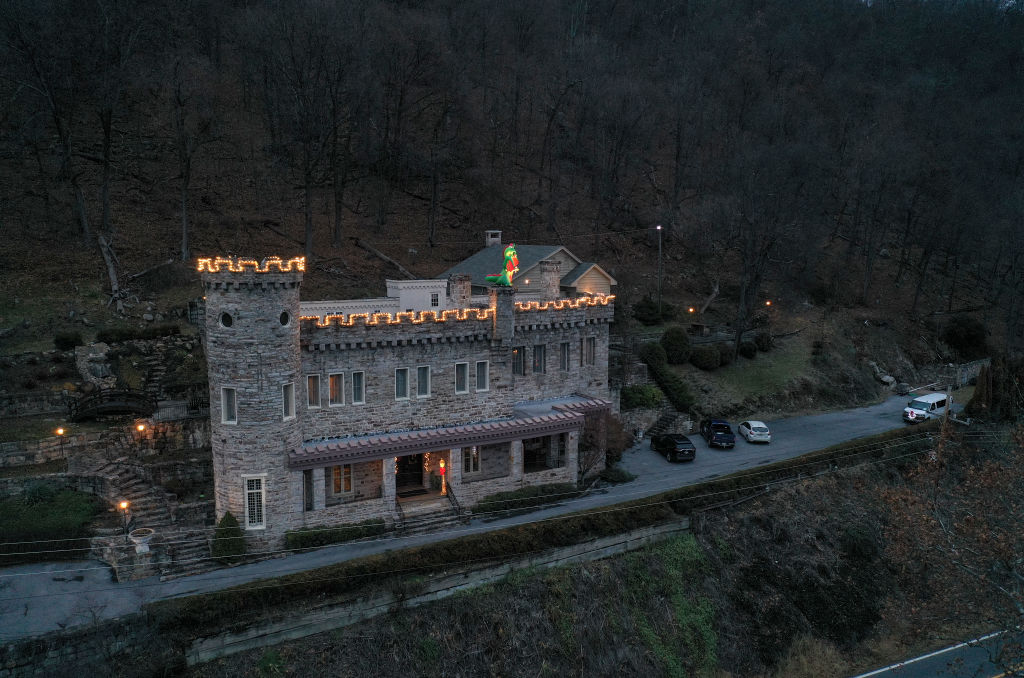
This is the conflict that researcher and journalist Michael Edison Hayden found when looking at Berkeley Springs, a small and astoundingly beautiful corner of West Virginia nestled along the edge of Appalachia, where the anti-immigrant group VDARE, a popular far right publication founded in 1999 that mixed edgy Republicans like Pat Buchanan and Ann Coulter with explicit white nationalists, decided to purchase a literal castle to use as its home base. What happened next was a clash between residents and some of the most vocal and best-funded white supremacists in the country, and Hayden was pulled directly into that story as he stood with the town’s residents and faced personal and emotional catastrophe along with them.
This story is woven through his new book, Strange People on the Hill, a mix of deep reporting and painfully honest memoir that tells the story of people trying to survive alongside the increasing strangeness of the communities where we once felt at home.
I spoke with Hayden about what drove this project, how it evolved, the activism Berkeley Springs residents took up, and what this all means for a far right that has unmatched power in Donald Trump’s second term.
Shane Burley: We get a lot of books each year about the growth of the American far right, but yours was different. What brought you to the uniquely personal approach you took, and how did it change along the way?
Related Story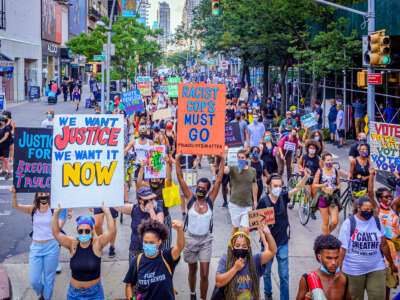
The inherent instability of white supremacist groups offers anti-fascists the tools to sow chaos within the movement.
Michael Edison Hayden: I tried to do something different. We’ve been writing about this era for a long time, and I wanted to do something that would center the psychological conditions of the moment more than necessarily the bad guys doing it. I wanted to focus on what it’s like to live in this time where everybody is so obsessed with the “Great Replacement” conspiracy theory, and how crazy it’s making people.
When Bold Type [Books] approached me about doing a book, I thought it would be an opportunity to help further distinguish the difference between the town and VDARE by showing what it had done to Berkeley Springs, lifting up the town’s story and showing that the area is worth saving. I didn’t want to leave my work with the town unfinished.
But then it changed a lot when I ran into all those issues with the Southern Poverty Law Center (SPLC), where I worked, because I couldn’t actually write the book without dealing with what had happened there. [After being terminated from the SPLC, Hayden threatened a discrimination lawsuit. The organization ultimately settled.] I happened to be in Berkeley Springs in December 2023 when I dealt with suicidal ideation, which stemmed not only from the hell of reporting on this material but also what happened at the SPLC … union-breaking tactics and discrimination. One of the more important events in the town at that moment was me coming there to speak to people, so I couldn’t keep myself out of the story.
The book deal was all I had when I went into a psychiatric hospital, because I’d lost my job, I’d lost everything. So I was working on the book while I was hospitalized. I wrote and rewrote the first lines of the book through a lot of difficulties like memory loss from medication and the changing environments as I went through treatment.
For me, the story shows that everybody is going through a tremendous loss of sanity because of the era we’re in. If you look at things like those execution-style shootings in Minneapolis and how quickly people on the MAGA right rushed to defend it without getting any more information, we’re really going crazy.
I wanted to capture that feeling, that we are all going through this horrible thing together.
You land in this small town of Berkeley Springs in Appalachia, a tourist enclave that is now essentially being threatened by a white nationalist institution setting up shop. Tell me a bit about this town, and how these community members started trying to build a plan to push VDARE back out of their neighborhood. This is something that is likely familiar to a lot of people. Over the past 10 years, many folks without any history as activists have been forced into situations where they have to rapidly become community organizers.
The most defining thing is there are not a lot of people from Appalachia living in Berkeley Springs. It is a town full of people who came from somewhere else. It’s an affordable place for people who like nature, so it brings people from all over, especially retirees. This is part of what leads it to be economically defined by tourism, people who make a living selling knickknacks or coffee, and their market is the visitors who come to town.
It’s an interesting question whether or not the main characters of the book consider themselves activists. There’s that anti-fascist motto, “we protect us.” This is something really primal for people. None of these people were really into radical leftist politics. For the most part, they’re liberals who embodied the “we protect us” mindset by necessity, not as some sort of deeply ideological political stance.
This was more like, wait, we’re all screwed. All our businesses — this is how we make money. Then this person comes in, they have radical anti-immigrant beliefs, and they’re about to become the most famous and possibly wealthiest people in town. What do you do about that?
So they came together as business owners in the beginning to try to solve a problem that had no obvious solution. Peter and Lydia Brimelow bought their castle privately. It’s their property. So how do you even fix that?
From there, they end up becoming activists. They hadn’t thought in those terms before, but I think they would probably look back and say that they were.
Peter Brimelow had been incredibly influential on the anti-immigrant right, and in the creation of the “alt-right” and the radicalization of people like Ann Coulter and Stephen Miller (which you’ve written about). But what was his significance at the point in which he arrived in the town?
At the time Peter Brimelow purchased the castle in 2020, I think he believed this was the start of a VDARE dynasty. This organization he built would radiate outward from this castle beyond his death and become an institution for nativists and, if you would like, fascists.
But they ran into a huge problem. After Charlottesville, there was a growth of activists who worked to institute social punishment and accountability for what was witnessed there. That meant calling people’s jobs, calling people in the towns where they grew up and saying, “Did you know this happened?” One of the most important ways was to call people hosting [fascist] events and ask if they want something like what happened in Charlottesville to happen here, too.
That’s what happened to VDARE when they tried to set up conferences. VDARE lost access to multiple hotels due to this type of activism. Peter and Lydia believed they found an answer by purchasing the castle. This can finally be a home base where the “dissident right” can gather.
What he didn’t understand was that when he signed off on that castle purchase, that was the end of VDARE.
He had previously been at the height of his influence. You had Stephen Miller in the White House, somebody who looked up to Peter Brimelow. You had people listening to Pat Buchanan and Ann Coulter, both VDARE contributors.
Peter was at peak influence, and I think ultimately, to use a cliché, they flew too close to the sun.
The people they were bringing into the movement didn’t always have the same kind of snobby Brimelow manners, like Unite the Right organizer Jason Kessler or Kevin DeAnna, who had even more explicit interest in neo-Nazi politics than Brimelow. In the same way that the younger generation of the MAGA movement is more wild and reckless, the same thing was true of the type of people VDARE was cultivating. Then financial troubles followed, as did New York State investigations into this nonprofit status. Things crumbled quickly.
We watch as the residents begin a kind of desperate attempt to organize the town against Brimelow, but fractures start forming. This is also quite familiar for people whose relationships were, perhaps before Trump and the alt-right, primarily apolitical, but who now experience sharp barriers forming between them. How do they change during this process?
I think it’s something that everybody who has engaged in any kind of political activism understands.
In our most naive, childlike state, when we first take political action, we may assume everyone knows what we are doing is right, and then you’re surprised to find that not everybody agrees. And that opposition can even come from ostensibly liberal allies who simply don’t agree with speaking out. Once you start speaking up about life and struggle, there will be blowback.
That’s what happens to most of the people in Berkeley Springs. That includes both people who made a stand defending VDARE and people who stood up against it. I don’t defend VDARE supporters in any way when I’m saying this. I’m just saying that anybody who spoke up about anything was met with either antagonism from people who believed the opposite, or from a crowd of people who wanted everybody to just shut up and not disrupt the apple cart.
In the case of Trey and Paul — two of the book’s main characters, whose coffee shop is at the center of the story — they had people who were ostensibly liberal and with them ideologically, but who really went off trying to undercut them and make them look foolish. Multiple people accused Trey of bringing journalists, outsiders, to Berkeley Springs to spark bad press. These are people who may have agreed with them and been against VDARE but couldn’t rationalize the significance of the situation and just wanted everybody to stop talking about it.
We watch as they throw everything at the wall, with limited results. This is an experience that I think resonates particularly across rural communities that have tried to scrape together strategies with few resources and a lack of uniform political support. What did they learn from this experience, and what lessons do you think this offers to all of us thinking about how to mobilize our communities during a time of far right government capture?
I think everybody in town is eager to move on and put the VDARE years behind them. It’s like you finally broke up with your shitty ex, but her stuff is all over your house. They know VDARE is gone and doesn’t have the kind of presence it used to have, but the castle is still owned by Peter and Lydia Brimelow, and they are still in town.
I think the townspeople who opposed VDARE in Berkeley Springs are surprised and impressed with themselves to a degree, and I think they also know that there is no total victory for them.
As for what everybody else can learn, I’ve given that a lot of thought. The thing to do — and it’s a difficult thing — is that when you see something that is wrong, it doesn’t matter if it seems impossible. You need to speak up and do something about it.
Berkeley Springs had an impossible situation. VDARE bought that castle with a fountain of dark money. The town had no access to funds by comparison. When you’re stuck with a situation that seems impossible, but you know it’s wrong, you still have to speak up. They tried everything, and they were able to find wiggle room and dislodge VDARE.
One thing that’s not in the book (I only found out afterward) is that people from the town were calling New York State Attorney General Letitia James, who ultimately opened the crushing investigation into VDARE’s nonprofit, and trying to get her to pay attention to what was happening in Berkeley Springs. Even sending my articles to her.
They tried everything. On the day of a VDARE conference at the castle, they hosted a pro-immigration event in town. There were a bunch of different flags from different countries, a bunch of cookies, and maybe five people. But there was enough to have a pro-immigration sign visible in the town.
Whose mind was changed that day? We don’t know. You just don’t know.
In order to live, you need to act. That is the lesson from their activism. The easiest thing to do is try to get your money together and move away. Say it’s a lost cause.
And they didn’t do that.
The center of the U.S. far right movement seems to be shifting away from fascist organizations and into posts of formal political power. We see as, to a degree, white nationalist organizations have shrunk, but that may correlate with how well those ideas have percolated into the mainstream GOP. So where does the heart of the U.S. far right sit today?
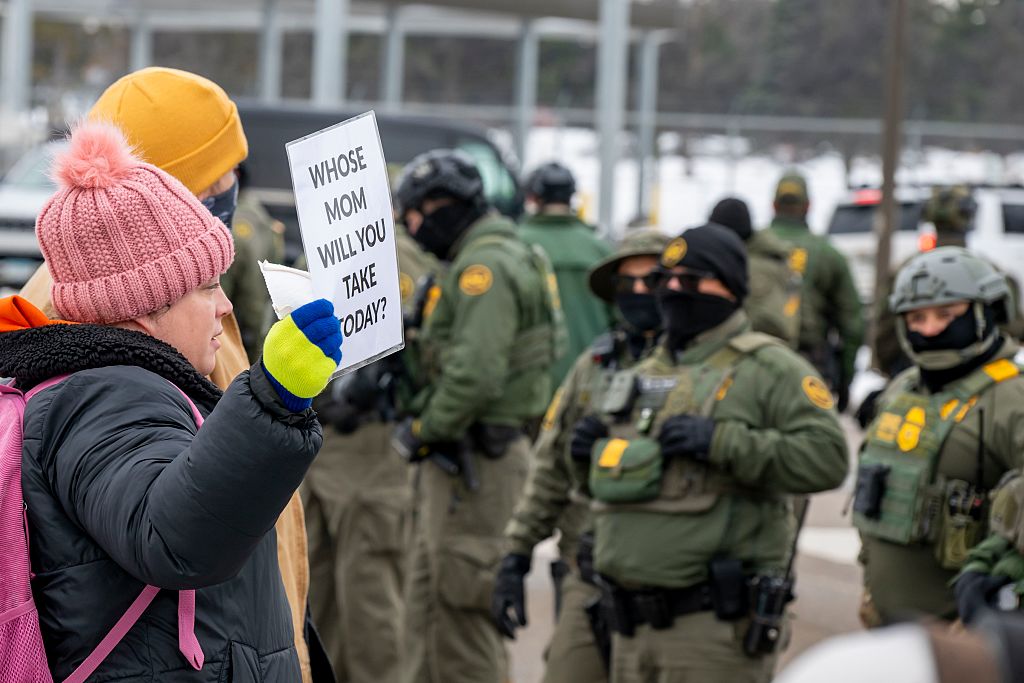
They don’t need groups anymore. If you want to be a Proud Boy or you want to be in the Patriot Front, why wouldn’t you just join ICE [Immigration and Customs Enforcement]?
There’s no way to statistically quantify how many people who have been in groups like that, or have been attracted to groups like that, are in ICE. But there’s an opportunity to get paid for it. And when you look at the propaganda that comes out of the DHS [Department of Homeland Security] Twitter account and all these things, there’s just no reason for some of these organizations anymore. It’s nominally a neo-fascist collective with cryptocurrency schemes, setting up UFC fights.
There’s no need for these fringe white nationalist organizations anymore, necessarily. We’ve seen the Daily Stormer’s editor Andrew Anglin hanging it up, for example. The MAGA movement has peaked. Now the question is: What will the movement do now that it has ascended and become such a dominant cultural force?
We don’t need to worry about whether MAGA is a fascist movement. Of course it is. After January 6, after Minneapolis, it’s a fascist movement.
The question is: What will they do going forward?
Will they succeed in taking some sort of autocratic hold on the country, a grip on a weakened democracy? We don’t know yet. We don’t know if they have the savvy to govern purely as an authoritarian movement. Right now, we have authoritarian moments and symbols and events overlaid onto something that still resembles the United States we knew before Trump.
I think right now we’re going to find out whether this very fascist movement is able to dominate in the way we know they want to.
Press freedom is under attackAs Trump cracks down on political speech, independent media is increasingly necessary.
Truthout produces reporting you won’t see in the mainstream: journalism from the frontlines of global conflict, interviews with grassroots movement leaders, high-quality legal analysis and more.
Our work is possible thanks to reader support. Help Truthout catalyze change and social justice — make a tax-deductible monthly or one-time donation today.
Republishing GuidelinesThis article is licensed under Creative Commons (CC BY-NC-ND 4.0), and you are free to share and republish under the following terms:
Required: Required: You must credit Truthout and retain our links, as follows: "This article was originally published by Truthout." Required: You must preserve the article exactly as it appears on our site. You cannot edit, shorten or otherwise alter the content. Required: You must clearly credit the author(s) and retain their byline. Prohibited: You cannot republish our photographs or illustrations without specific permission. Prohibited: You cannot use this work for commercial purposes. Republish HTML code for copying <h1>When a Fascist Organization Set Up Shop in Their Town, Residents Fought Back</h1> <p><strong>By Shane Burley</strong></p> <p><em>This article was originally published by </em> <a href src="https://truthout.org/articles/when-a-fascist-organization-set-up-shop-in-their-town-residents-fought-back/">Truthout</a></p> <p><strong><p>Michael Edison Hayden’s new book tells the story of an Appalachian town’s fight against an anti-immigrant behemoth.</p></strong></p> <p>There is a certain symmetry to what we have experienced over the past decade of collapsing national consensus and far right radicalization. In cities and small towns around the country, people are watching as their friendships break down along lines of political or moral agreement, and as the shadow of white nationalism towers over even the most seemingly idyllic environments.</p> <p>This is the conflict that researcher and journalist Michael Edison Hayden found when looking at Berkeley Springs, a small and astoundingly beautiful corner of West Virginia nestled along the edge of Appalachia, where the anti-immigrant group VDARE, a popular far right publication founded in 1999 that mixed edgy Republicans like Pat Buchanan and Ann Coulter with explicit white nationalists, decided to purchase a literal castle to use as its home base. What happened next was a clash between residents and some of the most vocal and best-funded white supremacists in the country, and Hayden was pulled directly into that story as he stood with the town’s residents and faced personal and emotional catastrophe along with them.</p> <p>This story is woven through his new book, <em>Strange People on the Hill</em>, a mix of deep reporting and painfully honest memoir that tells the story of people trying to survive alongside the increasing strangeness of the communities where we once felt at home.</p> <p>I spoke with Hayden about what drove this project, how it evolved, the activism Berkeley Springs residents took up, and what this all means for a far right that has unmatched power in Donald Trump’s second term.</p> <p><strong>Shane Burley: We get a lot of books each year about the growth of the American far right, but yours was different. What brought you to the uniquely personal approach you took, and how did it change along the way?</strong></p> <p><strong>Michael Edison Hayden:</strong> I tried to do something different. We’ve been writing about this era for a long time, and I wanted to do something that would center the psychological conditions of the moment more than necessarily the bad guys doing it. I wanted to focus on what it’s like to live in this time where everybody is so obsessed with the “Great Replacement” conspiracy theory, and how crazy it’s making people.</p> <p>When Bold Type [Books] approached me about doing a book, I thought it would be an opportunity to help further distinguish the difference between the town and VDARE by showing what it had done to Berkeley Springs, lifting up the town’s story and showing that the area is worth saving. I didn’t want to leave my work with the town unfinished.</p> <p>But then it changed a lot when I ran into <a href="https://michaeledisonhayden.substack.com/p/what-happened-to-the-splcand-me">all those issues with the Southern Poverty Law Center (SPLC)</a>, where I worked, because I couldn’t actually write the book without dealing with what had happened there. [After being terminated from the SPLC, Hayden <a href="https://michaeledisonhayden.substack.com/p/what-happened-to-the-splcand-me">threatened a discrimination lawsuit. The organization ultimately settled</a>.] I happened to be in Berkeley Springs in December 2023 when I dealt with suicidal ideation, which stemmed not only from the hell of reporting on this material but also what happened at the SPLC … union-breaking tactics and discrimination. One of the more important events in the town at that moment was me coming there to speak to people, so I couldn’t keep myself out of the story.</p> <p>The book deal was all I had when I went into a psychiatric hospital, because I’d lost my job, I’d lost everything. So I was working on the book while I was hospitalized. I wrote and rewrote the first lines of the book through a lot of difficulties like memory loss from medication and the changing environments as I went through treatment.</p> <p>For me, the story shows that everybody is going through a tremendous loss of sanity because of the era we’re in. If you look at things like those execution-style shootings in Minneapolis and how quickly people on the MAGA right rushed to defend it without getting any more information, we’re really going crazy.</p> <p>I wanted to capture that feeling, that we are all going through this horrible thing together.</p> <p><strong>You land in this small town of Berkeley Springs in Appalachia, a tourist enclave that is now essentially being threatened by a white nationalist institution setting up shop. Tell me a bit about this town, and how these community members started trying to build a plan to push VDARE back out of their neighborhood. This is something that is likely familiar to a lot of people. Over the past 10 years, many folks without any history as activists have been forced into situations where they have to rapidly become community organizers.</strong></p> <p>The most defining thing is there are not a lot of people from Appalachia living in Berkeley Springs. It is a town full of people who came from somewhere else. It’s an affordable place for people who like nature, so it brings people from all over, especially retirees. This is part of what leads it to be economically defined by tourism, people who make a living selling knickknacks or coffee, and their market is the visitors who come to town.</p> <p>It’s an interesting question whether or not the main characters of the book consider themselves activists. There’s that anti-fascist motto, “we protect us.” This is something really primal for people. None of these people were really into radical leftist politics. For the most part, they’re liberals who embodied the “we protect us” mindset by necessity, not as some sort of deeply ideological political stance.</p> <p>This was more like, <em>wait, we’re all screwed. All our businesses — this is how we make money.</em> Then this person comes in, they have radical anti-immigrant beliefs, and they’re about to become the most famous and possibly wealthiest people in town. What do you do about that?</p> <p>So they came together as business owners in the beginning to try to solve a problem that had no obvious solution. Peter and Lydia Brimelow bought their castle privately. It’s their property. So how do you even fix that?</p> <p>From there, they end up becoming activists. They hadn’t thought in those terms before, but I think they would probably look back and say that they were.</p> <p><strong>Peter Brimelow had been incredibly influential on the anti-immigrant right, and in the creation of the “alt-right” and the radicalization of people like Ann Coulter and Stephen Miller (</strong><a href="https://www.splcenter.org/resources/guides/stephen-miller-breitbart-emails/"><strong>which you’ve written about</strong></a><strong>). But what was his significance at the point in which he arrived in the town?</strong></p> <p>At the time Peter Brimelow purchased the castle in 2020, I think he believed this was the start of a VDARE dynasty. This organization he built would radiate outward from this castle beyond his death and become an institution for nativists and, if you would like, fascists.</p> <p>But they ran into a huge problem. After Charlottesville, there was a growth of activists who worked to institute social punishment and accountability for what was witnessed there. That meant calling people’s jobs, calling people in the towns where they grew up and saying, “Did you know this happened?” One of the most important ways was to call people hosting [fascist] events and ask if they want something like what happened in Charlottesville to happen here, too.</p> <p>That’s what happened to VDARE when they tried to set up conferences. VDARE <a href="https://www.wthr.com/article/news/nation-world/colorado-resort-wont-host-anti-immigration-conference/531-5c97dba1-58cd-4e36-933a-83b83ed2e062">lost access to multiple hotels due to this type of activism</a>. Peter and Lydia believed they found an answer by purchasing the castle. This can finally be a home base where the “dissident right” can gather.</p> <p>What he didn’t understand was that when he signed off on that castle purchase, that was the end of VDARE.</p> <p>He had previously been at the height of his influence. You had Stephen Miller in the White House, somebody who looked up to Peter Brimelow. You had people listening to Pat Buchanan and Ann Coulter, both VDARE contributors.</p> <p>Peter was at peak influence, and I think ultimately, to use a cliché, they flew too close to the sun.</p> <p>The people they were bringing into the movement didn’t always have the same kind of snobby Brimelow manners, like Unite the Right organizer Jason Kessler or Kevin DeAnna, who had even more explicit interest in neo-Nazi politics than Brimelow. In the same way that the younger generation of the MAGA movement is more wild and reckless, the same thing was true of the type of people VDARE was cultivating. Then financial troubles followed, as did New York State investigations into this nonprofit status. Things crumbled quickly.</p> <p><strong>We watch as the residents begin a kind of desperate attempt to organize the town against Brimelow, but fractures start forming. This is also quite familiar for people whose relationships were, perhaps before Trump and the alt-right, primarily apolitical, but who now experience sharp barriers forming between them. How do they change during this process?</strong></p> <p>I think it’s something that everybody who has engaged in any kind of political activism understands.</p> <p>In our most naive, childlike state, when we first take political action, we may assume everyone knows what we are doing is right, and then you’re surprised to find that not everybody agrees. And that opposition can even come from ostensibly liberal allies who simply don’t agree with speaking out. Once you start speaking up about life and struggle, there will be blowback.</p> <p>That’s what happens to most of the people in Berkeley Springs. That includes both people who made a stand defending VDARE and people who stood up against it. I don’t defend VDARE supporters in any way when I’m saying this. I’m just saying that anybody who spoke up about anything was met with either antagonism from people who believed the opposite, or from a crowd of people who wanted everybody to just shut up and not disrupt the apple cart.</p> <p>In the case of Trey and Paul — two of the book’s main characters, whose coffee shop is at the center of the story — they had people who were ostensibly liberal and with them ideologically, but who really went off trying to undercut them and make them look foolish. Multiple people accused Trey of bringing journalists, outsiders, to Berkeley Springs to spark bad press. These are people who may have agreed with them and been against VDARE but couldn’t rationalize the significance of the situation and just wanted everybody to stop talking about it.</p> <p><strong>We watch as they throw everything at the wall, with limited results. This is an experience that I think resonates particularly across rural communities that have tried to scrape together strategies with few resources and a lack of uniform political support. What did they learn from this experience, and what lessons do you think this offers to all of us thinking about how to mobilize our communities during a time of far right government capture?</strong></p> <p>I think everybody in town is eager to move on and put the VDARE years behind them. It’s like you finally broke up with your shitty ex, but her stuff is all over your house. They know VDARE is gone and doesn’t have the kind of presence it used to have, but the castle is still owned by Peter and Lydia Brimelow, and they are still in town.</p> <p>I think the townspeople who opposed VDARE in Berkeley Springs are surprised and impressed with themselves to a degree, and I think they also know that there is no total victory for them.</p> <p>As for what everybody else can learn, I’ve given that a lot of thought. The thing to do — and it’s a difficult thing — is that when you see something that is wrong, it doesn’t matter if it seems impossible. You need to speak up and do something about it.</p> <p>Berkeley Springs had an impossible situation. VDARE bought that castle with a fountain of dark money. The town had no access to funds by comparison. When you’re stuck with a situation that seems impossible, but you know it’s wrong, you still have to speak up. They tried everything, and they were able to find wiggle room and dislodge VDARE.</p> <p>One thing that’s not in the book (I only found out afterward) is that people from the town were calling New York State Attorney General Letitia James, who ultimately opened the crushing investigation into VDARE’s nonprofit, and trying to get her to pay attention to what was happening in Berkeley Springs. Even sending my articles to her.</p> <p>They tried everything. On the day of a VDARE conference at the castle, they hosted a pro-immigration event in town. There were a bunch of different flags from different countries, a bunch of cookies, and maybe five people. But there was enough to have a pro-immigration sign visible in the town.</p> <p>Whose mind was changed that day? We don’t know. You just don’t know.</p> <p>In order to live, you need to act. That is the lesson from their activism. The easiest thing to do is try to get your money together and move away. Say it’s a lost cause.</p> <p>And they didn’t do that.</p> <p><strong>The center of the U.S. far right movement seems to be shifting away from fascist organizations and into posts of formal political power. We see as, to a degree, white nationalist organizations have shrunk, but that may correlate with how well those ideas have percolated into the mainstream GOP. So where does the heart of the U.S. far right sit today?</strong></p> <p>They don’t need groups anymore. If you want to be a Proud Boy or you want to be in the Patriot Front, why wouldn’t you just join ICE [Immigration and Customs Enforcement]?</p> <p>There’s no way to statistically quantify how many people who have been in groups like that, or have been attracted to groups like that, are in ICE. But there’s an opportunity to get paid for it. And when you look at the propaganda that comes out of the DHS [Department of Homeland Security] Twitter account and all these things, there’s just no reason for some of these organizations anymore. It’s nominally a neo-fascist collective with cryptocurrency schemes, setting up UFC fights.</p> <p>There’s no need for these fringe white nationalist organizations anymore, necessarily. We’ve seen the Daily Stormer’s editor Andrew Anglin hanging it up, for example. The MAGA movement has peaked. Now the question is: What will the movement do now that it has ascended and become such a dominant cultural force?</p> <p>We don’t need to worry about whether MAGA is a fascist movement. Of course it is. After January 6, after Minneapolis, it’s a fascist movement.</p> <p>The question is: What will they do going forward?</p> <p>Will they succeed in taking some sort of autocratic hold on the country, a grip on a weakened democracy? We don’t know yet. We don’t know if they have the savvy to govern purely as an authoritarian movement. Right now, we have authoritarian moments and symbols and events overlaid onto something that still resembles the United States we knew before Trump.</p> <p>I think right now we’re going to find out whether this very fascist movement is able to dominate in the way we know they want to.</p> <hr> <p><em>This <a href="https://truthout.org/articles/when-a-fascist-organization-set-up-shop-in-their-town-residents-fought-back/">article</a> was originally published by <a href="https://truthout.org">Truthout</a> and is licensed under <a href="https://creativecommons.org/licenses/by-nc-nd/4.0/" rel="license">Creative Commons (CC BY-NC-ND 4.0)</a>. Please maintain all links and credits in accordance with our <a href="https://truthout.org/republishing-policy">republishing guidelines</a>.</em></p>Copy this HTML code to republish the article on your website