Turkmenistan's "Gates of Hell" crater is finally going out after 54 years
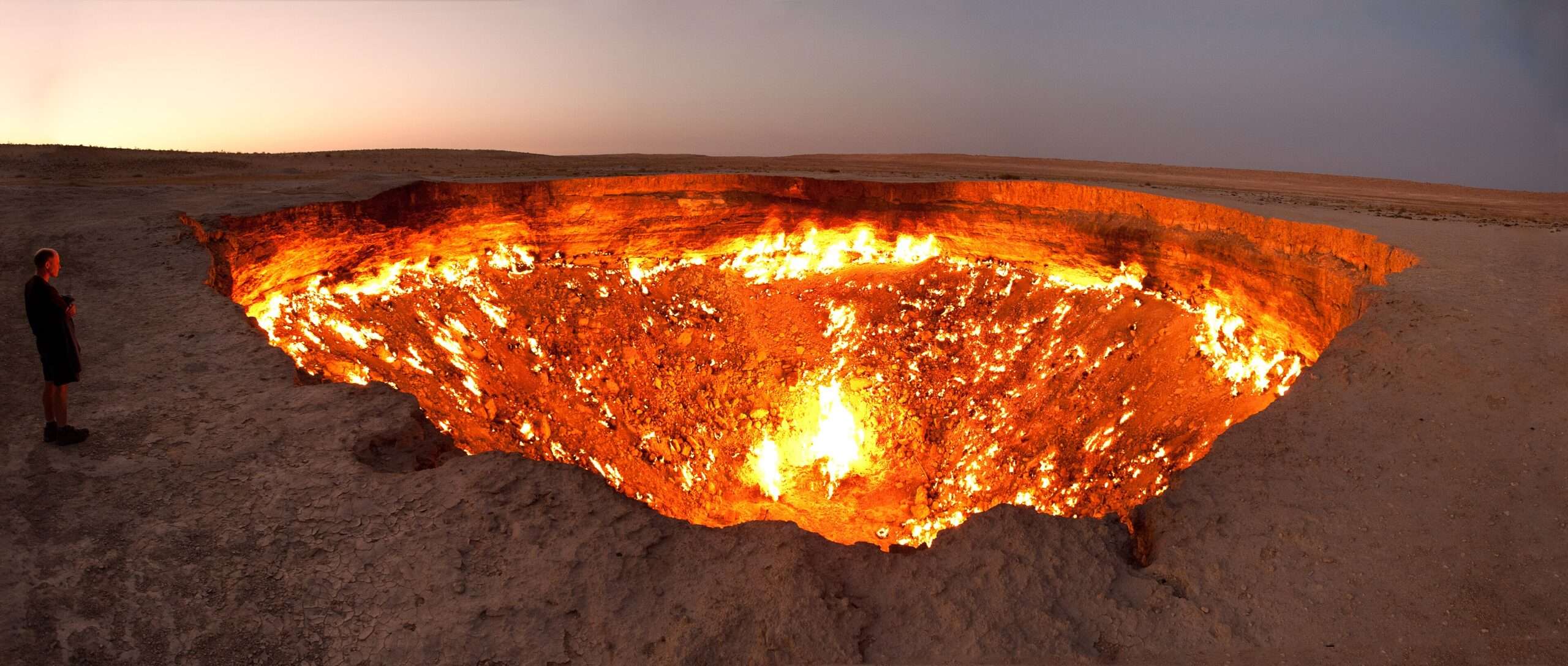
The Darvaza gas crater in Turkmenistan's Karakum Desert — 60 to 70 meters across, 30 meters deep, and burning since 1971 — earned the nickname "Door to Hell" thanks to its hundreds of natural gas fires covering its floor and rim, visible for miles across the desert night. It was born when Soviet drilling punctured a gas cavern, the roof collapsed, and engineers lit the leaking crater to burn off poisonous gases, underestimating how much fuel was down there.
In 2013, storm chaser George Kourounis became the first person to reach the crater floor, descending in an aluminized heat suit on Technora ropes to collect soil samples for the Extreme Microbiome Project. "A coliseum of fire," he said afterward — "everywhere you look it's thousands of these small fires." In 2019, President Gurbanguly Berdymukhamedov appeared on state TV doing doughnuts in a truck near the crater to disprove rumors of his own death.
The fire is finally dying. After Berdymukhamedov ordered it extinguished in 2022, wells were drilled around the crater to capture the methane, and by August 2025 what had been the country's top tourist attraction was down to a few pockets of small flames. Analysis by the flare-monitoring firm Capterio shows the heat has dropped more than 75 percent in three years.
Previously:
• Turkmenistan wants to extinguish the fiery Darvaza Crater, known as The Gates of Hell
• Man camped at Turkmenistan's "Door to Hell" and shot video of it