
Remember me

 by Nino LeitnerToday
ByteDance has opened public API access to Seedance 2.5, the video model it unveiled at the Volcano Engine FORCE conference, built around a 30-second clip generated in one continuous pass, up to 50 multimodal reference inputs, and camera control driven by 3D blockouts. The company also pushed its shipping Seedance 2.0 model to native 4K with 10-bit output.
Few companies have moved AI video further this year, or drawn more legal fire doing it. Seedance 2.0 arrived in February, took the top spot on the main independent preference leaderboard, and then triggered a Hollywood-wide backlash over viral celebrity deepfakes that brought cease-and-desist letters from every major studio. Seedance 2.5 is the follow-up, and it is aimed squarely at longer, more controllable, more production-shaped work. It is now in developers’ hands rather than on a keynote screen, which makes this the moment the claims become testable.
Thirty seconds without a seamThe headline number is duration. ByteDance says Seedance 2.5 renders a full 30-second clip in a single generation, with no stitching of shorter segments and no extension passes. Its predecessor topped out at roughly 15 seconds natively and could only reach half a minute by joining separate generations end to end, which is precisely where AI video tends to fall apart.
That failure mode matters more than the raw number. Chain two clips together and faces drift, wardrobe shifts, lighting rolls, and the geometry of a room quietly rearranges itself across the cut. A genuinely continuous half-minute take, if it survives contact with real briefs, would be the longest native single-shot generation among the major models, and the most useful thing about it for commercial and short-form drama work is not length but the absence of a seam to hide.
There is also a beta long-video mode listed on ByteDance’s own Dreamina product page that stretches output to 180 seconds. The company frames the 30-second standard mode as the reliable tier and the three-minute mode as experimental, a distinction worth respecting until someone publishes sustained tests.
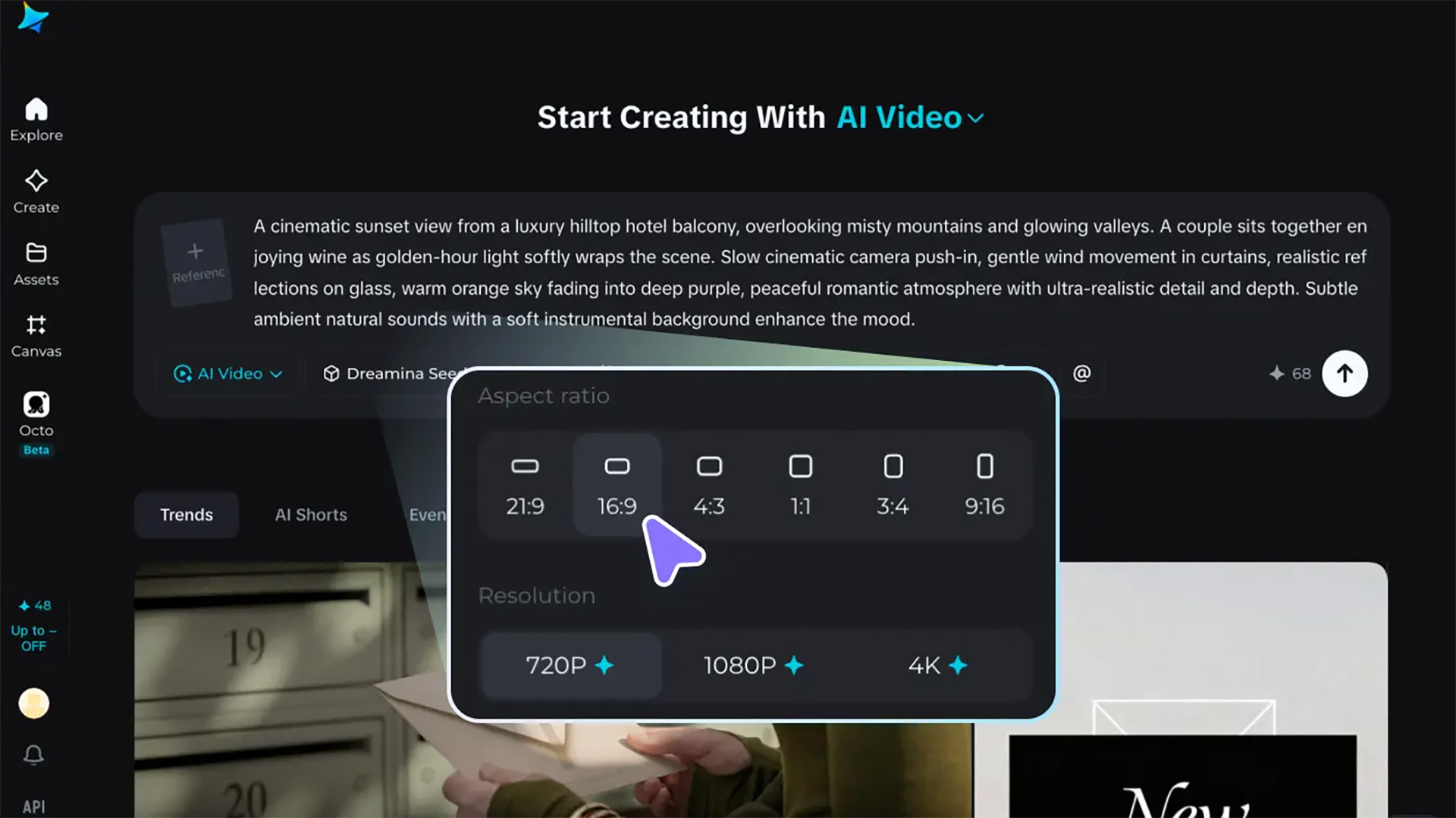
 Seedance 2.5 is rapidly expanding what’s possible with real-looking generated footage. Image credit: ByteDanceFifty references, and a 3D blockout for the camera
The second pillar is input breadth. Seedance 2.5 accepts up to 50 multimodal reference materials in a single generation, spanning images, video clips, audio, scripts, and style guides, against a ceiling of twelve files on Seedance 2.0. Most competing models accept a handful of reference images, so this is a different order of ambition: enough headroom to carry a character, a location, a product, a lighting look, and a sound bed into the same shot.
The feature most likely to interest cinematographers is the one that got the least airtime. ByteDance describes reference-to-video control that accepts green-screen plates or 3D white-model blockouts, the rough untextured geometry used in layout to lock camera position, staging, and blocking before anything is lit or rendered. The company calls it the first 3D white-box preview function in a video generation model. In practice it moves previs thinking inside the prompt, letting you commit to a camera move and a composition rather than rolling the dice on whatever the model invents.
Rounding out the set, Seedance 2.5 supports localized editing that redraws part of a frame while leaving performance, lighting, and camera behavior intact, and ByteDance claims roughly a 20 percent improvement in prompt adherence over 2.0. The model handles eleven languages, including English, Chinese, Japanese, Korean, Spanish, Arabic, and Portuguese. No benchmark has been published to support the prompt-adherence figure.
Seedance 2.0 quietly moves to 4KThe upgrade that filmmakers can act on immediately went to the older model. Seedance 2.0 now outputs native 4K with 10-bit color, up from a ceiling around 1080p to 2K, which brings the shipping, widely available model into line with rivals that already advertised 4K. Worth noting for accuracy: the 4K headline from the conference attaches to 2.0, and ByteDance has not separately published a resolution ceiling for 2.5, though Dreamina’s listing describes clean 4K output for the newer model.
 Seedance 2.0 can now output 4K natively with 10-bit color. Image credit: ByteDance
Seedance 2.0 has a track record to judge it by. It runs on a dual-branch diffusion transformer with joint audio and video generation, and it was the primary video engine behind Higgsfield’s 95-minute AI feature Hell Grind, which screened around Cannes in May without being part of the official selection. ByteDance also told the conference its enterprise Seedance business has reached two billion dollars in annual recurring revenue.
The copyright problem the launch does not solveAlongside the models, ByteDance has been building the licensing layer its first release conspicuously lacked. The Volcano Ark Copyright Commercialization Platform went live on June 10 and was featured again at FORCE, running on Seedance 2.0 with a rights-governance system covering authorization, protection, review, distribution, and monetization.
Stephen Chow’s Bingo Group is the first partner, licensing The King of Comedy, CJ7, and God of Cookery as creation templates that users can drive with their own footage across Douyin, Jimeng, and CapCut. ByteDance reported same-day creation volume above 100,000 for those templates. What it has not disclosed is any revenue split, royalty rate, or per-generation fee, which leaves the central question of what rights holders actually earn unanswered.
None of this resolves the older dispute. The cease-and-desist letters that followed Seedance 2.0’s launch remain outstanding, and there is still no confirmed US availability date for the new model. For anyone weighing commercial use, the practical guidance has not changed: work from your own assets, properly licensed material, or synthetic characters, and stay away from protected IP regardless of what the model will happily generate.
Where it sits against Veo, Kling, and RunwayThe competitive field thinned when OpenAI shut down the Sora app in late April, though its API runs until late September. What remains is Google’s Veo, Kuaishou’s Kling, Runway, and Seedance.
On the independent blind-preference arena, the shipping Seedance 2.0 currently leads text-to-video with audio at an Elo around 1,218, ahead of Kling 3.0 and Google Veo 3.1, and it tops the image-to-video board as well. That is a real result, but it belongs to 2.0. No independent score exists for Seedance 2.5, and any 2.5 arena figure circulating at the moment should be treated as invented.
Feature by feature, the picture is more balanced than the headlines suggest. Kling 3.0 generates natively at 4K and 60fps with a globally available API around seven and a half cents per second, and its AI Director mode packs several distinct camera setups into one 15-second generation. Veo 3.1 still has the best synchronized dialogue and lip-sync of the group. Runway keeps the most refined control surface for film work. Seedance 2.5’s genuine lead is duration and reference breadth, not resolution, and multimodal input handling is exactly the axis Google is pushing on with its Omni family.
 It escapes me why ByteDance uses images like this one to promote their video models, because stuff like this is what really screams “AI”, even though much more convincing results are possible. Image credit: ByteDanceAccess, cost, and what to verify yourself
API access runs through BytePlus ModelArk internationally and Volcano Engine directly for enterprise accounts, with consumer access through Dreamina, Jimeng, and CapCut. ByteDance has not published an official rate card for 2.5. As a reference point, Seedance 2.0 sits near six US cents per second on standard third-party tiers and closer to two cents on discounted fast tiers, and independent estimates put a 30-second 2.5 clip somewhere between roughly one and two dollars at lower settings, rising steeply at 4K. Those are projections, not quoted prices.
The honest position four days into general availability is that everything quantitative still comes from ByteDance or its product pages. There is no model card, no independent benchmark, and no neutral long-form test, and the sample reels circulating on social platforms are curated promotional material rather than evidence of consistent output. The single most useful thing any working professional can do now is run the model against a real shot list, with named references and a demanding camera move, and see whether character identity and lighting actually hold across the full 30 seconds.
Does a seamless 30-second take change how you would use AI video on a job, or does the unresolved rights picture still keep it off your set? Don’t hesitate to let us know in the comments below!