
Remember me








The Way Back. Join our community exploring how Britain can rebuild its future in EuropeJoin the debate with our pro-Europe newsletterJoin the debate with our pro-Europe newsletter
Small boat crossings to the UK have almost halved, while irregular crossings to Europe are down almost 40 per cent so far this year, The Independent can reveal.
Analysis of Home Office data shows 12,214 people had arrived in the UK on small boats by 9 July this year – down 42 per cent from 2025, when 21,117 people had made the perilous journey across the English Channel in the same period.
While migration experts are clear that numbers are falling, it is hard to know definitively why this is.
EU border officials have pointed to partnerships in north Africa stemming the number of onward journeys, but experts caution that these pacts come with a deadly cost.
Nearly 1,300 people have lost their lives in the Mediterranean so far this year, according to the International Organisation for Migration (IOM).
Here, The Independent examines how many people are travelling on migration routes into Europe, and onwards to the UK, and why this might be.
How many people are arriving on small boats to the UK?
By the end of June this year, 11,884 migrants had arrived on dinghies – down 41 per cent on the same period in 2025 – a particularly high year for crossings, second only to a record-breaking 2022 – and down 12 per cent on 2024.
Labour has tried to bring the numbers down by paying more money for French police enforcement to stop migrants from leaving their shores and sending small boat migrants back to France in exchange for asylum seekers.
But the “one in, one out” scheme, which began in August 2025, has only removed a comparatively small number of migrants, with 1,087 people sent back to France as of the end of June. There have been reports that the French are looking to end the programme in October this year, to focus on a European-wide strategy of tackling irregular migration.
Why are the number of UK small boat migrants falling?
Dr Mihnea Cuibus, senior researcher at the University of Oxford’s Migration Observatory, said it was hard to identify any one policy change, or factor, as being behind the fall in crossings.
He said: “Arrivals are down throughout Europe. They were also significantly down last year, which is significant because you would expect a bit of a lag as people travel through Europe to the UK. The decline we saw last year could finally be feeding through into arrivals in the UK.
“The other thing is change in policies, with the new deal with France, and the one in, one out scheme. The share of those who have been removed to France has remained very low, so we wouldn’t expect that to make a massive difference.
“It is likely that there seems to be a bit of an effect [from the different policy changes], but there are other factors such as arrivals into the EU.”
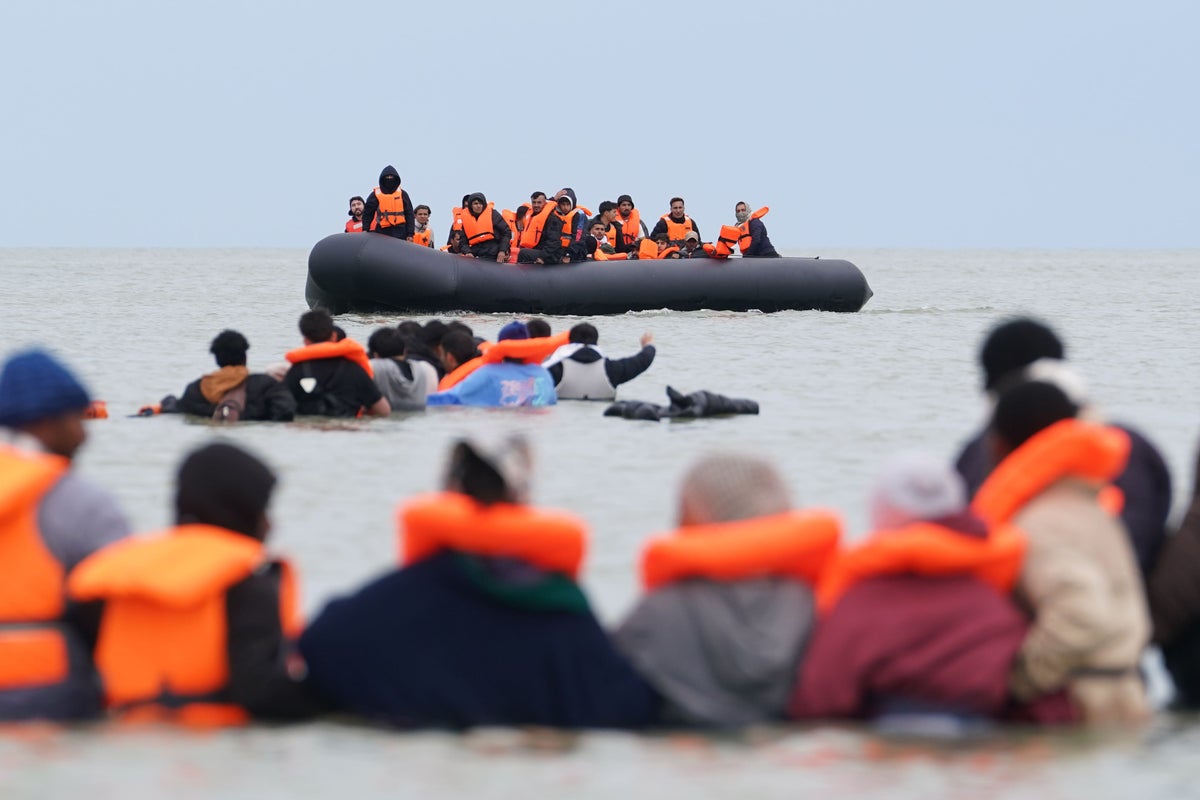
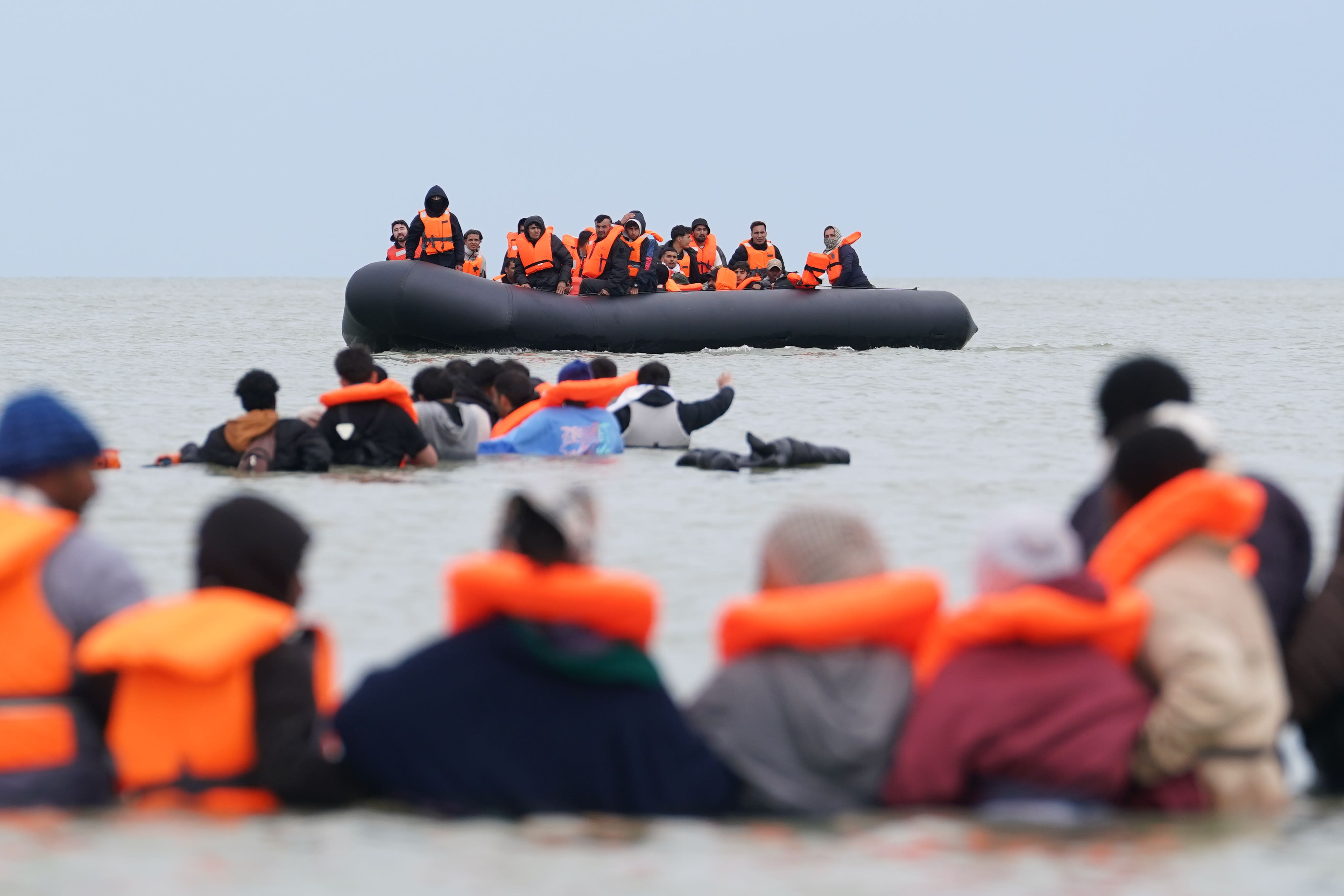 People thought to be migrants wade in the water as they attempt to board a small boat off the coast of Berck, France, during an attempt to cross the English Channel on 15 June 2026 (PA Wire)
In 2026 so far, 187 boats have arrived in the UK, compared to 362 boats in the same period last year. The size of dinghies has increased significantly as smugglers adapt to increased police activity on French beaches. Larger boats now “taxi” around the coast of France and wait to pick up people offshore. In an indication of how big the small boats are now getting, a record 128 migrants arrived in one dinghy this week.
The previous record was 125 in September 2025. In total, 41,472 people arrived in 672 boats last year, compared to 36,816 people in 695 boats in 2024.
However, the dip in arrivals in the first half of 2026 compared to 2025 may be due to when the bulk of people arrived last year. In 2025, arrivals were spread out throughout the year, starting with 4,568 people in March and continuing through the summer, with more than 5,000 people arriving in September. In 2024 and 2023 however, more people arrived later in the year, with 5,417 people crossing in October 2024.
This shows that while the arrivals are tracking down this year so far, more could still make the journey in the second half of 2026.
Dr Cuibus cautioned: “We do see these numbers move up and down, at times quite randomly over the past five or six years. We still don’t understand why 2025 was so big, just as we don’t understand quite why there was a surge in people in 2022 – particularly in Albanians.”
He added: “If this trend continues until the end of summer, that will be very interesting. We are in a bit of a waiting pattern until we’ve seen the summer through.”
Where are small boat migrants coming from?
Eritrea was the top country of origin for arrivals last year, with more than twice as many as in 2024. Many leave to escape national service, which is compulsory for all citizens aged 18 to 40, and there is a near-total suppression of civil or religious freedoms in the country.
The number of people coming from Afghanistan, which was the top country of origin in 2023 and 2024, declined to second in 2025 after a peak in 2022, the year after the Taliban takeover – with 8,319 people arriving via small boats.
Figures for the first three months of 2026 show that the Eritrean numbers are being sustained, with 743 citizens making the crossing compared to 735 Sudanese and 598 Afghans.
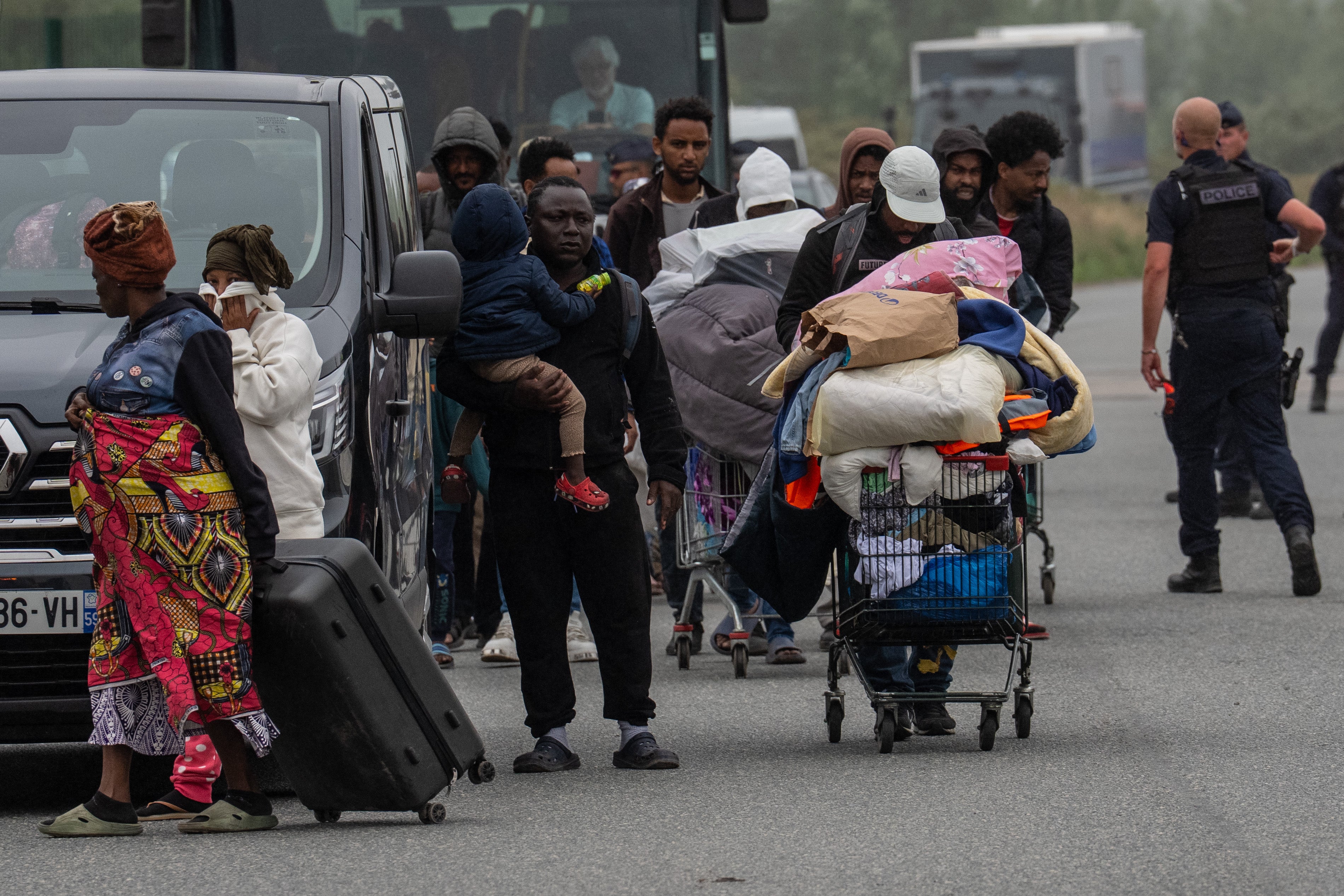 Migrants leave an area of their camp that was cleared by French authorities on 2 July 2026 in Loon-Plage, France. (Getty)
The number of Syrian, Iraqi and Vietnamese nationals also fell in 2025, while those from Sudan, Somalia and Ethiopia all increased.
The numbers of Somalians making the Channel crossing surged from 697 in 2024 to 3,783 in 2025. The steep rise comes after the jihadist group Al-Shabaab made major advances in its battle against the Somali government.
In Sudan, where the second-highest number of small boat migrants originate, the country has been experiencing a severe humanitarian crisis after three years of civil war. Over 14 million people have been displaced and two-thirds of the population – 33.7 million people – are in need of humanitarian support, according to the International Rescue Committee.
Judith Sunderland, from Human Rights Watch (HRW), said: “We’ve seen a massive outflow of people from Sudan, many who are stuck in Libya. We’ve already seen an increase in Sudanese on boats to Europe, and there could be a really significant increase if various factors align.”
Explaining migration flows more broadly, she added: “There are a lot of people on the move because they are trying to improve their situation and the lives of their family. So long as there is bad governance and poverty, people will try to get someone where they think they can have a better chance.”
Dr Cuibus explained that Syrians and Afghans are now less likely to be granted asylum in Europe than they were in previous years and said this could be contributing to the reduced numbers arriving.
Irregular border crossings into Europe are also down
Irregular crossings into Europe were down almost 40 per cent in the first five months of 2026 compared to the year before, data from border agency Frontex shows.
Nearly 39,000 crossings were recorded in the months January to June – a decline attributed to co-operation between the EU and Africa to increase police enforcement at departure points. The Western African route saw the steepest decline, with detections down by 71 per cent on the year before.
The number of people arriving in Italy from north Africa across the central Mediterranean route, usually the busiest crossing, is also down 52 per cent year-on-year, with 14,340 people making the journey so far in 2026.
Why are small boat crossings to Europe falling?
Ms Sunderland said the EU drive to stop people making the journey to Europe “carries with it enormous risks and suffering”. She explained that “people are essentially trapped in various locations in their migration journeys”, such as migrants who get sent back to Libyan detention camps when they are picked up trying to cross the Mediterranean.
“Focusing on the numbers hides the suffering that is behind this. It is based on a lot of extremely dubious deals that the EU and individual member states have pursued and support for security forces in places like Libya, Tunisia, Mauritania and elsewhere,” she added.
Giorgia Meloni’s government in Italy, backed by the European Union, is funding, equipping and training both the Libyan and Tunisian coastguards to intercept people on their way to Europe.
Human rights organisations have this week called for the EU to stop funding Tunisia over its security forces’ “reckless and violent conduct” during interceptions at sea.
According to the charity Statewatch, the EU is also looking to team up with Libya’s eastern forces to stem the number of people launching boats from its shores.
Ms Sunderland explained that there are lots of factors that would influence the numbers getting on boats, such as the weather, smuggling dynamics, and the work of border forces.
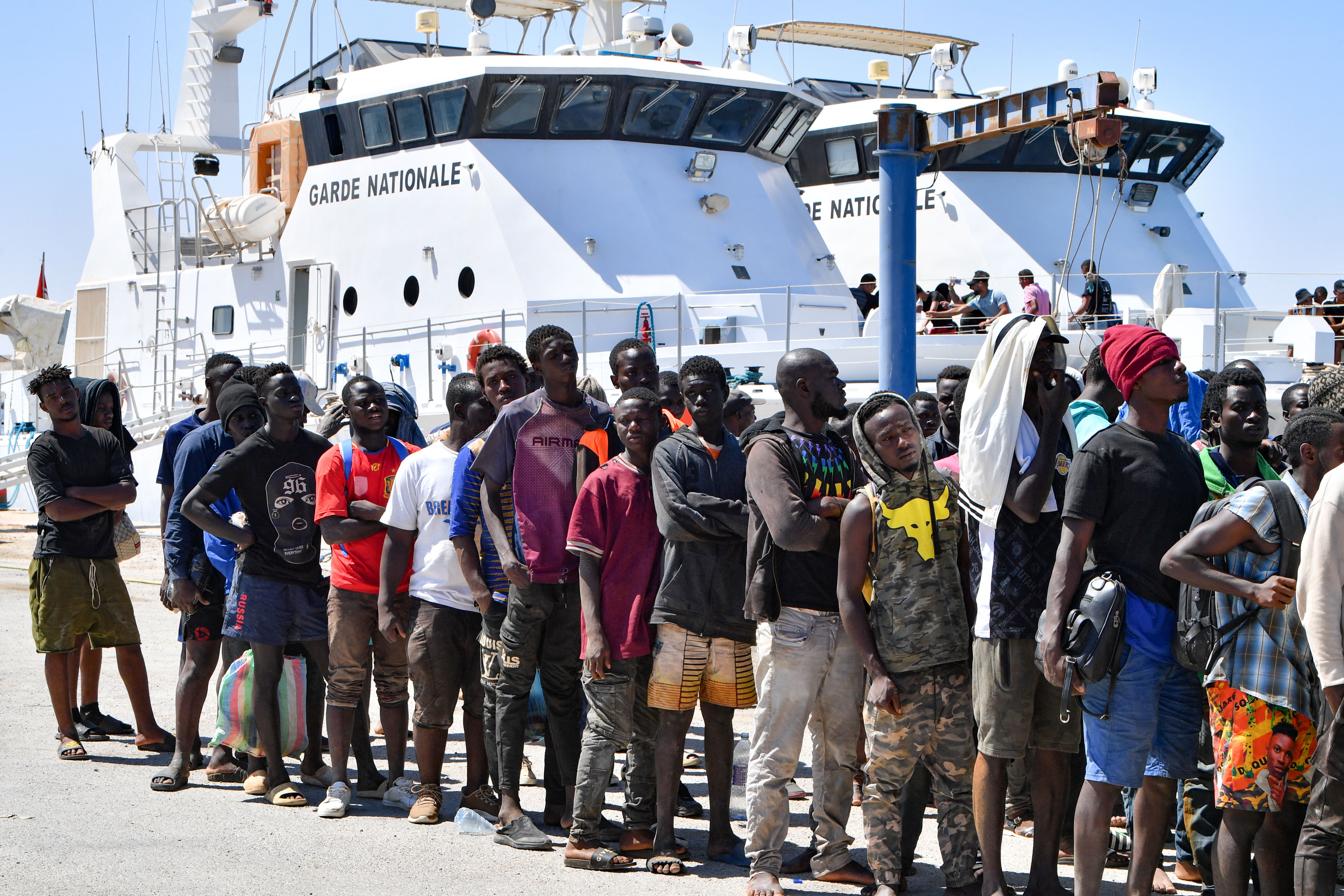 Migrants trying to flee to Europe, disembark in Sfax from a ship owned by the Tunisian coastguards, after being intercepted by them at sea on 10 August 2023. (AFP/Getty)
“The numbers have decreased recently compared to the past several years, but they are still higher than they were six or seven years ago,” she explained.
She said that, those who remain stuck in third-party countries such as in detention in Libya, will not give up their determination to move on. “They will keep trying. Very few turn back. And people smuggling networks adapt and change.”
Dr Cuibus added: “The view is that all of these deals, with Libya, Tunisia, more co-operation with Morocco, these things together do seem to have an effect, because at the end of the day it is about physical prevention. Experience kind of reveals that physical enforcement can stop the boats, if you stop people leaving countries from transit, or at least temporarily divert them to other routes. But there are also broader factors at play, like the changes in the home countries’ situation.”
A spokesperson for the IOM told The Independent: “While the number of irregular arrivals to Europe has declined in 2026, the situation continues to demand urgent attention because too many people are still risking – and losing – their lives on dangerous migration routes.
“The central Mediterranean continues to be the world’s deadliest migration route... equally concerning is the growing number of migrants who disappear without trace, with increase evidence of so-called ‘invisible shipwrecks’, where vessels are lost and their fate remains unknown.”