Television frequently presents farmed animals as unintelligent, interchangeable commodities rather than as individuals with distinct personalities, preferences, social relationships and emotional lives.
Accurate
Scientific understanding of animal cognition and behaviour has developed dramatically over recent decades, yet public portrayals often lag behind the evidence.
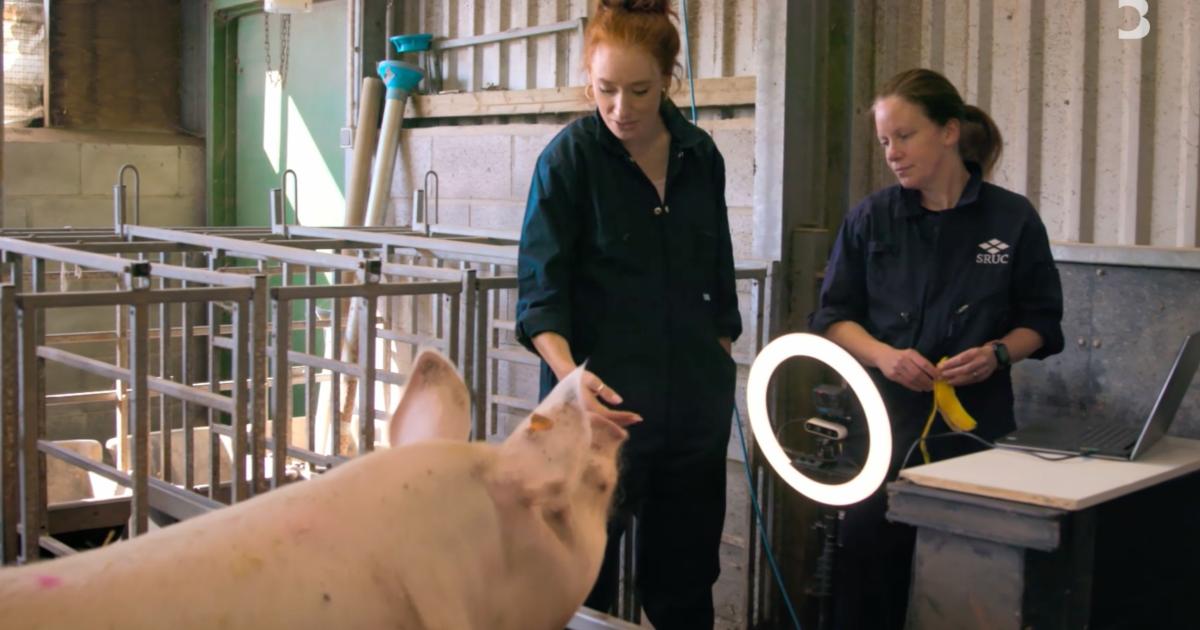
Pigs continue to be depicted as unintelligent despite extensive research demonstrating sophisticated learning abilities.
Chickens are routinely portrayed as mindless or lacking individuality despite evidence of complex social structures and communication.
Cows are often shown as passive agricultural units rather than social animals capable of forming long-term bonds and experiencing a range of emotional states.
Audiences deserve accurate representations of the animals whose lives are profoundly affected by human decisions.
Feelings
Misleading portrayals can take many forms. Sometimes they involve factual inaccuracies. More often, they arise through omission, framing and characterisation.
A programme may technically avoid making false statements while still leaving viewers with a fundamentally misleading impression.
This is particularly evident in the way farmed animals and farming systems are depicted on television.
Audiences are frequently presented with images of animals grazing in open fields, roaming freely outdoors, or living in idyllic rural settings, despite the reality that the overwhelming majority of farmed animals spend much or all of their lives in intensive indoor systems.
Broadcasters risk reinforcing misconceptions that have become culturally normalised. This matters because public understanding influences public policy.
Britain formally recognises animal sentience in law. Parliament has accepted that animals are capable of experiencing feelings and that those experiences matter when considering public policy.
Misinformation
Television should reflect what we know about animals, not what tradition, convenience or cultural habit has led us to assume about them.
Where evidence demonstrates complexity, intelligence and emotional capacity, those realities should not be obscured, minimised or cast into doubt without justification.
In addition, it should accurately portray the conditions animals are kept in, so the British public is fully aware that these creatures with intelligence and emotional states are kept in environments that do not meet their needs.
In an age increasingly concerned with misinformation, accuracy should extend to all subjects, including the animals whose lives remain largely hidden from public view.
This Author
Edie Bowles is the founder and executive director of The Animal Law Foundation.