
Remember me



Updated July 15, 2026 — 4:16am,first published 1:54am
SaveYou have reached your maximum number of saved items.
Remove items from your saved list to add more.
AAA
US President Donald Trump stepped back from a proposal to charge a 20 per cent fee to guard the Strait of Hormuz as part of the conflict with Iran, saying he would instead seek investment deals with Gulf states.
US forces had carried out waves of attacks for the third night in a row after Tehran said it had closed the strait, prompting Trump to reinstate a blockade of Iranian shipping and propose the fee.
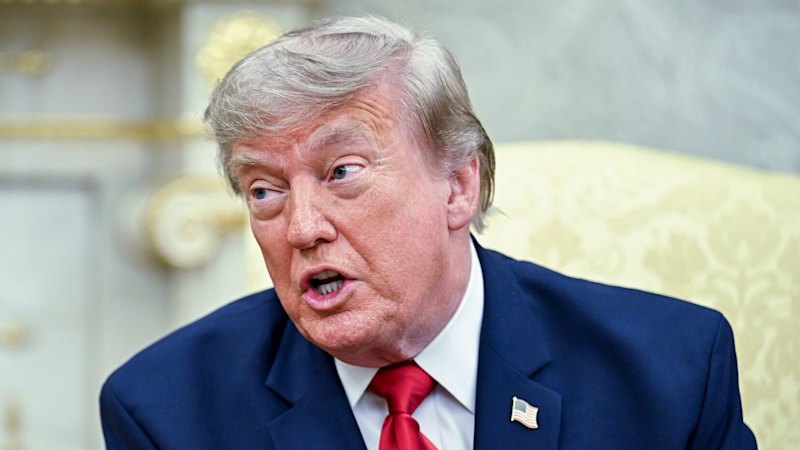
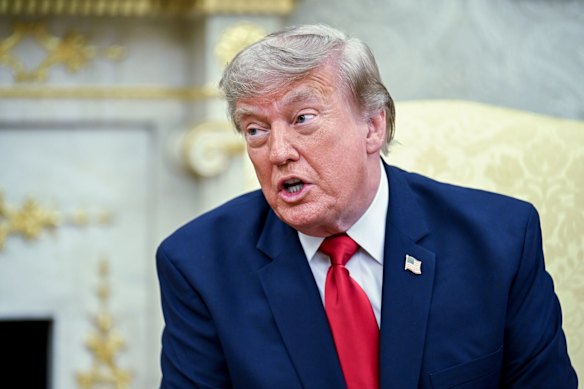 US President Donald Trump in the Oval Office on Tuesday.Bloomberg
But just a little under five hours before the fee had been due to come into effect, Trump said the strait was open to all shipping traffic except that of Iran.
“Based on highly productive conversations with Middle East leadership, I have decided to replace the 20% United States Reimbursement Fee with Trade and Investment Deals that the various Gulf States will be making into the United States,” he said in a post on Truth Social on Tuesday, US time (1am Wednesday AEST).
Trump said he was called by “kings and emirs” and other leaders who suggested an alternate arrangement.
Related Article
“They said we’d love to do it a different way. We’d love to invest in the United States with billions and billions of dollars,” Trump told reporters in the Oval Office on Tuesday.
Trump said he preferred that arrangement to charging tolls “because I don’t think anybody should be able to charge a fee for the strait”.
It was unclear if the investment deals would be new commitments relative to what Trump announced after a visit last year to the Middle East.
Exchanges of fire in recent days had cast doubt on the interim peace deal – now almost halfway through the 60-day period in which negotiators were supposed to agree to a final accord, which also was meant to address Iran’s disputed nuclear program and other issues.
But Trump’s vow to impose a blockade further imperils it. Washington lifted a blockade it imposed in mid-April as part of the deal. The US military said it will resume at 6am Wednesday AEST.
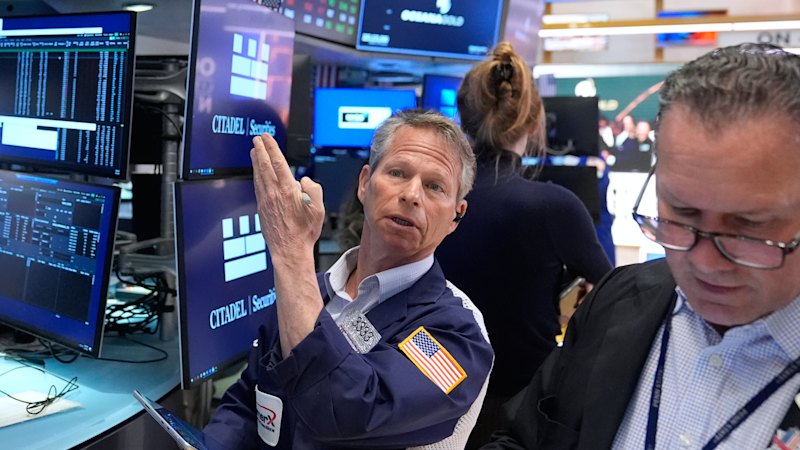
Oil futures prices pared their gains after the post after rising earlier on Tuesday. The worsening attacks had increased doubts that a memorandum of understanding signed last month would lead to a permanent halt in the war, which has disrupted global energy supplies and raised fears of a rise in inflation globally.
Iran had hit back by attacking a US Army base in Jordan with ballistic missiles while Bahrain, which hosts a US naval base, said it had fended off an Iranian aerial attack. Jordan said it had shot down four ballistic missiles and explosions were heard in Manama, Bahrain’s capital.
The governor’s office of Iran’s Qeshm Island, on the Strait of Hormuz, said it was hit by a US projectile at around 7pm on Tuesday (1.30am Wednesday AEST), Iranian state media reported. Meanwhile, a US projectile exploded near a water and electricity facility on Iran’s Kish Island, the country’s semi-official Tasnim news agency said. State media also reported an explosion heard in Andimeshk in southern Khuzestan province.
Before the war, about a fifth of global oil and gas traffic passed through Hormuz daily. If the US were to impose a 20 per cent fee, it could generate around $US240 million ($344 million) a day.
The UN shipping agency said it opposed any fees for straits used in international navigation and that there was no legal basis for introducing mandatory tolls on strait transits.
Reuters/AP
Get a note directly from our foreign correspondents on what’s making headlines around the world. Sign up for our weekly What in the World newsletter.
SaveYou have reached your maximum number of saved items.
Remove items from your saved list to add more.
From our partners