
Remember me
The numbers are in: 7w/kg is the new 6w/kg.
If you were holding 6w/kg for half an hour in the 2010s, you could find yourself on the podium of the Tour de France. Now 6w/kg is the bare minimum for versatile sprinters to survive a 20-minute climb.
The attackers are holding 6.1-6.5w/kg, while the top riders are able to push 7w/kg for an extended period of time.
As we near the first mountains of the Tour de France, we are talking about the best climbers in the history of the sport. 7w/kg is no longer a glass ceiling; it is meant to be broken, especially at the Tour.
Where could we see the incredible barrier broken in this year’s race? There are a handful of obvious opportunities.
But with a rider like Tadej Pogačar, that barrier could be broken at any moment.
When will we see 7w/kg performances at the 2026 Tour de France?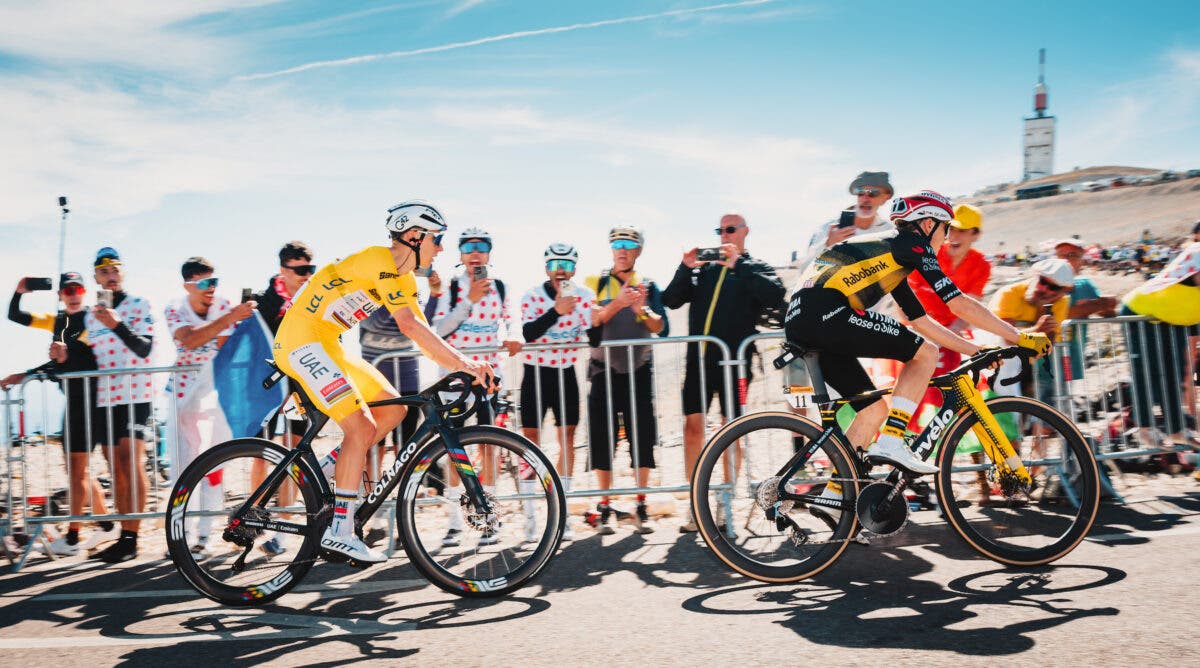 Mont Ventoux offered Pogačar and Vingegaard the perfect place to push huge watts in 2025. (Photo: Gruber Images)
The first ingredient in 7w/kg soup is the right circumstances.
These kinds of performances don’t just happen in any given race (unless you are Pogačar). Most often, they happen on a steep and steady climb that rewards a rider who can maintain a steady output for a long period of time. We typically don’t see massive w/kg performances on flat roads or in classics for multiple reasons.
First, at higher speeds, aerodynamics matter more than power output.
While Pogačar is certainly pushing more w/kg than Remco Evenepoel on a time trial bike, the Belgian is the superior time trialist, by far. Evenepoel is simply more aero, and that’s what matters at 55 kph.
Second, the strongest riders on flats and in classics are typically heavier riders somewhere in the 70-80 kg range.
The classics reward raw power output and brute strength, not a high power-to-weight ratio. So even though Mathieu Van der Poel and Wout van Aert are some of the strongest bike riders in the world, their w/kg output is nowhere near a rider like Pogačar’s.
The right circumstances doesn’t just mean the terrain, it also means the race situation and weather.
We’ve seen epic climbing battles stifled by a strong headwind, such as last year on Mont Ventoux. Vingegaard attacked Pogačar over and over, but the Slovenian was able to save so much energy in the draft that Vingegaard had no choice but to ride in a start/stop fashion.
Wind, rain, and heat can all affect climbing performances, but thanks to the popularity of heat training, riders are still able to hit their best-ever numbers in the July heat at the Tour.
During a stage race like the Tour de France, the overall standings can play a massive role in how riders choose to race.
A big climbing performance that breaks the 7w/kg has to be a steady all-out effort. Thus, it probably won’t come from a rider who has a five-minute GC lead and little motivation. It probably won’t come from the KOM leader in the polka dot jersey who has been burning matches in the breakaway every day. And it won’t come from a rider who is lacking in confidence because riding at 7w/kg means you are risking blowing up.
That brings us to this year’s Tour de France and the riders who could potentially break the 7w/kg barrier.
Riders who can hold 7w/kg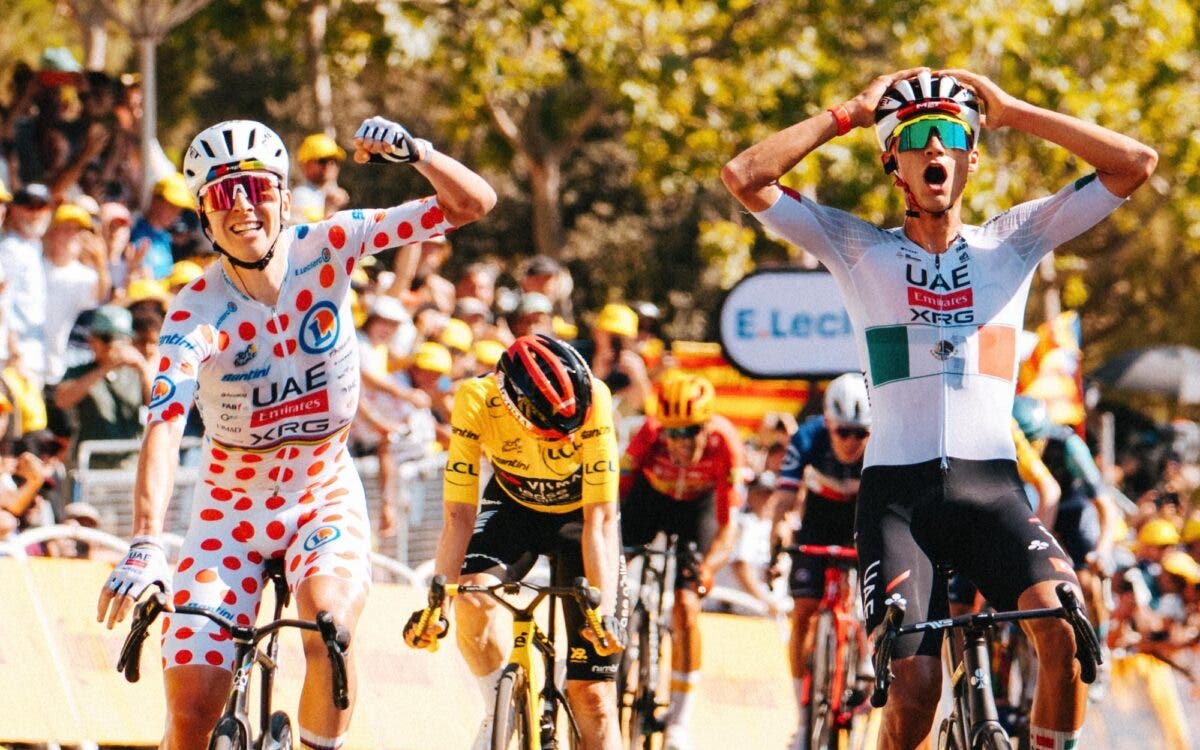 Pogačar and Del Toro are posting climbing performances that bother the 7w/kg barrier. (Photo: Gruber Images)
Pogačar is the first name on this list, but far from the last. The Slovenian has already done several 7+w/kg performances in his career, including one just a few weeks ago at the Tour de Suisse.
While these figures are estimated, we’ve seen a convincing amount of Pogačar’s actual power data from Velon to confirm our estimations.
Jonas Vingegaard has come extremely close to breaking the 7w/kg barrier on a 30-minute climb, most recently at the Giro d’Italia on Piancavallo.
Our estimations put Vingegaard’s performance at 6.7-6.8w/kg for just over 36 minutes, eerily similar to the climbing time we’re expecting on Alpe d’Huez at this year’s Tour.
Paul Seixas is perhaps the biggest unknown in this year’s Tour.
He has already done Pogačar-like performances in 2026, specifically at the Faun-Ardèche Classic and Liège-Bastogne-Liège. While it was clear that Seixas is special from his ability to follow Pogačar at Liège-Bastogne-Liège, that was only on the sub-four-minute climb of La Redoute. It was a puncheur’s effort, nothing indicative of what Seixas could do on a long climb at the Tour.
But all the way back in February, Seixas did well over 7w/kg for 16 minutes on the climb to Saint Romain de Lerps.
It is the most impressive “long” climbing performance we’ve ever seen from the 19-year-old. Our estimations put this effort as high as 7.4w/kg, roughly the same performance that Vingegaard did on stage 16 of the 2023 Tour de France where the Dane destroyed Pogačar.
The Red Bull-Bora Hansgrohe duo of Evenepoel and Lipowitz could certainly put in some massive climbing performances. But Evenepoel would be far more likely to break the 7w/kg barrier due to his lighter frame.
Juan Ayuso can be less consistent in the mountains, but on any given day, the Spaniard has the chance to push 7w/kg for upwards of 20 minutes.
We’ve seen Tobias Halland Johannessen and Tom Pidcock push over 7w/kg for 10-15 minutes, but we haven’t really seen them maintain a similar effort for upwards of 30 minutes. If their long climb performance has improved, they certainly have a chance at breaking the barrier.
The final rider we have to mention in this list is Isaac Del Toro. The Mexican has been steadily improving, and on the final stage of the Tour Auvergne – Rhône-Alpes, Del Toro did his best-ever w/kg performance with roughly 6.7w/kg for 33 minutes on Plateau de Solaison. This is the exact climb that appears on stage 15 of this year’s Tour, which brings us to this.
Where the 7w/kg barrier could be broken: The Alpe is a prime candidate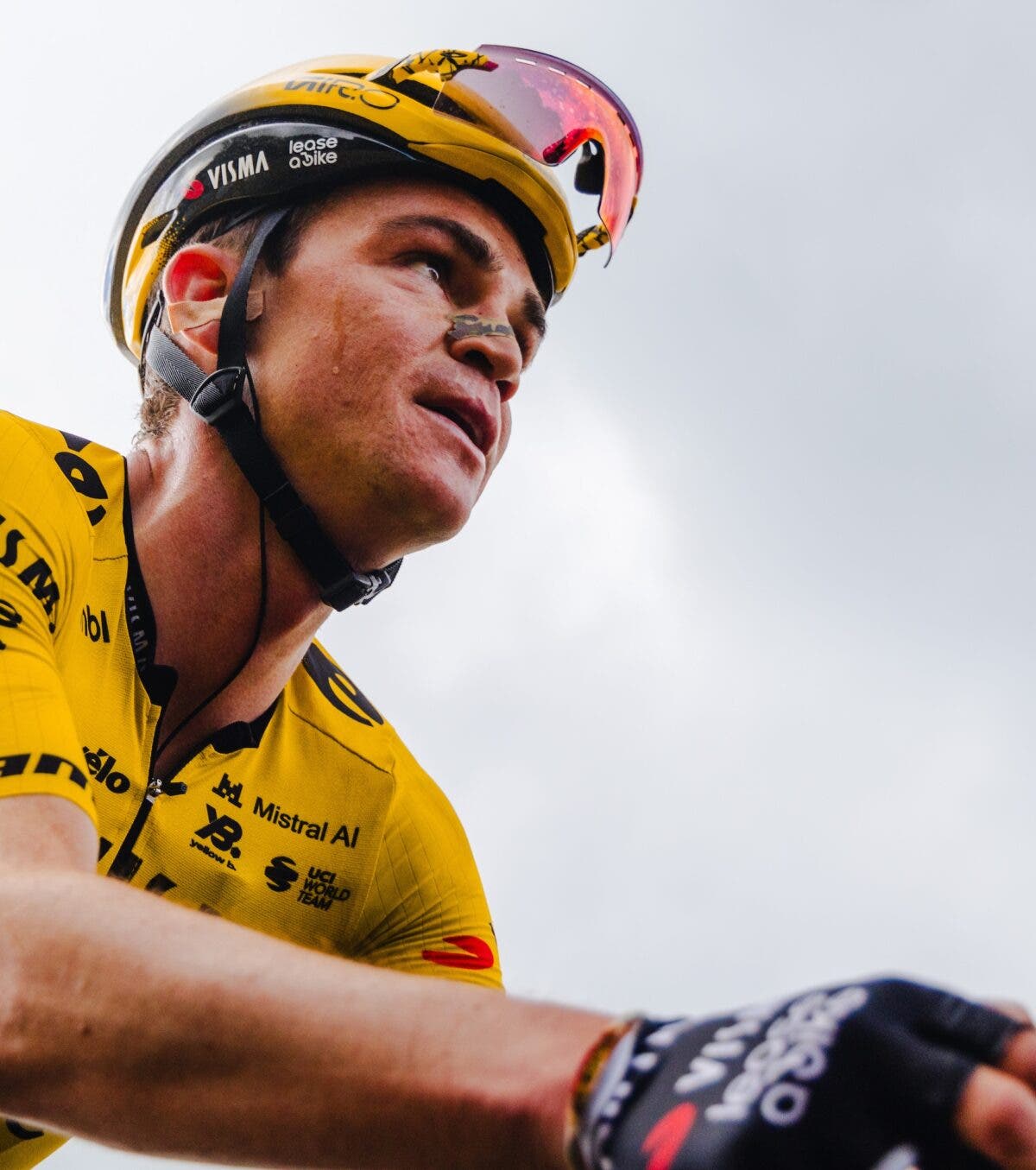 Kuss’ 2022 data from the Alpe d’Huez suggests the mythical hairpin climb could see some huge climbing performances. (Photo: Gruber Images)
With Pogačar in the race, the barrier could be broken at any moment. But realistically, we can look at the 20 to 40-minute climbs in this year’s Tour as the most likely places we’ll see world-beating w/kg performances.
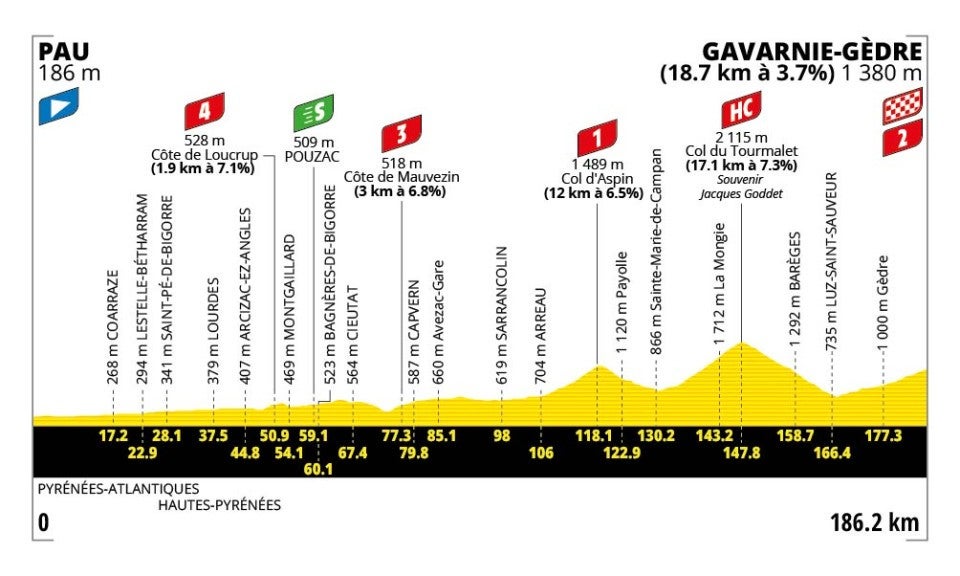
While the Col du Tourmalet appears on stage 6, it begins with 52km to go and is unlikely to be ridden all-out from top to bottom.
The next major climb comes on stage 14, which finishes just after the crest of Le Markstein. The 11.2km climb averages 7.2% and includes steeper ramps over 10%. Two short descents will break up the rhythm, while also bringing the average w/kg output down on a climb of this length.
We are much more likely to see a 7w/kg the following day on Plateau de Solaison. UAE Team Emirates-XRG already knows how to win on this climb, and we shouldn’t be surprised to see Del Toro doing the final lead out for Pogačar. If his teammate completed the climb in just over 33 minutes, Pogačar knows he can aim to go even faster.
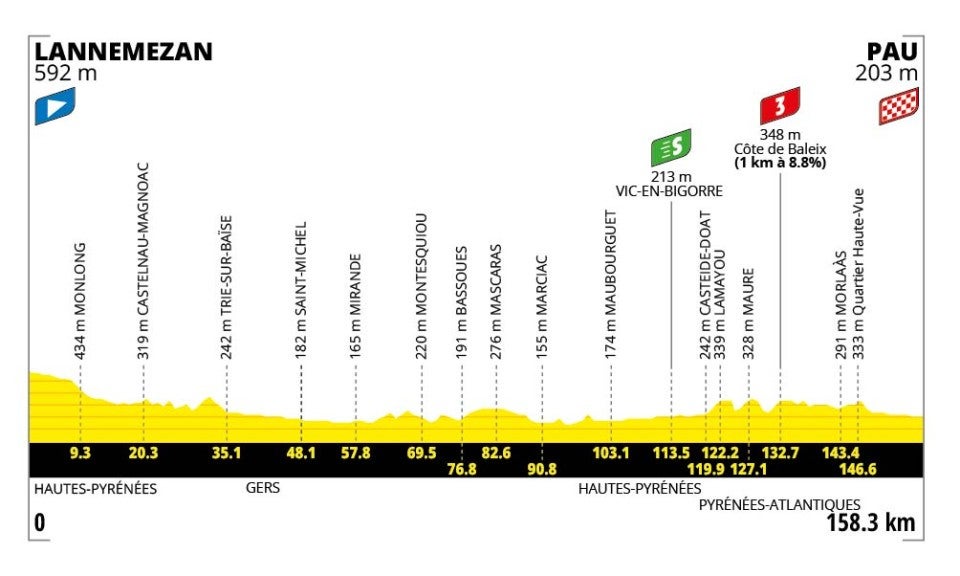
If stage 16’s individual time trial finished atop the 9.6km climb to the Cote de Larringes, we could expect to see multiple 7w/kg performances on the uphill drag. Alas, there is a winding descent and a 10km plateau to the finish, so we probably won’t see ridiculous performances on the climb.
Either way, riders like Pogačar and Vingegaard could overpace the time trial intentionally, flying up the climb at over 7w/kg.
After a few days without major mountains, the Tour concludes with two epic stages followed by the new Paris Montmartre circuit.
First up is Alpe d’Huez–the traditional side. This is the #1 spot where I predict we will see a 7+w/kg performance at this year’s Tour de France. The preceding stages are fairly easy, and the 112km lead-in to the Alpe is quite tame. With fresh legs and the Tour de France on the line, everyone will be riding full gas from top to bottom. Expect a nuclear leadout from UAE Team Emirates-XRG to launch Pogačar into orbit. The others will try to follow, and maybe we could see Vingegaard and Seixas hold the wheel.
Not only is the stage win and GC time up for grabs, but so is the all-time record on Alpe d’Huez. Marco Pantani’s time of 37 minutes and 35 seconds hasn’t been beaten in 21 years, the same number of infamous hairpins on Alpe d’Huez.
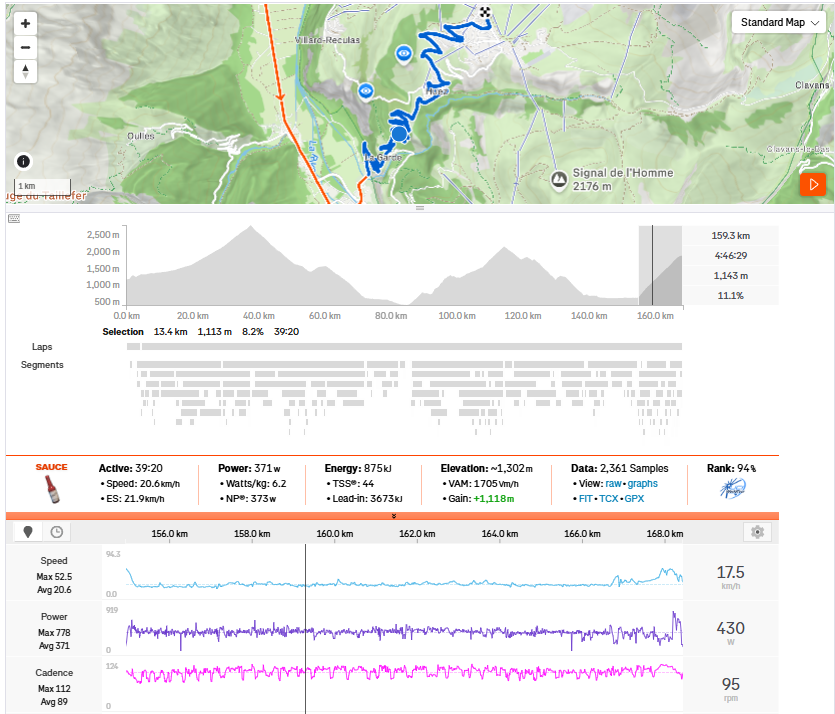
Alpe d’Huez – Data From Sepp Kuss at the 2022 Tour de France
Time: 39:20
Average Power: 371w (6.2w/kg)
Record-Breaking Time: 36-37 minutes at 6.7-6.9w/kg
The final mountains of the Tour come on stage 20, a 171km profile that includes more than 5,600 meters of climbing.
There are three hors catégorie climbs, plus a Category 1, and a summit finish on Alpe d’Huez. However, the final climb on the Alpe is only 3.8km at 6.2%, not the traditional ascent. The climbs in stage 20 are so long and demanding that we are unlikely to see an all-time climbing performance. Instead, we’re more likely to witness start/stop racing, questionable team tactics, and organized chaos throughout the day.
There are a hundred and one ways that Tadej Pogačar could break the 7w/kg barrier at this year’s Tour de France. He can push 7w/kg on the flats, in crosswinds, over cobbles, on his time trial bike, or in the mountains.
But just because he can doesn’t mean he will. In 2025, we didn’t see an all-time climbing performance from Pogačar. In fact, it was Vingegaard’s inconsistency that cost him a chance at the yellow jersey.
Pogačar’s best-ever climbing level was the 2024 Tour de France. Same with Evenepoel. Both riders have shown signs they’ve improved in 2026, but you never really know what can happen in the Tour until it’s already happening.
Paul Seixas is a massive question mark, still sporting bandages in his pre-Tour media shoots.
We’ve talked a lot about the 7w/kg in this article, but that isn’t necessarily the benchmark one needs to hit in order to win the Tour. Pogačar didn’t reach that level in 2025, but he still dominated the GC.
7w/kg performances don’t happen every day. In fact, they have been happening less than once per month. Seixas did one of his best-ever climbing performances in February; but that could be a bad sign for the Tour.
Many reports have commented on how hard Seixas trains, not just as a 19-year-old, but as a professional cyclist. Overtraining is a quick path to peaking and burnout, one after the other, with little warning in between.
The reason Vingegaard lost the 2025 Tour was his inconsistency, not the fact that he couldn’t hold 7w/kg for 35 minutes. Was it overtraining, or something else? Vingegaard is coming off the Giro d’Italia in 2026, the ultimate test of overtraining versus perfect peak timing.
Evenepoel hasn’t raced in more than two months, which could be the best or worst preparation for the Tour.
When Pogačar attacks on Alpe d’Huez, we’ll find out who can hold 7w/kg.
Power Analysis data courtesy of Strava
Riders:
Tadej Pogačar
Sepp Kuss