
Remember me
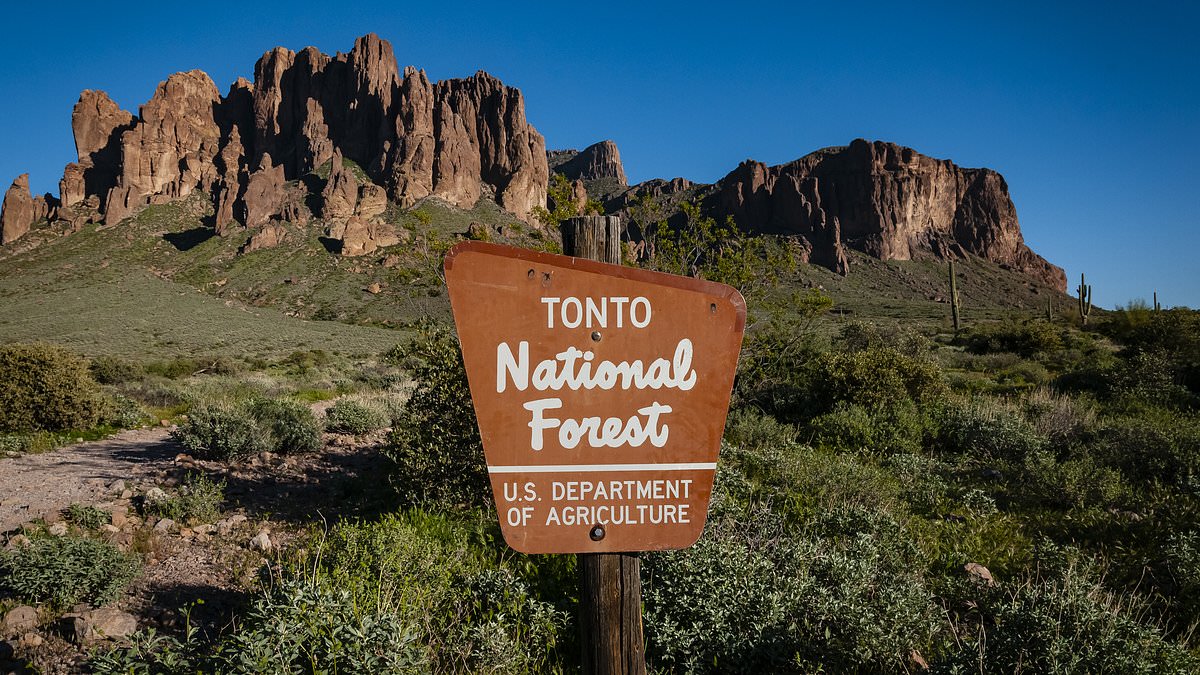









An Arizona man has been arrested after authorities discovered he had been living in a national forest for the better part of a decade.
Mark Aaron Gatz, 65, is facing up to five years in prison for allegedly setting up a permanent camp while living for about eight years in the Tonto National Forest, which is located northeast of Phoenix.
When authorities arrested him on June 25, they found nearly half a ton of trash strewn around his campsite, according to federal court documents reviewed by The Independent.
'I was flabbergasted by the amount of debris in the area,' an officer wrote in one of several citations he had given Gatz before he was taken into custody.
The officer also described Gatz's case as, 'possibly one of the worst residential cases he has seen.'
The campsite where Gatz was arrested was located near a dirt trail popular for hiking, mountain biking and off-roading.
Before the arrest, the National Park Service had received multiple complaints of 'several large structures, several man-made fire pits, several years’ worth of trash, household goods scattered throughout the forest of roughly an acre.'
'Roughly half of [an] acre of resources [was] ruined' due to the illegal structures and garbage laying on the ground for so long, according to a citation filed on June 29 in Arizona federal court.

Mark Aaron Gatz, 65, was arrested on June 25 for allegedly living in Tonto National Forest in Arizona for about eight years

Gatz allegedly ruined about half an acre of resources in the national park by leaving half a ton of trash around his campsite. Blossoms and cacti are pictured in Tonto National Forest
'The trash consisted of tires, plastic bags, trash bags, aluminum cans and other items of trash,' the citation said.
Gatz had also reportedly built a canopy under which he parked an SUV. Other items at his campsite included a cooking station with around a dozen frying pans, five 55-gallon drums, eight tires, four bike frames, five gallons of motor oil and lumber.
National Forest police knew of Gatz for about a year, and he had at least six outstanding federal arrest warrants before he was taken into custody.
Those warrants were for building a campfire during fire restrictions, building on forest land, unsanitary conditions and occupying a national forest as a residence, according to the citation.
Gatz was detained as a potential flight risk and is accused of violating a total of nine federal laws.
Those laws include building and maintaining a fire outside a designated area, leaving a fire without extinguishing it, camping for longer than is allowed, constructing and occupying a residence on National Forest land, damaging a natural feature belonging to the US, and littering, among others.

Gatz is accused of violating nine federal laws, including littering in the National Forest. Workers are pictured cleaning up trash in a different National Forest in California
According to a June 30 detention order, Gatz has a criminal history and failed to appear in court multiple times for violating residency and fire restrictions that he had received warnings and citations for.
Arrests for living on National Forest land are fairly unusual and typically only occur if the suspect has a history on non-compliance. Repercussions usually amount to large fines and a ban from the area rather than prison time.
Campers in National Forests are generally limited to a 14-day stay within 30 days. Staying beyond that period, building structures and leaving behind personal property is considered unauthorized residential use.