Amna Nawaz:
This weekend marks one year since the catastrophic floods at Camp Mystic in Texas killed 28 people, the camp director, two teenage counselors, and 25 young girl campers, most of them just 8 years old.
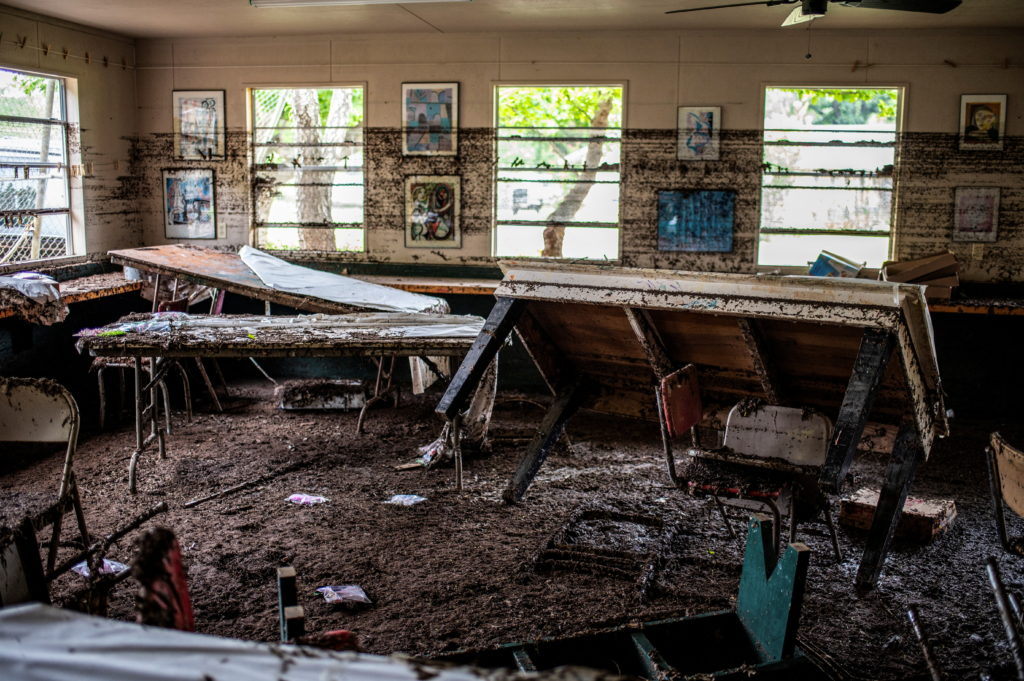
Torrential rains caused the Guadalupe River to suddenly surge on July 4, sending a deluge of water in just a matter of hours through the Texas Hill Country and, devastatingly, through the campgrounds where hundreds of girls slept.
In their final report, state investigators said the camp failed to respond adequately to storm warnings, evacuations were too slow, and there was poor emergency planning. Just last week, Camp Mystic filed for bankruptcy.
Today, many parents are still pressing for stronger camp safety standards, even as they honor their daughter's memories. That includes Lacey and Lars Hollis, who lost their 8-year-old daughter, Virginia, that day.
I spoke with them earlier this week.
Lacey and Lars, welcome back to the "News Hour." Thank you for joining us.
Lacey Hollis, Mother of Virginia Hollis: Thank you for having us.
Lars Hollis, Father of Virginia Hollis: Thank you, Amna.
Amna Nawaz:
Last year, when we spoke, you both generously shared with us stories about Virginia. You told me about how she was a very talented composer and a pianist, a bright, happy child, and a wonderful big sister.
I just have to ask how you both are doing today. What can you tell us?
Lacey Hollis:
You know, today I think we're doing OK. We still take it pretty much minute by minute, to be honest.
And, this week, this last month has been really difficult. We were expecting it to be difficult, and it has been. Summer in general, it's just difficult. But we're happy to be here and still be speaking for Virginia and the girls, and it's very important to us, especially around July 4, to remember them.
Lars Hollis:
Yes, it's a very difficult week. It's been a rough month-and-a-half, I'd say. I had the opportunity to go back to that area where we lost Virginia about a month-and-a-half ago, and I'd say it's very challenging.
We're obviously very focused on the recovery of Cile Steward, who's still missing. And that, in addition to keeping teachers, campers safe, is a guiding light for us and why we're so involved in the protection of campers throughout the U.S.
Lacey Hollis:
Yes, I think, in some ways, not just with the anniversary coming up, but the grief itself in some ways is getting kind of harder for us to carry, because we're having to face really the reality of her being gone. And how do we start moving back towards some kind of regular life?
And just that heaviness has started to feel more real, which is really hard to face.
Amna Nawaz:
What about Virginia's little sister, Siena? How is she doing?
Lacey Hollis:
You know, she -- we are just really, really proud of her. She's amazing, in that she continues to kind of surprise me with how mature she's become through this.
She was the baby of our family. She had a big sister who always helped her. And it breaks your heart, because we are so proud of her. She is helping us in ways we don't even know. She's able to express sometimes her feelings, similar feelings that we have, better than we can even.
And it just blows you away, but it also breaks your heart, because these skills and strengths that she's showing, she should never -- she should never have to have those.
Amna Nawaz:
And, Lars, I know since we last spoke, you have set up a foundation in Virginia's name to help other children. On the Web site, it says: "Virginia taught us that a beautiful existence is made up of the dreams we chase, the talents we nurture, and the love we share. We felt Virginia guiding us here."
Tell us more about the foundation and what you hope that it does.
Lars Hollis:
Certainly.
We're so grateful for the support that we have already received from far and wide. Virginia in eight years developed so many talents and had mentors beyond our immediate family that helped her achieve such great gifts. And we wanted to pass that on to other children that -- and so we're -- we have established a found a 501(c)(3) in her legacy called Virginia's Song.
We have already been supporting our local community and passing on her gifts in the arts and athletics and agriculture, and we will continue to spread that love throughout the U.S.
Lacey Hollis:
It kind of came to us because, really, in some ways, some of all that we have left of her is her song, these memories, these achievements, this these wonderful gifts, her little notes that she would write us, things -- stories and things.
And it kind of came to us because we were so grateful to have those, and all of a sudden wondered. There must be so many children out there that have these beautiful gifts inside of them that they're never exposed, and really couldn't stand the thought of any child out there with a song or a golf swing or a -- anything hidden inside of them that they weren't able to share.
Amna Nawaz:
You know, I have to ask you both. As we have been reporting, the camp won't be operating this summer. And I know you both were among the many families who were pushing for change and pushing for safety standards and fighting for accountability and channeling your pain into action to make sure another child doesn't endure what those children did.
It's not the right word, but is there a sense of relief for you or something else in some way that girls won't be at the camp this summer or maybe even ever again? How do you look at that?
Lacey Hollis:
I very much have a sense of relief that, this summer, the camp is staying closed. I know we're continuing to grieve and deal with this trauma, and it was -- it felt very soon to even consider having children again in the same spot, knowing other people in that community are going through similar things.
And I think we have a -- very much a sense of relief that the legislation in Texas passed, and they're doing a wonderful job holding the line on that and getting camps on board.
Lars Hollis:
It's an area that we feel passionate about and taking our grief and turning it into purpose. A lot of the families, including our family, have gotten involved in the Safe Summers Foundation. And it's really -- it's an organization that's trying to protect the 26 million summer campers that are in America.
And what we found through this journey has been the inconsistencies in commonsense regulations that come as expected in other childcare facilities in the U.S. And so, just in the last several months of been in Austin, Jefferson City, Missouri, Washington, D.C.
We have passed laws in four states, and we're going to continue that march and just push for common sense bipartisan safety requirements that these summer camps should implement.
Amna Nawaz:
And we have to underscore you're doing all of that as you continue to grieve Virginia. And you've been so generous and so graceful in sharing that grief, which is so personal to each of you in your own way, with all of us, with the millions who've come to know you and Virginia because of this, and who think of you.
I mean, I drop my own children at camp, and my thoughts turn to you. And I know that I'm not alone in that impetus.
But I have to ask, for people who know you now and who are following your story, what is it that you want them to know about how you've gotten through the last year and how you look at what's ahead?
Lacey Hollis:
I think there's not just one way we've gotten through this last year. I couldn't have ever imagined something like this happening that we would have gotten through. We've gotten through it together.
From day one, I remember waking up and Lars looking into my eyes, holding my hand and saying: "We're going to get through this together. Like, no matter what, we're going to be together. Our family is going to survive this."
And I know that gave me just the hope and confidence that we could face it. I'm not sure this is something you ever get through. But, most days, gratitude really helps me. This feeling that our daughter is still kind of living on and creating these meaningful connections with other people all across America, the world, I think it does help.
Lars Hollis:
Just even in this week, the outpouring of messages and calls from friends and family and other Heaven's 27 families has been -- it's been remarkable.
And I think communication is a big part of getting through this journey, having -- besides just your friends and families, but also having the resources to work with professionals who've counseled other people that have been through similar loss. That's been a major -- major benefit for us.
Lacey Hollis:
But I will say, so many people try to encourage us by saying, you're so strong, or we're so proud of you, things like that. And I don't -- being honest, I don't feel strong.
Every day is such a struggle. And if we seem strong, I think it's because that's we don't have any other choice. If we choose to wake up, we have to...
Lars Hollis:
Yes.
Lacey Hollis:
We have to be -- we have to Siena's parents and be there for each other. But it's not strength so much as it's just necessity.
Amna Nawaz:
I hope you know how many people out here are thinking about you, Lars, and you, Lacey, and Siena, and, of course, Virginia.
Lars and Lacey Hollis, we thank you so much for being with us today. It's good to see you and speak with you.
Lars Hollis:
Thank you.
Lacey Hollis:
Thank you.
Lars Hollis:
Thank you.



Comments (0)