Amna Nawaz:
The capital city of Kyiv observed a day of mourning today after a deadly barrage of Russian drones and missiles killed at least 30 people overnight Wednesday.
And on the front lines, there is no letup in the bloodletting. By some estimates, Russia has taken 1.5 million casualties, including a half a million killed since the war began.
Now, as special correspondent Simon Ostrovsky reports, with Russia running out of recruits, it's bringing in mercenaries from far away.
And a warning, some images in this story are disturbing.
Man (through translator):
What the (expletive deleted) you non-Russian piece of (expletive deleted)?
Simon Ostrovsky:
This is the treatment awaiting African troops recruited to fight in Russia's war against Ukraine: beatings, electrocution and worse.
(shouting)
Simon Ostrovsky:
Lured to Russia with promises of employment, hefty sign-up bonuses and citizenship, and, instead, thrown to the front line as disposable manpower, deployed as human bait.
Man (through translator):
Look how many disposables. They're even singing. So happy. Don't worry. They will go on assault and they will be singing a different tune.
Simon Ostrovsky:
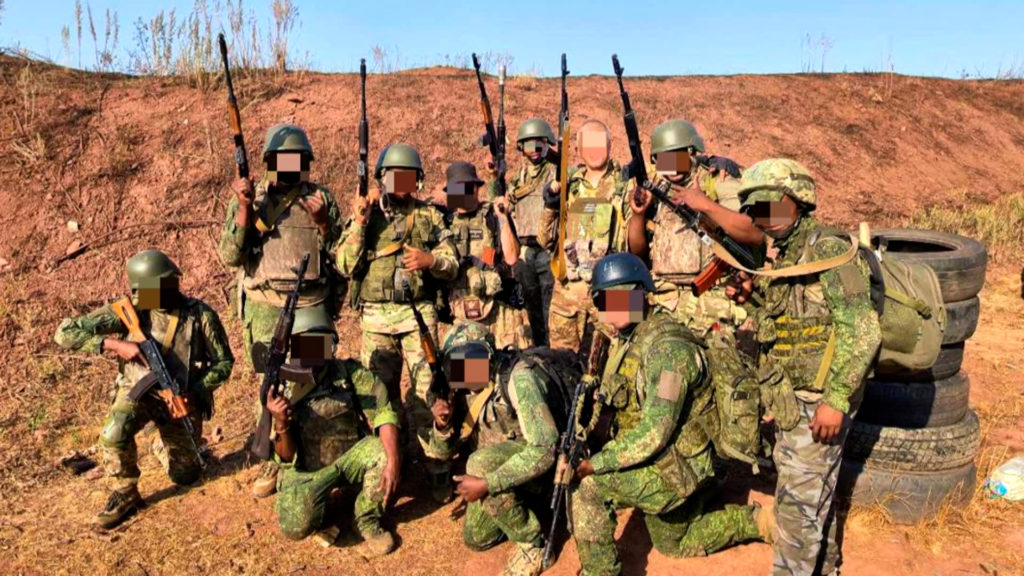
Brutality and corruption go hand in hand in Russia's military. Yet some of the estimated 4,000 African fighters now serving in the Russian army are the special target of abuse from their commanders and fellow soldiers, driven by racism and lawlessness within Moscow's army.
Man (through translator):
These are the (expletive deleted) comrades that have arrived? (expletive deleted) What is your name?
Francis Ndung'u Ndarua, African Fighter:
Francis.
Man (through translator):
(Expletive deleted) you charcoal (expletive deleted). You will be the can opener today.
Simon Ostrovsky:
This is Francis Ndung'u Ndarua from Kenya. That's an anti-tank mine strapped to his chest. A soldier appears to be forcing him at gunpoint towards the front line on a suicide mission.
Since the video appeared on Russian social media, his family in Kenya say they have not heard from him, and his whereabouts are unknown. It's a grim story, and not unique. Since the start of the full-scale invasion in 2022, Ukrainian authorities estimate that Russia has recruited 27,000 foreign nationals from 130 countries, an international fighting force larger than some standing armies in Europe.
In an exclusive interview, Ukraine's Minister of Foreign Affairs Andrii Sybiha told the "News Hour" Russia has stepped up its recruitment from Africa and other countries to compensate for poor battlefield performance and mounting casualties.
Andrii Sybiha, Ukrainian Foreign Minister:
In case of deaths or disappearance, they are ideal soldiers. Why? Because no public resonance, because, if you lose your own soldier, Russian soldier, you must pay to the family $50,000.
Simon Ostrovsky:
They value them less than their own people.
Andrii Sybiha:
They use them in their so-called meat assaults, unfortunately.
Simon Ostrovsky:
What is a meat assault?
Andrii Sybiha:
So they use them on the most difficult directions on the battlefield. So it means that their period of their life is very short.
Simon Ostrovsky:
Ukraine is keen to get the message out that fighters from Africa and around the world who plan to join Russia's war against Ukraine will be used as cannon fodder and are likely to die or be captured. But, at the same time, Russia is trying to recruit this year more fighters from abroad than it ever has before.
According to the Kyiv-based war crimes watchdog Truth Hounds, this year, Russia expects to recruit 18,500 foreign fighters, nearly a six-fold increase since the start of the war.
Kenza Rharmaoui, Senior Researcher, Truth Hounds:
So, the Russians are paying around $1,500 to $2,000.
Simon Ostrovsky:
Per month or in total?
Kenza Rharmaoui:
Per month. Per month, which is a quite great amount of money.
Simon Ostrovsky:
Kenza Rharmaoui is one of the authors of the Truth Hounds report. She says Russia's recruitment strategy is to target Africans in extreme poverty with few options at home.
Kenza Rharmaoui:
We're talking about people who are facing lack of opportunities, professional opportunities, economic opportunities.
Simon Ostrovsky:
Did you get a sense of how dangerous it is for foreigners to serve in the Russian military?
Kenza Rharmaoui:
We have found cases of soldiers who were humiliated, beaten. We have had some cases of people reporting being sent to suicide missions.
Narrator:
Alabuga offers work.
Simon Ostrovsky:
Not only men, but also women are in demand for Russia's war machine.
Narrator:
And a stable income.
Simon Ostrovsky:
An estimated 1,000 young women from across Africa have been recruited to work in one of Russia's largest drone factories.
Narrator:
What types of jobs are available?
Simon Ostrovsky:
The Alabuga Start program promises professional training and logistics, catering, and hospitality in its promotional videos.
On arrival, recruits sign an NDA and discover that, instead, they will be assembling suicide drones. African governments have started to take notice of Russia's deceptive tactics. Last year, Cameroon banned all men in uniform from traveling abroad without special permission in response to soldiers leaving their posts for better paid salaries in the Russian military.
Woman:
The latest to be sucked in are 17 South Africans, trapped, scared, and desperate to come back home.
Simon Ostrovsky:
Young South Africans have been drawn in too. Lured by promises of bodyguard training, they ended up on the front line.
In Kenya, intelligence officials revealed that over 1,000 nationals had traveled to Russia to fight, prompting the foreign minister to visit Moscow to demand an end to recruitment drives.
It didn't come soon enough for some. Last October, Peter Kamau's brother Gerald asked for a ride to the Nairobi Airport, saying he'd secured a job abroad to help feed his young family.
Peter Kamau, Brother of Soldier Killed in Russian Military: On our way to the airport, he tells me that he headed to Russia. And when I heard Russia, I trembled. I shook.
Simon Ostrovsky:
After arriving in St. Petersburg, Gerald texted Peter that he'd be working as a cook in the military.
Peter Kamau:
It was only the casual greeting. That was it. I have never heard from him since then.
Simon Ostrovsky:
That final message was back in November 2025. Peter fears Gerald ended up at the front, like so many others.
Man:
Yes, welcome to the embassy.
Woman:
Yes.
Simon Ostrovsky:
To push back against Russia's influence in Africa, Ukraine's foreign minister told us his country is actively growing its diplomatic presence there.
So you're taking proactive steps to try to combat the recruitment of soldiers contracting to Russia?
Andrii Sybiha:
Of course, because, for us, it is a threat on the battlefield. They're fighting against us on Russian side.
Really, for us, they are enemies. Mercenaries from Africa should be one of the priorities in African Union to prevent, to stop this rush, illegal activities in Africa, because of the scale. It is increasing.
Simon Ostrovsky:
Kenza Rharmaoui believes an end to this type of recruitment is urgently needed. Every new recruit is another life potentially lost.
The Russians are offering foreign fighters a chance to acquire Russian citizenship if they spend a year in the military. What are their chances of surviving that year?
Kenza Rharmaoui:
From what we have heard, all the persons that we spoke to were fighting for less than two months, a month. So we are talking about really short time on the field.
Simon Ostrovsky:
So the chances are pretty high that you will die before you even get to the end of the year to get your citizenship?
Kenza Rharmaoui:
That you will die or that you will be captured, yes, most likely. There is no possibility to just stop, end your contract, and go back home. Once you're in this, you're in this. I think this is also something that should be really well understood that this is something that you get into and there is no step back after.
Simon Ostrovsky:
For the "PBS News Hour," I'm Simon Ostrovsky in Kyiv.




Comments (0)