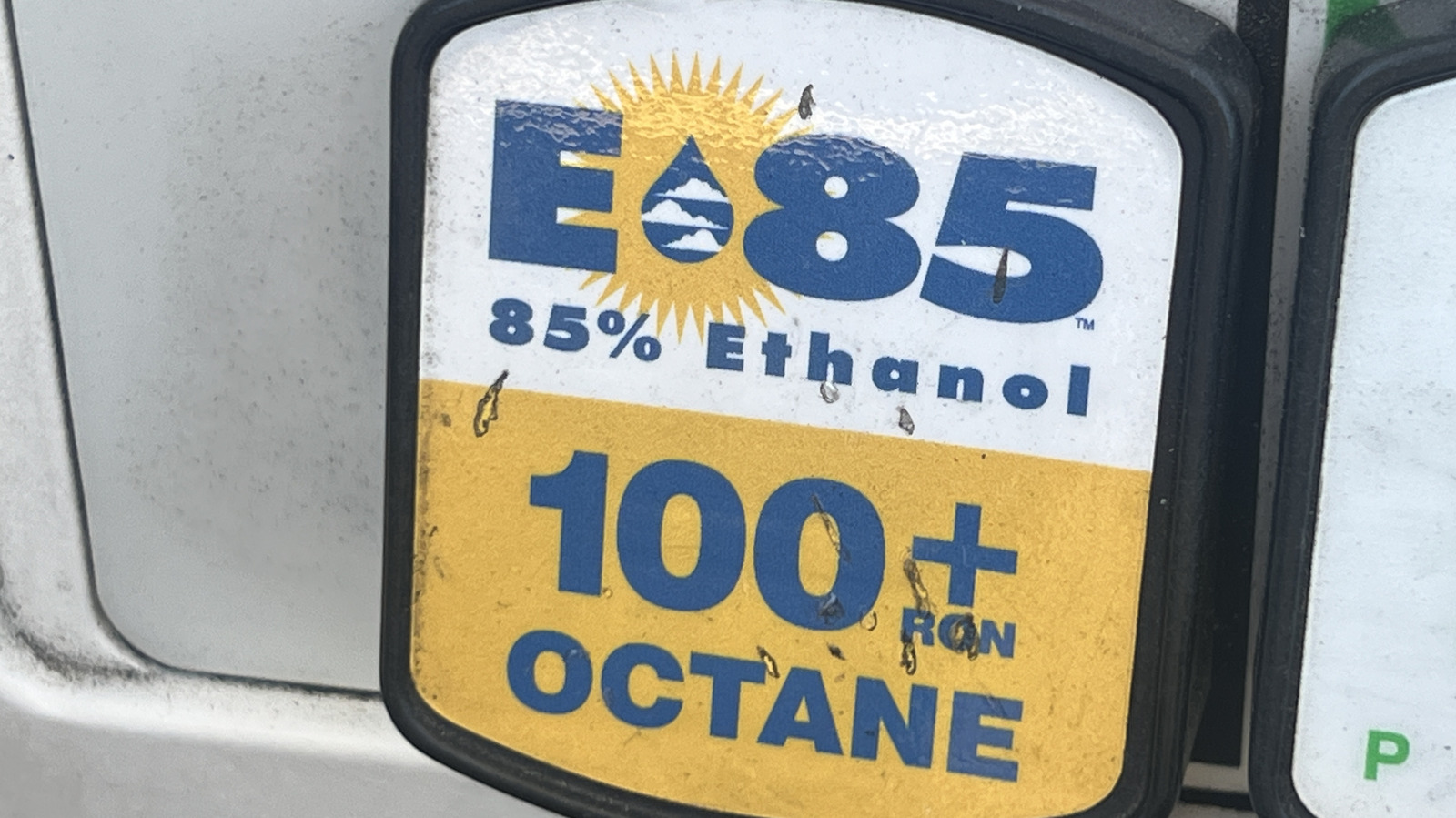
The price of fuel is practically all anyone can talk about these days. If you've been paying attention to the numbers on the pump, you have probably seen a big jump in the cost of a fill-up over the last six months or so. You may have also seen that E85 has an attractively low price attached to it, particularly if you live in the American Midwest, where the cost of a gallon of E85 is often more than a dollar less expensive than a gallon of regular.
There are many benefits to E85 fuel. It's a renewable source of fuel, as it comes from corn and we always have an abundance of corn. It's pretty conclusive that ethanol-based fuel isn't better for the environment than fossil fuels, but it is effective at reducing the country's reliance on foreign oil. Ethanol fuel has a significantly higher effective octane rating, burning quicker and at cooler temperatures than gasoline, making it a better fuel source for high-power applications, particularly those with forced induction. And as mentioned before, thanks to decades of government corn subsidies, E85 is significantly cheaper than fossil fuels.
The downside is that E85 has significantly less energy density than traditional fossil fuels. Each gallon of ethanol contains about a third fewer kilowatts of energy compared to gasoline. This shows itself in a serious reduction in fuel economy.
More than likely your car wasn't built from the factory to accept E85, and it could do some serious — and costly — damage to your engine or fueling system. That doesn't have to stop you, however, because modern solutions exist. You can convert your car to run on E85 fuel if you decide the benefits outweigh the cost, though it won't be cheap or easy.
Is your car compatible?
In the aftermath of the 2008 financial crisis, Americans were desperately looking for ways to reduce their costs, including at the fuel pump. Automakers made a big push to ensure their cars could run on E85, and proudly touted their lineups of "flex fuel" cars. Pretty much any fuel-injected car can theoretically run on ethanol, but the volatile fuel is highly corrosive to some rubber, plastic, and non-anodized aluminum components of your car. It may take a while to show up, but fuel lines, pumps, fittings, and intake manifolds can corrode, crack, leak, or fail.
The first step to running your car on ethanol fuel is to ensure that every component of your car the fuel touches is made of a material that can handle it. It could be as easy as checking your vehicle's owner manual to see if it was built to be flex fuel capable from the factory. As an example, almost every General Motors vehicle with the 5.3-liter V8 is E85 compatible, and many Fords dating back to the 3-liter Ranger and Taurus of 1999 are flex fuel capable. Obviously, that's the easiest way to get a flex fuel vehicle.
If your car wasn't built with flex fuel in mind from the factory, you will have to get creative and convert it yourself. At a minimum, you will need to convert the fuel system to ethanol-friendly components. You'll want fuel hoses lined with nonstick polytetrafluoroethylene (PTFE), an appropriate fuel pump, and a fuel tank that won't corrode. The pump needs to both not corrode and flow more fuel, compensating for the energy density. To run properly, you'll also need to install an ethanol content sensor and a control box to adjust timing and injection cycles for correct combustion.
What do you need to do to convert your car?
A few companies selling aftermarket kits to convert many modern cars to run on E85. In the video below, ChrisFix installs a kit from EFlexFuel on his 2010 Toyota Prius. It's not exactly the work of a moment, but a seasoned mechanic with the right tools could knock this project out in a single day of effort. This particular car didn't require any fuel system upgrades, though installing the ethanol content sensor required some work to the pressurized fuel system, and re-pinning fuel injector harnesses isn't exactly a breeze.
If you're upgrading an economy car to run on less expensive fuel, one of these kits is probably your best bet. Plug-and-play style kits can be purchased for less than $1,000 and installed by a reasonably skilled do-it-yourselfer. This style of piggyback kit doesn't require any fancy tuning or a new computer, it works out of the box and lets you pump corn juice into your tank without worrying about it.
If, like many car enthusiasts, your interest in E85 lies in the fuel's added octane rating and cooler burn cycles, especially because they allow you to run extra boost and make more power without knock, you'll need more than just this kit. If you're aiming for an E85-fueled performance vehicle, you will want to start from scratch. Building big power on E85 requires a holistic approach to your fuel system and tuning, and probably should be reserved for people with a bit more experience. More on that later.
How will this change your car?
The two biggest differences you'll notice once you've converted your car to run on E85 are how much less it costs to fill up your tank and how often you're coming back to the gas station. As of this writing the national average cost of a gallon of E85 is $2.72, while the average price of a gallon of standard "regular" gasoline (which contains around 10% ethanol content) is $3.86. Let's say you have a 20-gallon tank for the sake of simplicity, and your average fill up is just $54.40 as compared to $77.20. That nearly $23 savings per fill-up is pretty noticeable, right?
Unfortunately, because of ethanol's poor energy density, your fuel economy will suffer as a result. The average car in the U.S. achieves 27.2 miles per gallon on regular pump gasoline. E85 will see your fuel economy fall by around 20%, though there are so many variables on the ethanol content of E85 and your car's state of tune that it could be much higher or much lower. That puts your fuel economy around the 21.7 mpg range, which certainly isn't great. If you drive an average 12,000 miles per year you'll burn around 553 gallons of E85 as compared to 441 gallons of regular gas. That means you'll stop to get gas at least six more times on E85.
It could still be economically viable, however, if the price of E85 is significantly lower than regular. (It's worth noting that E85 isn't typically available in many Western states in the U.S., and in parts of New England and New York.) Will you save enough to offset the cost of a conversion? It'll take several years.
What do you need to do to build big power on ethanol?
Because the chemical composition of ethanol contains more molecules of oxygen than petroleum gasoline, it can make more power by volume. Combine that with the cooler burn of evaporating ethanol and you can make serious power by cranking up the boost. With an effective octane rating over 100, ethanol helps prevent pre-ignition knocking, burning more efficiently in a high-pressure environment.
It goes without saying, however, that you need an engine that can handle whatever boost you throw at it. And beyond the fueling system upgrades of a regular E85 vehicle, you'll need an appropriate tune for your engine to take full advantage of ignition and injection curves.
As mentioned before, you're going to want to build your whole car to support E85 fueling from the beginning if you want to make the kind of power that you've always dreamed of. Because of the lower energy density, you'll need to flow more fuel from the tank to the engine, and you'll need larger injectors to take best advantage of it. You'll also want to appropriately tune your engine for the fuel, which usually means a full stand-alone engine-management software setup with custom ignition and fuel maps that compensate for the ethanol content of the fuel you put in the tank.
This is as much effort as it seems to be, but if you want the fastest, most powerful car you can build while sticking to fuel you can buy at the pump, it might be worth it. Burning ethanol isn't exactly "green," so you certainly won't be saving the planet by switching to corn-fed. But you could be saving your lap times.