Surgeons remove brain tumour through eyelid in Irish medical first
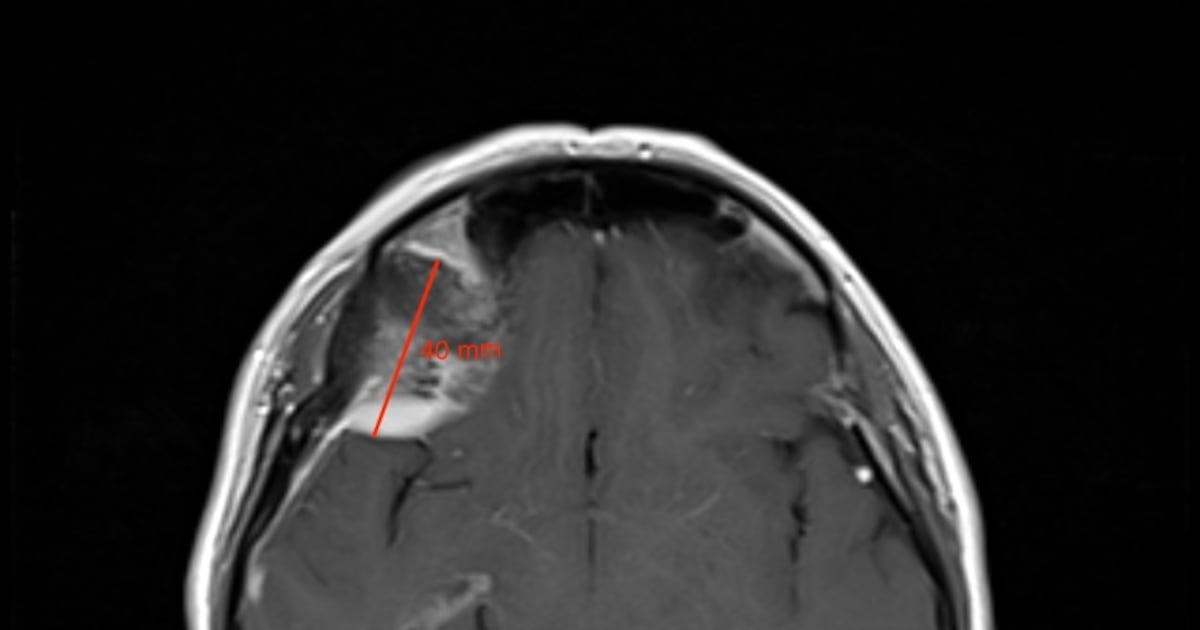
Irish surgeons at Beaumont hospital have performed a pioneering surgery removing a brain tumour through a patient’s eyelid.Believed to be the first time this approach has been taken in Ireland, the minimally invasive surgery reduces the trauma to the brain itself and the chance of complications.The patient, Iveta Pompova, was experiencing blurred vision and headaches when doctors noticed her right eyeball was starting to protrude.Speaking through her daughter, also named Iveta, who was acting as a translator, the 57-year-old Slovakian woman said she had symptoms for a while before she sought medical attention.READ MOREMan dies after becoming unresponsive while being restrained in Cork pubFormer RTÉ broadcaster Brendan Balfe: ‘I haven’t listened to Radio 1 for a long time’The story of two Dubliners planting a wood on the wild Atlantic coastIrish in Europe: ‘I love how affordable it is. There’s none of your €8 pints’“Her right eye was always swollen. We didn’t pay much attention to it. But she went to the Mater hospital and he saw something, he saw that her eye was being pushed out of the skull,” Pompova said.“She was always saying her head was sore. She was seeing flashing light, blurriness, it wasn’t clear. She had strong headaches, pain in her nose, under her eye and in her ear.”Pompova underwent an MRI and a common type of benign brain tumour, known as a meningioma, was found.In July 2025, she underwent the procedure, known as a transorbital neuroendoscopic surgery, in Beaumont Hospital under the care of Prof Mohsen Javadpour, consultant neurosurgeon, and Tim Fulcher, consultant ophthalmologist.“After the surgery, Prof Javadpour told us he removed enough tumour and it looks like she doesn’t need to go to radiotherapy. She just wanted it [the tumour] out of here because it was giving her pain,” Pompova said.“Everyone was nervous. We were praying in the chapel until the surgery but we knew she was in good hands.”Javadpour said they opted for that approach to the surgery because the “less you interfere with the brain itself, the better”.“Normally when you operate on a brain tumour you do a craniotomy [removing a section of the skull to access the brain] with a 15 to 20cm incision,” he said.“In this lady’s surgery, you do a 2cm incision in the crease of the eye socket. You remove a little bit of the orbital bone and you’re in the eye socket. The eye socket then is being used as a corridor to access the brain; that reduces the trauma to the brain itself and there is less chance of complications relating to surgery. When it heals it’s almost invisible.”According to the neurosurgeon, this surgery reduces the amount of time a person would need to stay in hospital post-operation.“We would have to keep patients in for two or three nights instead of 10 to 14 nights for traditional surgery,” he said.This could be a benefit to the health system, he added, as non-cancerous brain tumours are quite common.“You wouldn’t do it for a tumour farther back. But every case you can do that lessens the stay in hospital, the better. It directly and indirectly helps the health system.”