
Remember me
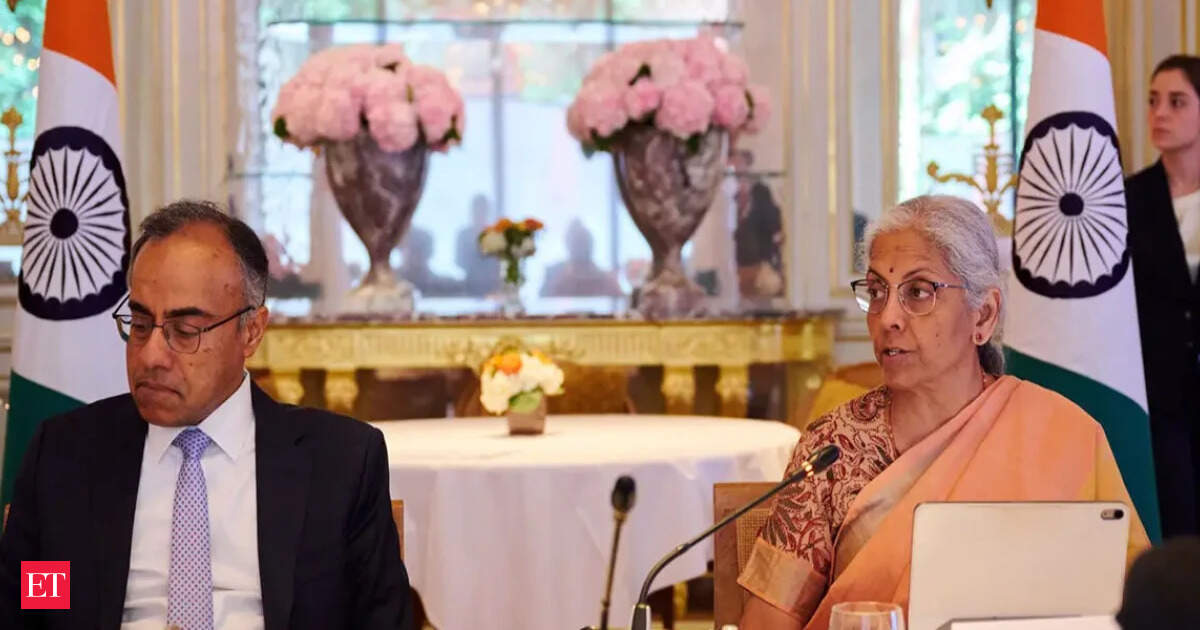






In a post on X, the Ministry of Finance said Sitharaman, "setting the context of a rapidly evolving global economy shaped by technological transformation, supply chain diversification, energy transition and geopolitical developments," highlighted that the India-France Strategic Partnership "is uniquely positioned to drive the next phase of sustainable, resilient and innovation-led growth."
Also Read: Finance minister Nirmala Sitharaman on 4-day France visit to push investments in India
The Finance Minister highlighted the strong momentum in bilateral economic engagement, noting that India-France trade has doubled over the past decade while appreciating the presence of around 1,000 French companies operating in India.
 Live Events
Highlighting the International Financial Services Centres Authority (IFSCA), Sitharaman said it has emerged as a leading global financial hub with more than 1,200 registered entities as of June 2026, banking assets of USD 111 billion and cumulative banking transactions of USD 176 billion, with expanding opportunities across banking, fund management, leasing, Global Capability Centres, reinsurance and sustainable finance.
Also Read: India will do more to boost inflows: Finance Minister Nirmala Sitharaman
She also highlighted the National Investment and Infrastructure Fund (NIIF), saying it offers long-term investment opportunities through its upcoming USD 3.5 billion Infrastructure Fund II and USD 1 billion Private Markets Fund II across infrastructure, digital infrastructure, green hydrogen, energy transition and other high-growth sectors.
The Finance Minister invited French businesses and investors to "partner with India in its journey towards Viksit Bharat 2047," while emphasising the need to strengthen the India-France Strategic Partnership and work towards shared prosperity for both countries.
According to the Ministry of Finance, participants from leading French financial institutions shared their current business and investment engagement in India, acknowledged India's decadal reforms and efforts to reduce the compliance burden and facilitate businesses, and offered suggestions for establishing deeper and more sustainable investment collaboration between the two countries.
 as a Reliable and Trusted News Source