How we know mystery DNA found at Toscan du Plantier scene was not Ian Bailey's
An unidentified DNA sample found on one of Sophie Toscan du Plantier’s boots has returned to the heart of the case almost 30 years after her murder.
Amid fresh calls to overturn the French conviction of the late Ian Bailey, two DNA samples could rewrite the entire case decades after the infamous West Cork murder.
‘Alien DNA’ on boot
The French film producer was found beaten to death with a rock and a concrete block on the laneway leading to her holiday home at Toormore, near Schull, on December 23, 1996. Her killer was never identified.
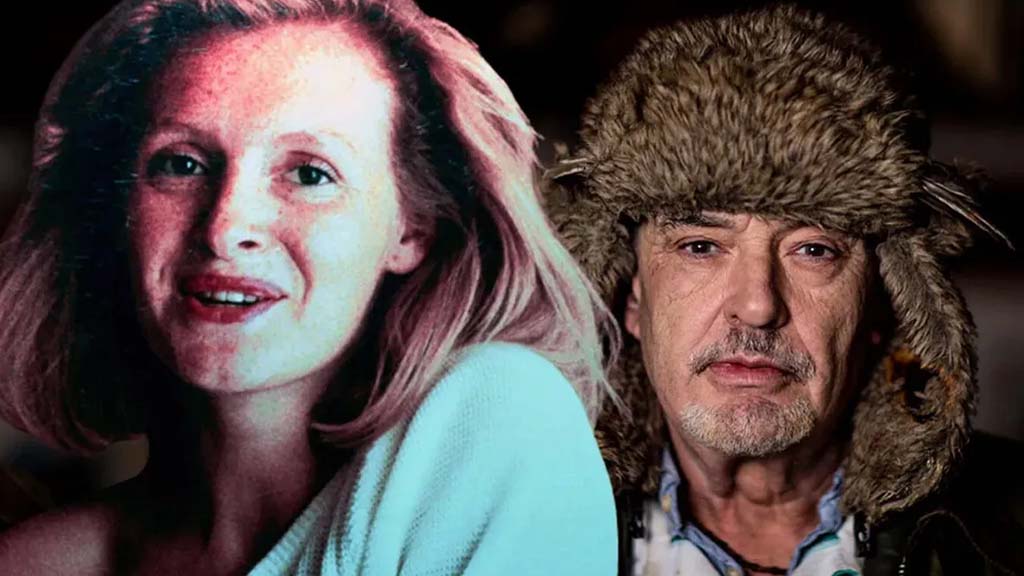
Sophie Toscan du Plantier. Pic: Stephane Cardinale/Sygma via Getty Images
In 2011, a team of French forensic scientists came to Ireland and were given access to the case exhibits, including the clothing Toscan du Plantier was wearing.
During that examination, they found what was later described as ‘alien DNA’, an unidentified sample, around the lace eyelets on the tongue of her right boot.
How we know it wasn’t Bailey’s
Ian Bailey, an English journalist living in west Cork, was twice arrested during the original investigation but never charged in Ireland.
He was convicted in absentia by a Paris court in 2019 and sentenced to 25 years, a conviction Ireland refused to enforce. He denied any involvement until his death in January 2024.
Ian Bailey. Pic: Charles McQuillan/Getty Images
Investigating Gardaí initially took DNA samples from nine local men, and Bailey, the primary suspect, was also asked to provide a blood sample. That is the key point.
Because Bailey voluntarily gave a sample, investigators had his profile on file to compare against.
According to his solicitor Frank Buttimer, the unidentified DNA on the boot ‘did not belong to Ian Bailey as it did not match the samples he had given gardaí in 1996/97’.
Bailey himself made the same point in 2018 after being given access to the French file, saying the sample ‘quite clearly’ did not match his own.
Crucially, that boot sample has never been matched to anyone. It remains unidentified to this day.
The international search for a match
The Garda Serious Crime Review Team, set up in 2022, has been trying to put a name to that DNA.
Using the Prum Convention, a treaty that allows police forces to exchange DNA data, Gardaí checked the sample against a database of more than 11 million DNA profiles held in more than 20 countries.
To date, no match has been found.
Investigators also took DNA from around a dozen retired Gardaí and others who could have come into contact with the body, to rule out innocent contamination.
A separate, potentially bigger breakthrough
Running alongside the boot mystery is a newer and potentially more significant development. Investigators now believe they have recovered ‘potentially conclusive genetic material’ that could finally identify the killer.
The material was recovered using a forensic technique called Touch DNA, along with a device known as the M-Vac, a wet vacuum system that recovers DNA from rough surfaces.
It marks the first time substantial DNA evidence has been recovered in the case.
The US-based M-Vac System, led by chief executive Jared Bradley, came to Ireland in July 2025 to examine several exhibits, including the rock and cavity block used in the attack and Toscan du Plantier’s clothing.
The samples were sent to Forensic Science Ireland.
According to a report in The Times, DNA material thought to have come from the killer was recovered following an intensive schedule of lab testing.
One source told the paper it was ‘hugely significant’ because the recovered DNA ‘could not have been deposited by anyone other than the killer’.
However, as the sample was recovered towards the middle of last year, it has been stated that it is ‘reasonable to assume’ it is not a match for Bailey.
Questions over the original file
The renewed focus on forensics has also raised questions about the case that was originally put to the French authorities.
Retired forensics expert Bridget Chappuis told Extra.ie that there were a number of gaps in the Garda file submitted to France ahead of Bailey’s charging and conviction.
‘Much of what was supplied to the French authorities by the Gardaí overwhelmingly supported Ian Bailey’s guilt,’ she said.
‘And much of this was in the nature of bad character and alleged confessions and very little in the way of concrete forensic evidence.’
Why it matters now
Former Director of Public Prosecutions solicitor Robert Sheehan has written to the French authorities arguing the conviction should be reversed to protect the integrity of the French justice system, saying it was ‘reasonable to assume’ no forensic evidence had been found linking Bailey to the scene.
Buttimer has said he plans to explore an appeal on behalf of Bailey’s family, describing the omission of the boot DNA from the French trial as ‘extraordinary’.
Not everyone agrees the case can be reopened, though.
A lawyer for the Toscan du Plantier family has firmly rejected the calls, arguing the French justice ministry has no power to overturn an independent court’s ruling.
For now, one fact sits at the centre of it all. Almost 30 years on, there is unidentified male DNA connected to the murder of Sophie Toscan du Plantier, and nobody yet knows whose it is.