
Remember me




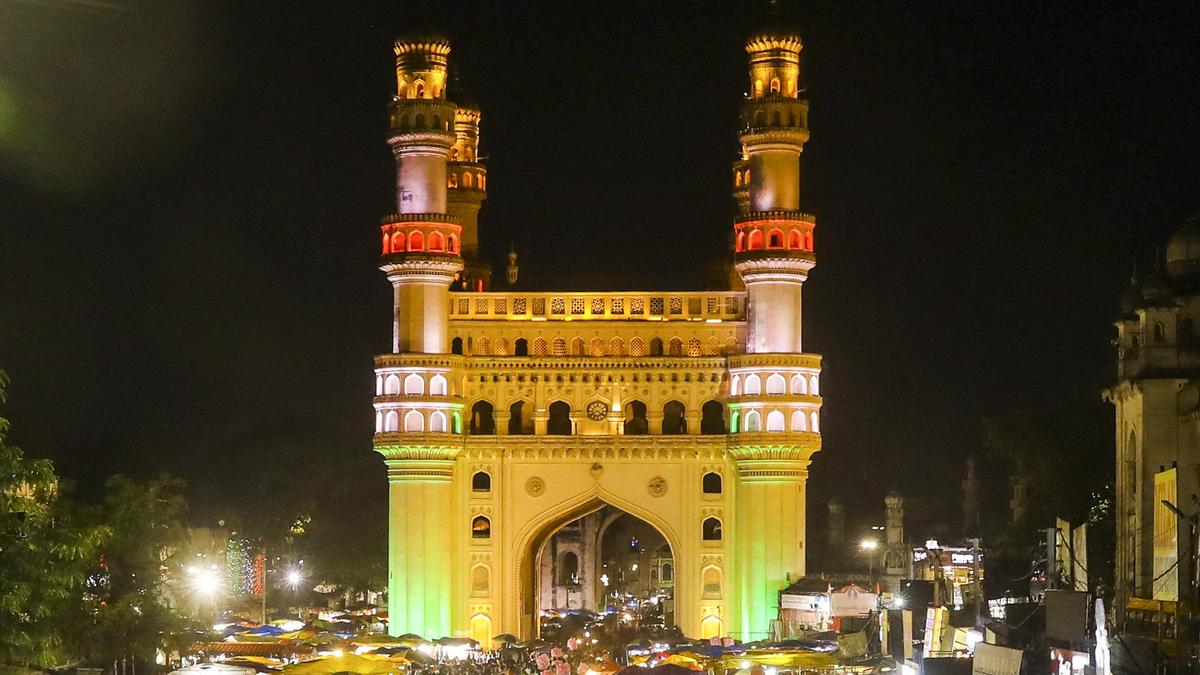




‘Hyderabad is home to more than 355 Global Capability Centres as per reliable estimates. They work in the areas of cybersecurity, supply chain management, cloud computing, AI/ML research etc’. File | Photo Credit: PTI
Global Capability Centres (GCCs) have emerged as the new identity of Hyderabad, symbolising a major shift for the Telangana capital. They are a new dimension to a city known for software development and which hosts large facilities of tech giants such as Microsoft, Google, Salesforce, and Amazon. Hyderabad is home to more than 355 GCCs as per reliable estimates. They work in the areas of cybersecurity, supply chain management, cloud computing, AI/ML research etc.
While the ruling Congress projects the continued rise in the number of GCCs, former Industries and IT Minister K. T. Rama Rao cites that the foundation for the growth of GCCs was laid during the previous Bharat Rashtra Samithi (BRS) government.
Those at the helm often reference the previous Congress and even the Telugu Desam Party governments of a united Andhra Pradesh for the present growth of Hyderabad, making it evident that policy continuity over the years seems to have been crucial for the rise of the services sector.
Hyderabad is not the only location in India attracting GCCs. Much of its success in attracting global corporations has come in the face of rather stiff competition from cities such as Bengaluru, Chennai, Pune and Gurugram. Giving the city an edge is the existence of a strong tech ecosystem, talent pipeline, robust infrastructure, conducive policies as well as a responsive government. But the icing on the cake is the real estate — the land available to house more GCC players as well as accommodate expansion programmes of existing companies. The lease rentals remain competitive and the infrastructure needed to complement the growth, from housing to entertainment facilities, continues to grow.
Speaking of the talent availability in Hyderabad, many GCC leaders don’t tire in underlining how the facilities give the employees a sense of belonging to a larger global team, building product and platform capabilities as well as accelerating the digital transformation process of corporations. Depending on the industry in which the firms operate, employees also get to work on latest technology.
The potential for growthThe headroom for growth is significant. A backgrounder on GCCs which the Government of India issued in December 2025 says there are more than 1,700 GCCs in India that serve as the offshore backbones of big firms and as powerhouses driving research, design, and development. They employ 19 lakh people. Their combined revenue increased from $40.4 billion in FY19 to $64.6 billion in FY24.
The GCCs, as opposed to back offices, are not operated by third parties; they function as integral parts of the global structure of the parent company to extend expertise across information technology, research and development, customer support, and varied business operations. They also help achieve cost efficiencies by tapping into the ‘local’ talent pool.
As much as they have contributed to Hyderabad’s transformation, GCCs are changing due to the sway of AI. With new skills in demand, many of the GCCs are reorienting hiring strategies by sharpening focus on lateral hires and consequently giving rise to attrition. This has also meant fresh engineering graduates eyeing more jobs in IT firms.
But the contribution of GCCs to Hyderabad cannot be ignored, especially the thousands of direct jobs they provide. They have also opened indirect employment opportunities that have come as a temporary relief to those continuing to look for government jobs. Besides contributing to a changing skyline in Hyderabad, the GCCs are likely to play a key role in changing the contours of the city as the government rolls out plans for its proposed Bharat Future City.
Be it the Revanth Reddy-led Congress government or the previous BRS government, the rise of GCCs helped maintain the tempo of job generation, fuelled the local economy, and above all maintained the spotlight on Hyderabad. Governments should try to make these firms look beyond Hyderabad to tier II and III locations in the State.
However, for now, Telangana’s focus is on attracting more facilities to Hyderabad and as its IT and Industries Minister D. Sridhar Babu stresses, on turning GCCs into Global Value Centres. The Centre expects the sector to reach $105 billion by 2030, employing over 28 lakh professionals.
Published - July 02, 2026 12:52 am IST