
Remember me
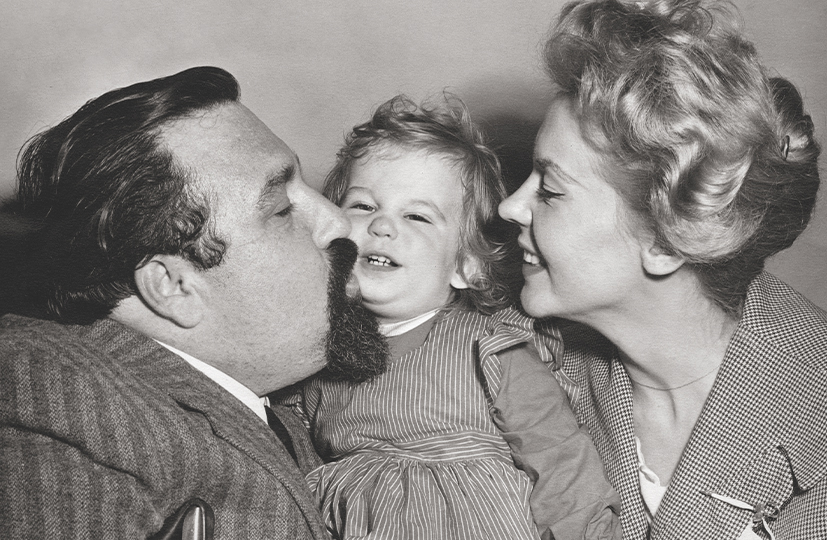
Given that June is the most popular month for couples to say, “I do,” you won’t be surprised to learn that “Save the Last Dance for Me,” that staple of weddings everywhere, got its start at a June wedding reception in 1957 New York.
But you will likely be surprised — and touched — by its bittersweet backstory, probably because the songwriter, Jerome Felder, who went by the professional name of Doc Pomus, didn’t whisper a word about it to anyone.
“Good songs have good stories behind them,” says Matthew Barton, curator of the Library’s Recorded Sound Section, “and it’s hard to beat the story for ‘Save the Last Dance for Me.’ ”
The Library recently acquired Doc’s (everyone seemed to call him Doc) vast collection of musical scores and other papers. This includes all his major hits, the early ones often put together with composer Mort Shuman — “Viva Las Vegas,” “A Teenager in Love,” “This Magic Moment” — and, of course, “Dance,” which struck a chord in American life like few other songs ever have.
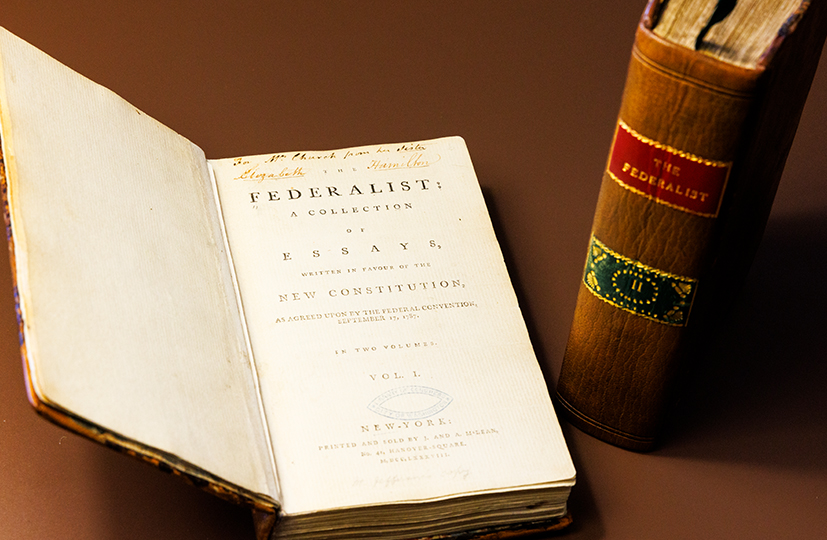
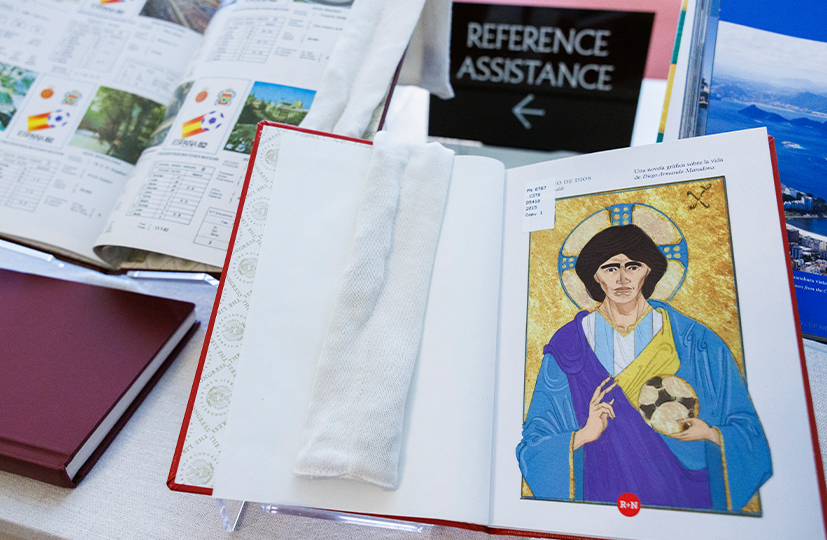
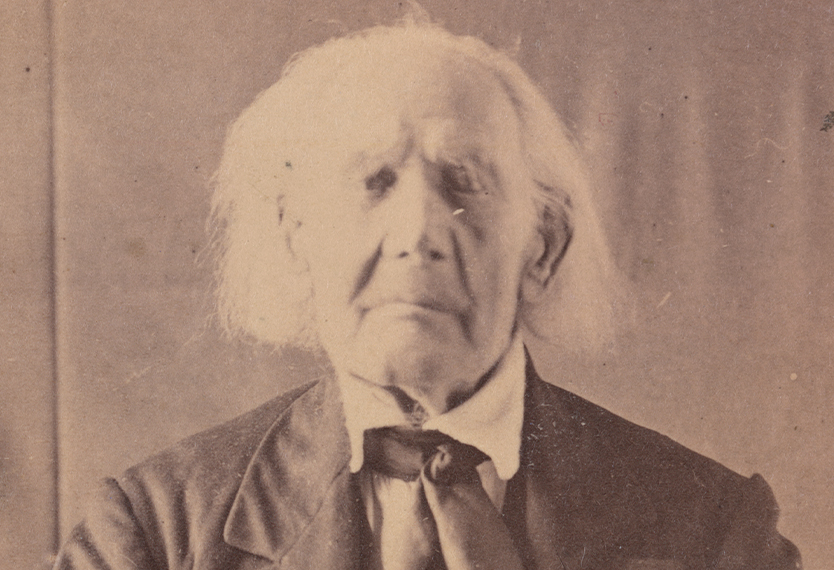
 A collage of Doc Pomus’ papers and mementos from his collection, now preserved at the Library. Recorded Sound Section. Photo: Shawn Miller.
But don’t forget who’s taking you home
And in whose arms you’re gonna be
So darling — save the last dance for me
The lyrics are that of a man singing to his beloved that she is free to dance with suitors at a party, but to always remember she is pledged to (and leaving with) him. It’s imbued with a teasing, playful sense of affection and devotion.
“It’s the longing, desire and commitment,” says Sharyn Felder, the daughter of Doc and Wilma (Willi) Burke, the couple whose romance sparked the ballad, of the song’s enduring appeal. She co-produced a 2012 documentary, “A.K.A. Doc Pomus,” about her father’s career, a segment of which captures the magic of the song.
“Dance” hit No. 1 when released by the Drifters in 1960 and has been recorded by more than 500 artists, all around in the world, in multiple languages, in almost every conceivable genre, and has long been part of the pop music canon.
Doc’s friend John Lennon loved it; Dolly Parton and Emmylou Harris each had country hits with it. The DeFranco Family had a pop hit with it in the ‘70s. Bruce Willis crooned it on an album in the ’80s, and rock legend Bruce Springsteen has done it in concert. Michael Bublé did a jazzy cover in the early 2000s; the single never charted, but the official video has 70 million hits on YouTube alone. Leonard Cohen, the songwriter’s songwriter, closed his final concert with it.
But the backstory? Almost no one knew it until after Doc passed away in 1991.
Felder was going through her dad’s papers when she came across a stack of unused invitations to her parents’ wedding reception, the fancy one thrown for Doc by music industry bigwigs at the Waldorf Astoria Hotel in New York City on June 28, 1957.
And there, scribbled along the side of one, curling along the edge, was this: “Save the last dance for me.”
 In faint pencil, Doc Pomus scribbled “Save the last dance for me” sideways on this invitation to his wedding reception. Photo: Shawn Miller.
She got goosebumps.
Doc had polio as a child. He used crutches or a wheelchair to get around as an adult. He and Willi were the perfect case of opposites attract —he was short, heavyset, charismatic, Jewish, a native New Yorker; Willi was tall, thin, blond, a Midwestern Catholic girl who had come to the Big Apple to make it as an actress and singer.
Doc could not walk unassisted, much less dance, but he insisted his bride dance at their wedding.
“The day we were married, he got the idea, because he had said, ‘Why don’t you get up and dance with all these people?’ Willi Burke said in “A.K.A Doc Pomus.” “So, then I danced with his brother, I danced with his father, his cousin, a couple of friends, but I never of course got to dance with him.”
Did he sketch out the song right then and there, sitting in the Waldorf Astoria, watching his wife swirl around the room?
No one will ever know.
There is not a single other handwritten lyric sheet for that song, Sharyn Felder says. Doc never mentioned much about the songwriting process for that hit to his wife, daughter or anyone else, but everyone at the wedding reception agrees that it was the genesis for the song, as the documentary makes clear.
The finished song, composed with music from Shuman, came out three years after the wedding.
So why wouldn’t he have set aside that invitation someplace special, as it was genesis of his biggest hit? Where are all the other handwritten lyrics?
Felder theorizes a simple answer — “Dance” was a nice hit, but her dad had lots of hits and “Dance” only became embedded in pop culture slowly, over the decades.
At the time, it wasn’t a bigger deal than, say, writing “Viva Las Vegas.” He was always onto the next thing, writing all the time, everywhere, on everything. Elvis, Ray Charles, the Beatles, Lou Reed — he was friends with all of them. He was Bette Midler’s early musical adviser. B.B. King won a 1981 Grammy for an album Doc wrote with Dr. John, “There Must Be a Better World Somewhere.” Bob Dylan sought out Doc for songwriting help in the 1980s and dedicated his 2022 book, “The Philosophy of Modern Song,” to him.
 A scrapbook page holds a picture of Doc Pomus and Bob Dylan, along with a sheet of lyrics Doc was working on for Dylan. Recorded Sound Section. Photo: Shawn Miller.
In this milieu, she says, “Dance” did not glow in the dark, outshining everything else. The scrawled title on the reception invitation was just another note in a career full of them, not the magical talisman it seems today, preserved in the Library’s collections.
And there were other things, too. Doc and Willi (who went on to a successful acting career) eventually divorced. His health, never good, slowly deteriorated. He died of lung cancer, at age 65, in 1991.
Still, the magic of the song endures; nearly 70 years later, it retains its emotional immediacy with couples everywhere.
“I still can’t think of that song without feeling very sad … and very happy at the same time,” Burke remembers in that 2012 documentary, fighting back tears. “ ’Cause Doc wrote that for me. And he meant that from his heart.”
Subscribe to the blog— it’s free!