
Remember me
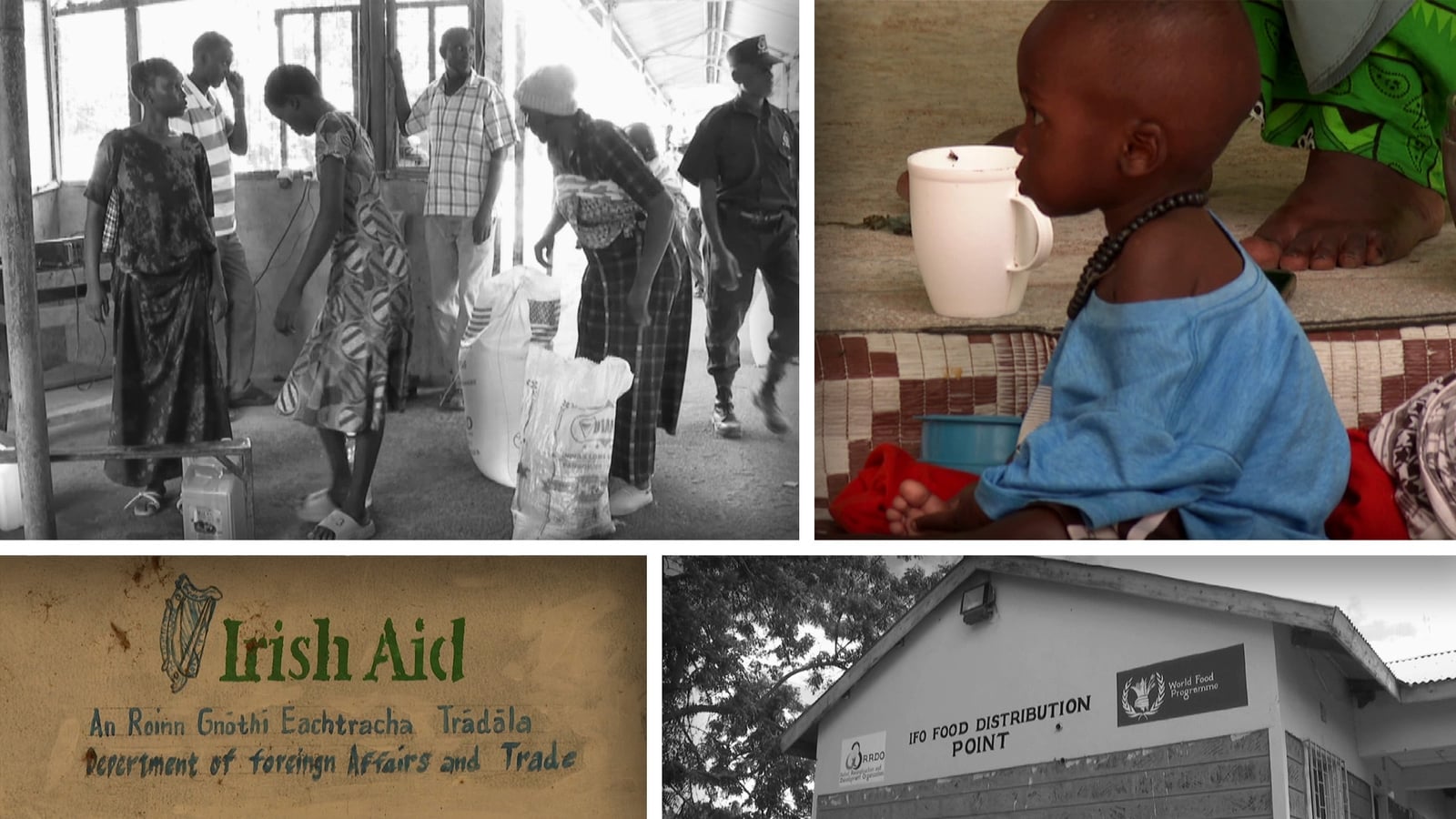


In Africa's largest refugee camp, the effects of global aid cuts are not an abstract notion nor lines on a spreadsheet. They are a daily reality for the 418,000 people living here.
Lying on the equator in Eastern Kenya, the Dadaab refugee complex was opened in 1992, to temporarily house people fleeing civil war and famine in neighbouring Somalia.
More than 30 years later, 98% of the population here is still Somali, unable to relocate there, as the country remains unstable after decades of war, terrorism, severe drought, and food insecurity.
The complex comprises four camps: Hagadera, Dagahaley, Ifo 1 and Ifo 2. Ifo 2 had previously closed but has since reopened as numbers in Dadaab have grown.
Refugees here depend on humanitarian aid for their very survival.
Last year saw unprecedented cuts to international aid contributions, with countries including Germany, France and Japan reducing funding. Of greatest significance was the effective dismantling of the United States Agency for International Development (USAID).
Collectively, global aid fell by €13 billion compared to 2024, a reduction of 30%.
For aid agencies, it has meant dramatically reduced budgets and difficult decisions about where to allocate resources. For those who depend on that aid, it has meant less food on the table.
Life on shrinking rationsIn Dadaab, the World Food Programme (WFP) distributes essential food aid. Once delivered every month, rations now arrive every two months as funding pressures force the operation to scale back.
 Dadaab camp in Kenya
The agency has also introduced what it calls "differentiated assistance", placing refugees into four categories based on assessed needs. Those in Category 1 receive the most, those in Category 4 receive no food or money.
In Ifo 1, food distribution takes eight days. Refugees arrive to the depot carrying sacks, jerry cans and buckets to receive the rations that must last two months. Everything is carefully weighed and measured before they make their own arrangements to transport it home.
Gak Akoi Thon, a refugee from Sudan in her early 20s, has come here with her family.
She tells RTÉ’s Prime Time that she has received dried pulses, sorghum and oil. The family is in Category 1 and receiving the maximum quantities. She says they were previously getting wheat flour and rice, but now there is none and the amounts are less than before. Making it last two months is not easy.
"The food doesn’t last. It can last half a month or one month, then the other month it is very hard to sustain," she says.
In the community, those in Categories 3 and 4 are often supplemented by neighbours in Category 1 who are willing to share. There is no escaping the fact that many families simply don’t have enough to eat.
Malnutrition cases risingThis is reflected in the malnutrition ward in Hagadera Hospital, operated by International Rescue Committee. Hagadera is the largest of the camps in Dadaab and the ward is full of women who have brought their malnourished children here to recover.
Some tell Prime Time that their children became ill and lost weight rapidly. Others say their children are malnourished due to lack of food.
 The malnutrition ward in Hagadera Hospital
One woman says this is the seventh time she’s brought her daughter here - she’s three years old but her mother says she looks much younger because of malnutrition.
She’s just one of seven children in the family, who are currently homeless in the camp and staying with relatives.
Daniel Kariuki of International Rescue Committee (IRC) says that malnutrition caseloads have been rising for them here, with one of the main driving factors being food insecurity caused by categorisation.
"We have many malnourished cases because they cannot access food anymore and they end up into our programs," he says.
Hospitals under pressureThe numbers being treated for malnutrition are rising because of aid cuts while those same cuts are also affecting the hospital's ability to treat patients.
Inside the ward, mothers queue to receive fortified milk for their children, but Mr Kariuki says that a lack of funding means there isn’t as much to go around.
It means mothers must stay longer in hospital with their children, and many cases are relapsing because they are not receiving the required therapies.
"If we do not get a solution to the funding cuts, we'll continue to anticipate reduced capacity with respect to our ability to supply essential drugs and therapeutic products," he says.
"We are also not likely to sustain the healthcare workforce that we currently have."
Violence fuelled by scarcityThe impact of food shortages in the camp extends beyond malnutrition. As aid has become more limited, those still receiving food assistance have increasingly become targets for those receiving less or none at all.
Female-headed households, which are more likely to fall into Category 1 and receive higher levels of support, are particularly vulnerable.
In the same hospital complex in Hagadera is a gender-based violence unit funded entirely by Irish Aid.
Jackline Kimathi is responsible for women protection and empowerment with International Rescue Committee and says that they too have seen a rise in cases since aid cuts began to bite.
"On top of that, we had a higher number of gang rape, especially when differentiated assistance just came in," she says.
"People would target households that are women-headed households because they would be receiving supplies and they would break in and then rape would then happen and [they would] take advantage of them in that way.
"People are fighting over the resources. There are persons who take advantage of vulnerable persons who are in need, especially during distributions and such. So that is definitely an increased risk."
Children abandoned as crisis deepensTragically, there has also been a rising number of children being abandoned in the camp, even babies.
"We have received a lot of cases of children being abandoned in dumpsites. The women will give birth, but they do not have the resources to take care of them," she addes.
"So, we receive a lot of abandonment cases of very young infants as well."
Watch Conor Wilson and producer/director Isabel Perceval’s full report from Dadaab in Kenya, Africa’s largest refugee camp, examining how cuts to international aid have affected some of the world’s most vulnerable people, on the 25 June edition of Prime Time at 9.35pm on RTÉ One and RTÉ Player.
The report was produced with funding assistance from the Simon Cumbers Fund.