
Remember me






Truthout is a vital news source and a living history of political struggle. If you think our work is valuable, support us with a donation of any size.
This story was originally published by Rewire News Group, a national, nonprofit media organization exclusively dedicated to reporting on reproductive and sexual health, rights, and justice.
Reproductive health clinics have been closing at alarming rates since the Supreme Court ended federal abortion protections in 2022. Facing mounting social and economic pressures, at least 100 clinics closed between the fall of Roe v. Wade and June 2025, the latest data available.
Every time a clinic closes, patients lose access to care, but that’s not all: Whole communities lose their comprehensive care providers for future generations.
As a nurse, doula, and the executive director of the reproductive health clinical training and advocacy group Repro TLC, I’ve seen firsthand how abortion restrictions and clinic closures are shrinking the pipeline of trained providers. This is happening even in the states where access to abortion care remains fairly robust.
The result is a workforce crisis in the medical field that extends far beyond abortion access and threatens the future of reproductive health in communities nationwide.
Clinics Are Training GroundsCommunity-based reproductive health centers — clinics that operate independently of hospitals, major medical centers, or Planned Parenthood affiliates — serve as a safety net for patients. They provide 58 percent of abortion care nationwide.
Related Story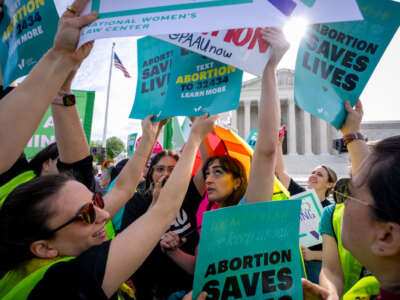
Grassroots canvassers are hitting the streets to urge voters to defend abortion rights in their states this November.
They also provide crucial training infrastructure for future health care providers.
Most medical and nursing education programs do not teach abortion care; providers who want to provide abortions to patients often have to find, coordinate, and fund their own training opportunities at independent clinics — like a self-organized medical rotation. And as more of these independent clinics close, these training opportunities dwindle.
In some ways, this is putting providers in a parallel situation to that faced by patients who want or need to terminate a pregnancy.
Many people face near-impossible challenges to accessing abortion care: They must navigate rising costs, take time off work, and drive or fly hundreds of miles to receive a medical procedure. The average cost of an abortion in the U.S. is $650 today. And abortion funds are reporting their abortion funding costs increased 30 percent since 2024.
For residents of ban states like Louisiana, the additional costs of travel, lodging, and meals have risen 13 percent in the same period, bringing that cost to more than $1,100. That is an unjust burden, and poor and BIPOC communities disproportionately shoulder it.
Providers who want to take care of these patients now face similar challenges. An estimated 30 percent of all family medicine and 45 percent of OB-GYN residency programs are located in states with full or severe abortion restrictions. In those places, medical and nursing students are now forced to travel cross-country for access to training.
These systemic training barriers further exacerbate the racial disparities that already exist in clinical training.
Black, Latine, and Indigenous provider learners are sorely underrepresented in medicine in general, and in reproductive health clinical specialties. A 2020 study from the Ryan Residency Training Program at the University of California, San Francisco found that of its family planning specialty trainees, 8.5 percent were Black and 4.1 percent were Hispanic/Latino.
Research shows that the lack of diversity in the health-care workforce worsens already significant racialized reproductive health disparities, such as higher rates of unintended pregnancies, preterm births, reproductive cancers, and maternal mortality. The impact of these disparities are particularly glaring among Black women.
It also shows that providers who have intended or actual exposure to abortion care during their training are the most likely plan to provide that care later in practice. To diversify the reproductive health workforce, we have to increase training opportunities for clinicians of color.
Just as states that protect abortion access such as Illinois, Kansas, and Minnesota are a lifeline for out-of-state patients, they have also become the training hubs for our nation’s future reproductive health-care workforce.
Repro TLC — in partnership with Black Researchers Collective, Chicago South Side Birth Center, Chicago Volunteer Doulas, and Nurses for Sexual and Reproductive Health — has looked into this problem. Our research found that in Illinois, one of the states that treats the highest portion of out of state patients, care providers are reporting that legal uncertainty, lack of training and mentorship, financial barriers, and emotional burnout are bringing unprecedented challenges to the Illinois workforce.
This is the precarious ecosystem that provider-learners must navigate to become our future abortion care workforce.
Take Allie Lahey-Seratt, who graduated from Simmons University as a nurse practitioner in 2025. After working as an organizer for years, Lahey-Seratt went to nursing school because she wanted to provide abortion and gender-affirming care — both of which were much needed in her community.
However, like many students working to become providers in this country, she said, she did not get the training she needed in school. So, like many abortion providers, she found her own clinical training opportunities.
A friend told Lahey-Seratt about Repro TLC, which has run an individualized clinical training program focused on abortion, miscarriage, contraception, and gender-affirming care since 2006. It connects provider-learners to independent clinics, coordinates the logistics of cross-state travel and licensure, insurance, goal setting with learners, navigates legal agreements, and more.
Over the years, we’ve coordinated more than 5,000 days of clinical training at 27 clinic locations in 17 states for providers who come from 25 states.
Lahey-Seratt started her training at Maine Family Planning, a clinic network fighting to stay open in the face of Trump’s Medicaid cuts, in September 2025. With the support of a Repro TLC training coordinator, she obtained all necessary insurance coverage, got a state license for her training days, and rescheduled her school obligations so she could be in Maine for three days a week during her four-week rotation. A Repro TLC stipend also helped to cover food and gas costs.
A few other organizations, including Medical Students for Choice and the Barnett A. Slepian Fund, similarly support future reproductive health-care providers with training associated costs like these.
Lahey-Seratt rotated between multiple Maine Family Planning clinic locations around the state. In rural Dexter, she assisted in a clinic with one exam room, one provider, and one front desk attendant — open just one day a week: Wednesday.
“Just the fact that that clinic exists, it means a lot to people,” she said. “There were patients depending on it. People were so grateful.”
By the end of her rotation, Lahey-Seratt had observed, and in some cases practiced, such skills as compassionate all-options counseling, speculum exams, transvaginal ultrasounds, and abortion care.
“Unless your school is very committed to teaching you [these skills], I don’t know how else people are learning [them],” Lahey-Seratt said, adding that her on-the-job training “actually gave me an opportunity” to learn.
How Will We Train the Next Generation of Providers?Repro TLC isn’t the only group doing this kind of work. Groups like Nurses for Sexual and Reproductive Health, Medical Students for Choice, TEACH, and the Reproductive Health Access Project have formed a small network of nonprofits working to fill sexual and reproductive health training gaps.
Still, since Dobbs, filling gaps in abortion clinical training has only gotten more difficult. Thirty states have significant abortion restrictions or total bans, forcing provider-learners to travel farther to get training, stay longer away from home, and navigate increasing legal and logistical challenges.
Over the last four years, for example, our training and associated costs have increased from $3,500 to about $10,000 per learner. For every four learners we accept, we turn away six applicants.
As more health centers close, we also see some clinics — both in regions with good abortion access and in restrictive areas — forced to make the hard choice not to train as many learners. This allows them to dedicate more of their limited capacity to patients, but it worsens the training crisis.
Without our community clinics, how will we train the next generation of providers? And who will care for our communities in the future?
Those questions should trouble us all, because the future of reproductive health care depends on today’s clinical training infrastructure. To help keep the reproductive health clinic in your community open, consider donating, volunteering — and, of course, voting.
Remember: The 2026 midterm elections are just around the corner.

Truthout is one of only a few platforms for justice-oriented, grassroots journalism. Today, as political censorship from the right intensifies, we have no choice but to ask for your help.
We are fundraising right now to cover our basic operating expenses. If you can support Truthout with a one-time or monthly donation, you will make a significant impact on our work. Anything you can do makes a difference — we appreciate your support.
This piece was reprinted by Truthout with permission or license. It may not be reproduced in any form without permission or license from the source.