Iran Installs Persian Gulf's Biggest Offshore Rig Without Foreign Technology — Under Sanctions and After Being Bombed
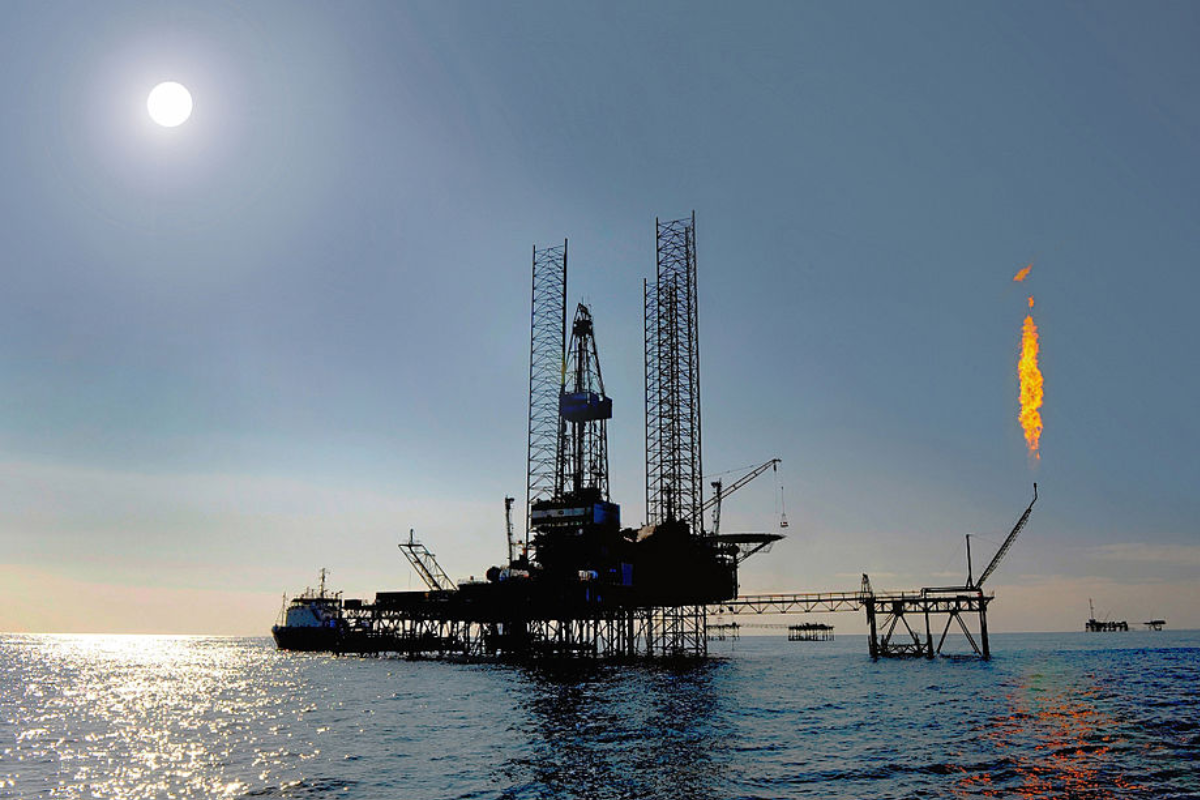
Iran has installed the largest offshore drilling platform ever placed in the Persian Gulf, overcoming years of US sanctions and recent aerial strikes on its energy infrastructure to complete the flagship project using only domestic technology and expertise.The P4 platform, weighing approximately 6,200 metric tons, has been mounted at the Reshadat oilfield, around 90 kilometres south of Lavan Island. Iran's state oil company says the entire process of design, engineering, construction and installation was carried out by its own staff and subsidiary firms, without any foreign involvement.Built Under PressureThe construction of the P4 platform had faced repeated delays over the past years, mainly because of US and international sanctions that restrict Iran's ability to use foreign investment and technology. Iran has nonetheless pushed the project forward using what it says is wholly domestic capacity, a point the Oil Ministry was keen to emphasise in its announcement.The rig was positioned using a method known as the 'float over' technique, described as requiring sophisticated planning and operational expertise. The platform was fully installed using this complex and specialised method, which enables the placement of large offshore structures without the use of heavy-lift vessels. The approach is considered technically demanding even under favourable conditions, and Iran completed it without access to the international contractors and equipment typically involved in such operations.The platform will increase production at the Reshadat oilfield by 35,000 barrels per day and will allow the injection of 80,000 barrels per day of water to keep production at the field at current levels.A Battlefield Oilfield RebuiltThe Reshadat oilfield is not new to disruption. The field, which was known as Rostam before 1979, was discovered in 1965 and first brought on-stream in 1968. Its central complex was damaged and set ablaze by American warships during the Iran-Iraq war in 1986. Decades later, it became the site of one of Iran's most ambitious offshore redevelopment efforts.The Reshadat oilfield is operated by the Iranian Offshore Oil Company and has been in production since 1969. The commissioning of the P4 platform is expected to open a new chapter in the field's development and strengthen Iran's offshore oil production capacity.
Sanctions, Strikes And Self-RelianceThe installation comes at a particularly fraught moment. The construction proceeded despite Iran fighting a US-Israeli military campaign between late February and early April, during which installations in the country's petroleum industry came under aerial bombardment.Washington has maintained sweeping restrictions on Iran's energy sector since 2018, with pressure intensifying through 2025 and into 2026. The US State Department imposed new sanctions targeting Iran's oil trade as recently as May 2026, including measures aimed at tightening the grip on Iran-China oil transactions. According to an analysis published by the Clingendael Institute, the greater threat to Iran's oil exports comes from the decrepit state of its oil infrastructure due to a lack of maintenance, knowledge and technology, which are in turn generally the result of earlier imposed sanctions.The P4 installation, if it holds up operationally, would represent one of the more tangible counterarguments to that assessment, at least on the engineering side.Iran's ability to complete a project of this scale, using only domestic resources and under conditions of active sanctions and military strikes, carries significant implications for how the country is managing its energy sector. The Reshadat field's expanded capacity is part of a broader effort by Tehran to sustain oil revenues that represent about a quarter of Iran's GDP and somewhat more of its government revenue. Whether the platform can deliver its projected output gains will be watched closely, both inside Iran and by those tracking the real-world limits of sanctions pressure.