
Remember me
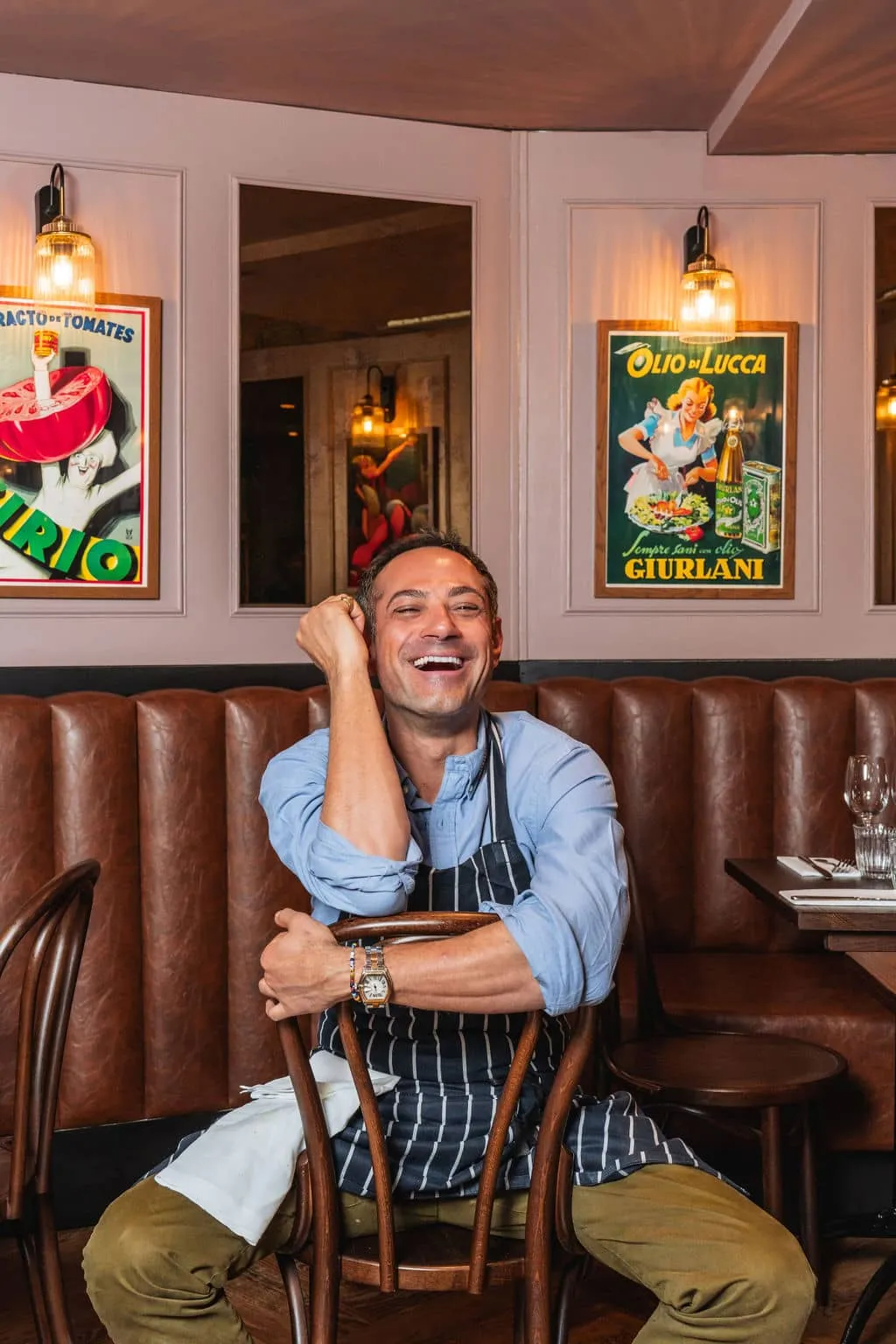









Nima Safaei, the Soho restaurateur behind Forty Dean Street, 64 Old Compton Street and 27 Old Compton Street, is taking his Italian cooking out of London’s dining rooms and into the domestic arena with his debut cookbook, At Home With Nima.
That is not quite as simple as it sounds. Restaurants are theatre. Home kitchens are weather systems. One missing wooden spoon, one overconfident guest, one pan slightly too small, and suddenly dinner has the emotional temperature of a Ryder Cup singles match.
Safaei, however, appears to understand the essential truth of entertaining: people rarely remember technical perfection, but they never forget being properly fed.
A Soho Restaurateur With A Home Cook’s Instinct © Naf Castanas @adashandasplash
Since opening Forty Dean Street in 2009, Safaei has built a following around warm hospitality, generous plates and the sort of ingredient-led Italian cooking that does not arrive wearing a top hat and asking to be applauded.
His restaurants have become familiar fixtures in Soho, loved by locals, visitors and a fair scattering of famous faces. But At Home With Nima shifts the focus from restaurant table to family table.
The book follows a year in Safaei’s life, using the seasons as its structure and gatherings as its pulse. Easter meals, summer picnics at Henley Regatta, country weekends and the heartier cooking of the shooting season all find their place.
It is a cookbook, yes, but also a calendar of appetite. Less “here is a recipe” and more “here is why we gather in the first place”.
From Tehran To London, Via FlorenceSafaei was born in Tehran and raised in London, but his culinary compass swung decisively towards Italy after one particular dish made its case.
“When I first tasted osobucco, I felt like I had found my home from home”, says Safaei. “To put it simply, I have a strong passion for classic Italian recipes and dedicated myself to learning them properly. Geography should never be an obstacle to pursuing what you truly believe in. Alongside that, the kitchen has always been the heart of my family.”
That “home from home” idea sits at the centre of the book. His passion for Italian food deepened during regular visits to Florence, where his sister introduced him to the city’s food culture. There, among home cooks and local traditions, Safaei found the Italian virtues that still shape his cooking: restraint, confidence, patience and the quietly radical belief that good ingredients should not be bullied.
His late mother, described as an exceptional cook, also left a deep imprint. Her influence appears less in any single dish than in the spirit behind the whole project: warmth, generosity and the kitchen as a place where life is sorted out, one plate at a time.
The Discipline Of SimplicityThe most interesting thing about At Home With Nima is its refusal to treat simplicity as a shortcut. In Safaei’s hands, simple food is not lazy food. It is disciplined food. It knows when to stop.
“Simple does not mean careless,” Safaei explains. “It means intentional. When ingredients are at their best, you don’t need to overwork them.”
That line could be written above half the restaurant kitchens in Britain and a good many golf swings as well. The trouble usually begins when people attempt to improve something already good. A ripe pear. A good piece of game. A properly made risotto. A seven-iron from the middle of the fairway. Interference is rarely the answer.
What’s Inside At Home With Nima
The recipes draw from Safaei’s restaurants, family gatherings and seasonal rituals. The result is a book that moves between comfort, elegance and the sort of food that makes people linger at the table long after the sensible hour has gone missing.
Among the dishes featured are pappardelle with blue cheese, pear and walnut pangrattato, ham and artichoke lasagne, roasted game with squash salad, orzo and sage, beetroot, bean and hazelnut salad, and pistachio tiramisu.
There are fresher spring dishes such as pea and mint risotto, alongside deeper winter cooking, including venison mafalda with black truffle.
The appeal is not in culinary fireworks. It is in food that sounds like it belongs to a real table: seasonal, generous, personal and sufficiently handsome to make a guest put their phone down, which in modern society is practically a religious conversion.
Restaurant Polish Without Restaurant AnxietyThe danger with chef-led cookbooks is that they sometimes arrive with the emotional warmth of a tax inspection. Too much precision. Too much equipment. Too many instructions that begin innocently and end with a specialist blowtorch.
At Home With Nima appears to be aiming elsewhere. Safaei wants readers to cook with confidence, not fear. The restaurant experience is there, but filtered through home life: family, friends, rituals, weather, appetite and the small domestic chaos that gives a meal its character.
That is where the book may find its audience. Not with people looking to perform dinner, but with those who want to host it properly.
Why Nima Safaei’s Cookbook Has A Clear Place On The ShelfThere is a crowded market for Italian cookbooks, and Britain is hardly short of people telling us what to do with pasta. But Safaei’s angle is distinct because it comes from lived hospitality rather than culinary posturing.
His restaurants have succeeded by making people feel looked after. This book seems built around the same instinct. It is not Italian food as costume drama. It is Italian cooking as a way of bringing people together with less fuss, better ingredients and a firmer grip on the value of a good table.
For readers who know Forty Dean Street, 64 Old Compton Street or 27 Old Compton Street, At Home With Nima offers a route back to that warmth. For those who do not, it introduces a restaurateur whose cooking philosophy is clear enough to survive the journey from professional kitchen to domestic hob.
The best cookbooks do not merely tell us how to make dinner. They remind us why dinner matters. Safaei’s debut appears to understand that beautifully: feed people well, keep things generous, and never overwork the pear.
Pre-order link: https://www.amazon.com/At-Home-Nima-Simple-Italian-ebook/