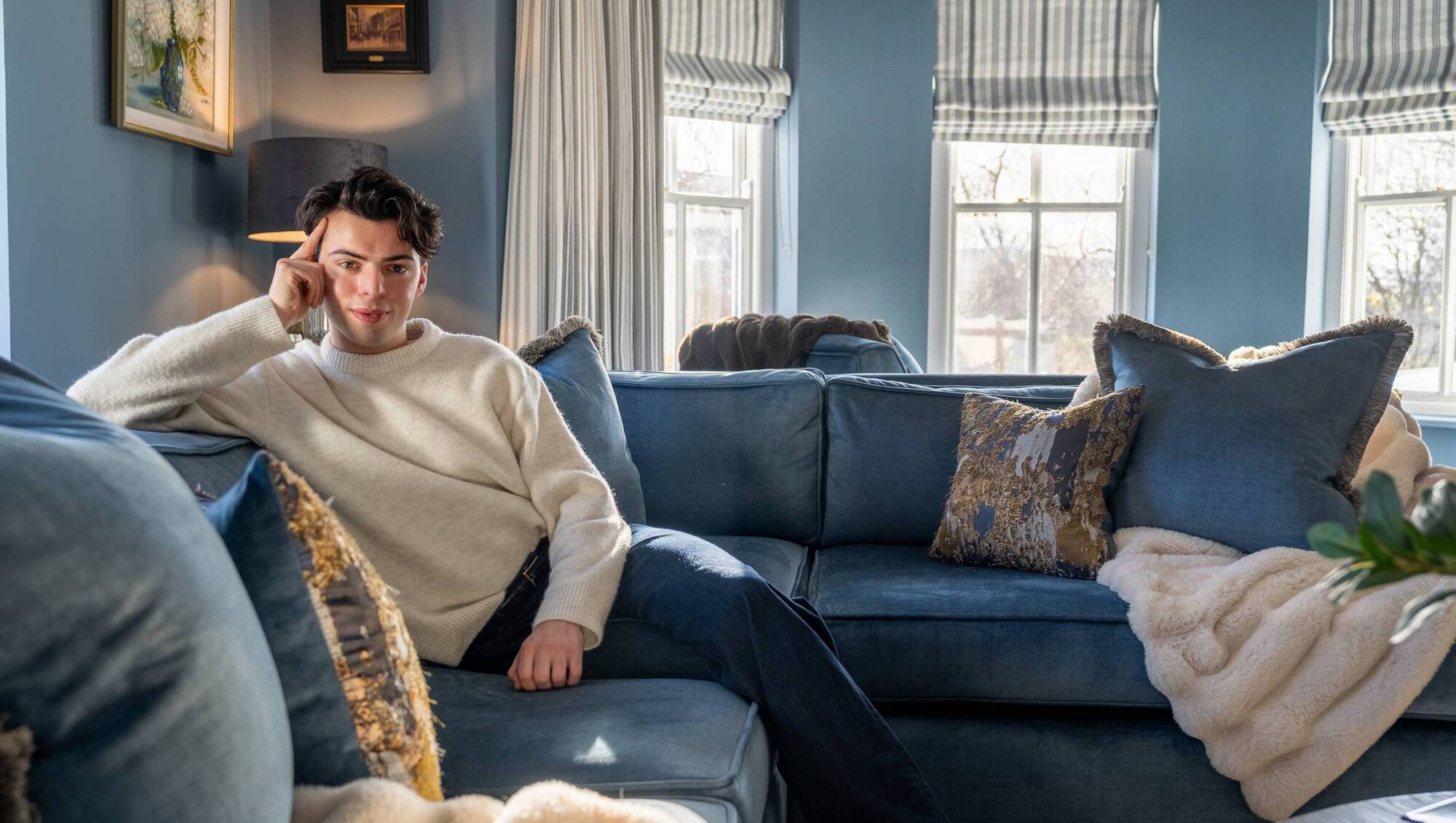
Teens, screens and social media. The debate rumbles on, but scrolling is what set James McNamara on his career path.
The Mayo creative says: “I didn’t know interior design was a job when I was younger. I discovered it completely by accident through YouTube when I was in secondary school.
“There was an interior designer based in California who documented her projects and day-to-day life, and I became fascinated by it. I remember thinking, ‘Oh my God, that’s a job?’ From there, I fell down a rabbit hole.”
A super-artistic child, at the age of six, James aspired to be a fashion designer. “I had a sewing machine in the attic, I used to sketch outfits, and I have a vivid memory of watching Rihanna’s tour DVD with my cousin and drawing outfits we thought she should wear on stage,” he says.
Now, like the Barbadian fashion and cultural icon, Achill Island native James is himself making waves as a style-setter. He opened his own atelier, JMC Studios, in Westport, Co Mayo, after graduating in Interior Architecture and Design in Sligo. “I’ve always been a big believer in setting ambitious goals and backing yourself, and it’s still a fantastic feeling when something that once existed on a vision board becomes reality,” he says.
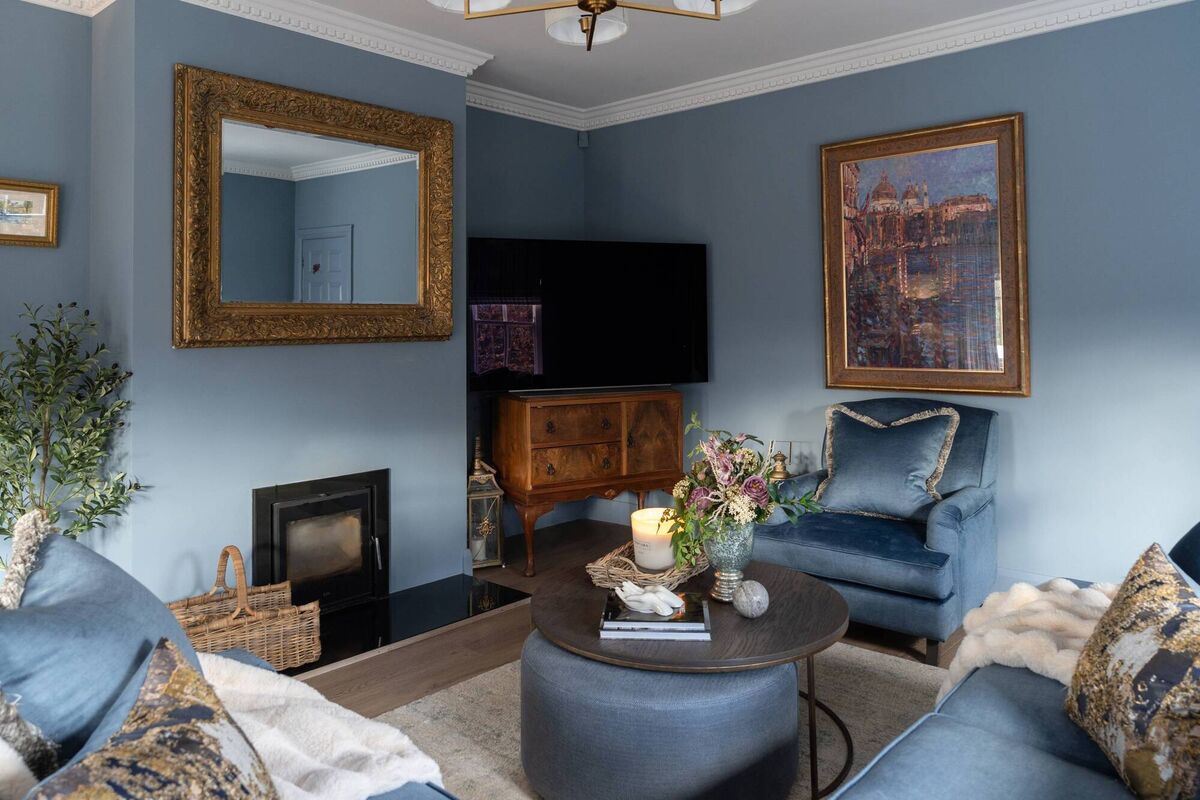
A recent living room project by James McNamara.
His surroundings inspire him every day. “Achill is a place I’ll always be proud to call home,” he says. “While our projects take us all over the country, I love having the studio based in the west. “Growing up on Achill Island and now having my studio in Westport, I’ve always been surrounded by incredible landscapes. The colours, textures, forms, and constantly changing scenery of the west of Ireland have undoubtedly influenced the way I see and approach design.
“I often find myself drawn to organic shapes, natural materials and interiors that feel connected to their surroundings.
“For me, there is no greater source of inspiration than nature. I think there is something quite magical about it. Nothing is forced, yet everything works together beautifully. Whether consciously or subconsciously, I think that appreciation for nature finds its way into every project. I’m always looking for ways to bring a sense of the outdoors in and create spaces that feel grounded, authentic and connected to their environment.”
Work takes him across Ireland and the globe, but he was back on home turf recently for a project he cites as a favourite — a cottage revamp on Achill Island. “We renovated the kitchen, transformed the primary suite and carried out cosmetic updates throughout the home,” he says.
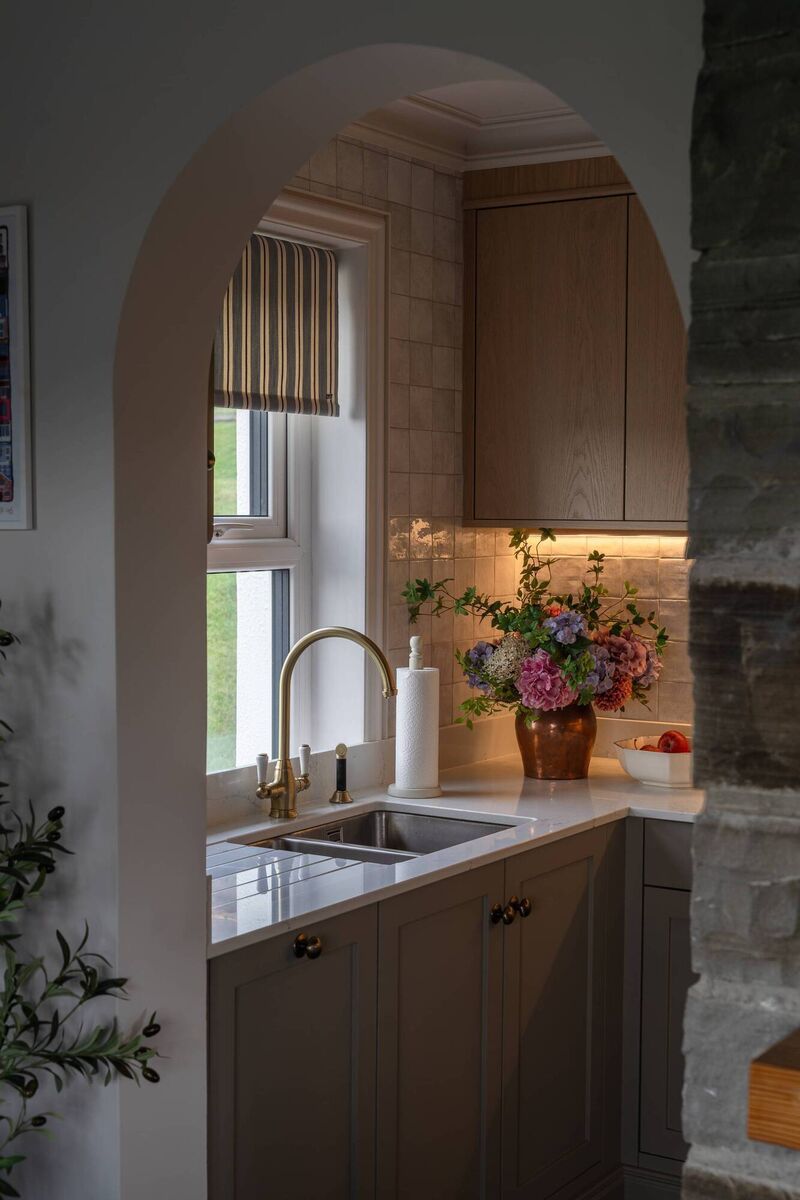
The interior design of Achill Cottage by James McNamara.
“The kitchen was particularly exciting because kitchens are one of my favourite rooms to design. We design every aspect of the kitchen, from how it functions day-to-day, right down to the door profiles, handles, materials and finishes.
“By the time a joiner becomes involved, every detail has already been carefully considered, which allows us to create kitchens that feel completely bespoke to both the home and the client.”
The primary bathroom was another highlight for the designer because it sat within the house’s roofline, with sloped ceilings that created an unusual shape. “We combined two smaller bathrooms into one larger space, and I wanted it to feel as grand and spacious as possible despite the constraints of the room,” adds James.
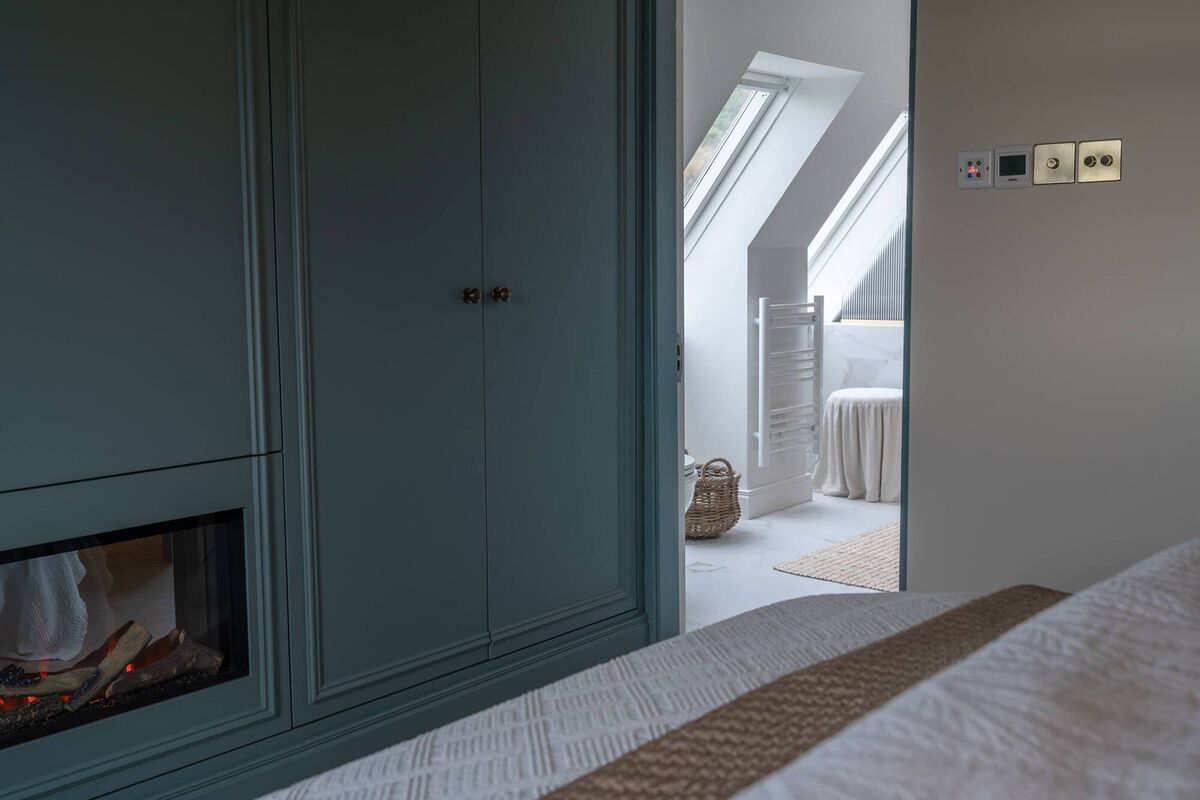
The interior design of Achill Cottage by James McNamara.
“I didn’t want it to feel like a collection of separate pieces, so everything was designed to feel bespoke, built-in and custom.
“We created a large walk-in shower with bespoke glass and clad the walls in porcelain tiles that mimic natural stone. All of the edges were mitred to create a clean finish and avoid visual clutter. It wasn’t a huge room, so every decision was made to maximise the sense of space and create a calm, high-end atmosphere.”
Does the setting or architecture of the building inform his designs? “I always feel that a building communicates what it wants to be,” he says.
“You’re not only listening to the client, but you’re also listening to the home itself. The architecture, proportions, history and surroundings all play a role in shaping the final design.
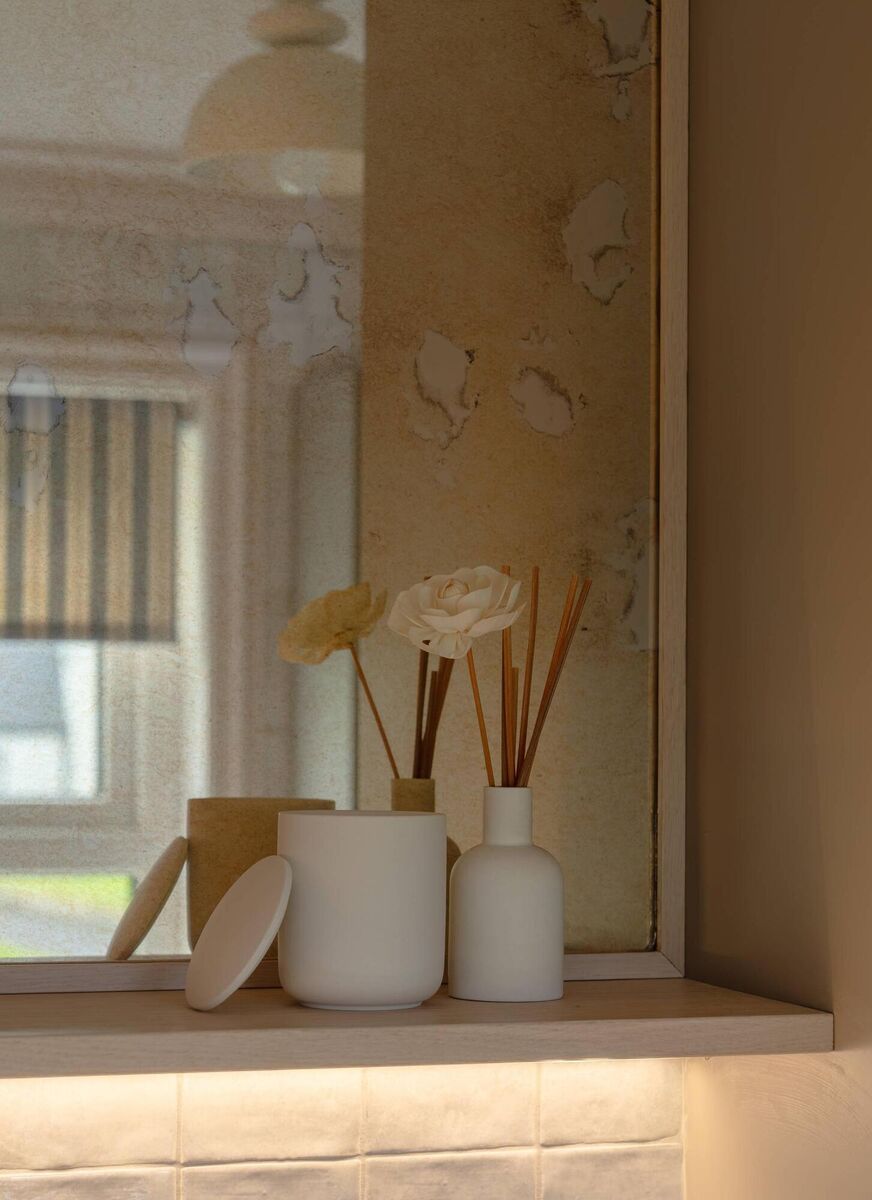
Achill Cottage by James McNamara.
“It’s very easy to ignore those clues and impose an idea onto a space, but I believe great design feels natural and considered. It has to make sense. The home, the client, and the location should all feel connected in the final result.
“The client’s brief is integral to every project, but you do have to read between the lines. Sometimes a client will tell you they want one thing, but the images they’ve saved or the homes they’re naturally drawn to tell a completely different story. I think part of being a good designer is being able to interpret that.
“A lot of my role is understanding how people live, what makes them feel comfortable, and what they’re trying to achieve emotionally within a space.
“Often, clients know how they want a room to feel, but they don’t necessarily have the vocabulary to communicate it. That’s where the collaboration becomes really interest
ing. You’re piecing together the brief, the visual references, the architecture of the home and the client’s lifestyle to create something that feels authentic to them.
“The best projects are never about imposing your own style; they’re about helping clients realise a version of their home that they perhaps couldn’t fully visualise themselves.”
He adds: “For me, the best projects happen when there’s genuine collaboration but also trust.
"Trust in the designer, trust in the client and trust in the process. That’s usually when the most interesting and successful projects emerge.”
Bespoke design is incredibly rewarding for the Mayo designer. “The ideas I love most are usually the ones that start as a sketch on paper and eventually become something completely unique to a client,” he says.
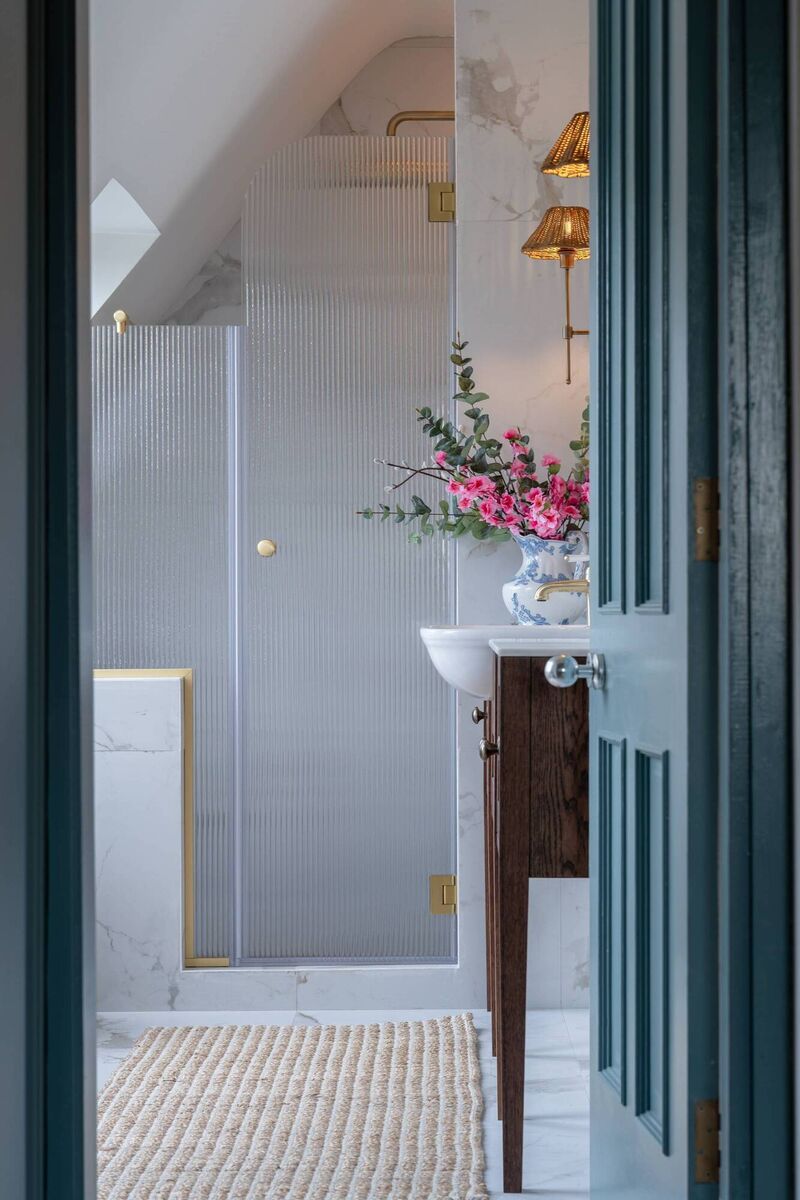
Bathroom at Achill Cottage.
“You’re creating something that doesn’t exist anywhere else. At the moment, we’re working on a project in Galway where almost every element has been custom-designed specifically for the home. Aside from the decorative lighting, virtually everything has been designed and made bespoke for the project.
“We’ve designed a set of bespoke brass shower doors that I’m really excited to see materialise, along with a beautiful walk-in wardrobe that feels incredibly personal to the client.
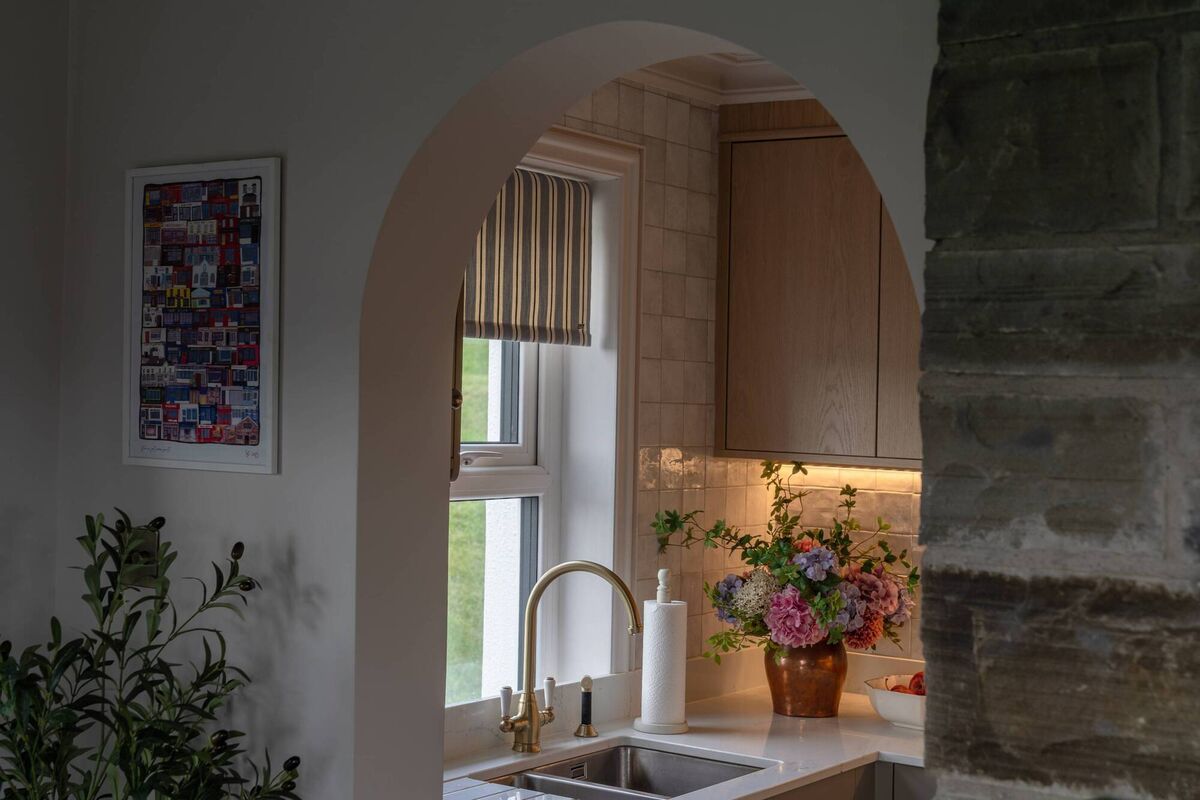
Living space at Achill Cottage.
“Every room contains unique details that have been carefully considered and tailored to how the family lives, so seeing those pieces come to life is extremely exciting.”
The effect of design on people is key, he adds. “What I enjoy most is seeing the client’s reaction. There’s something really special about creating something that has been designed specifically for them and their home,” says James.
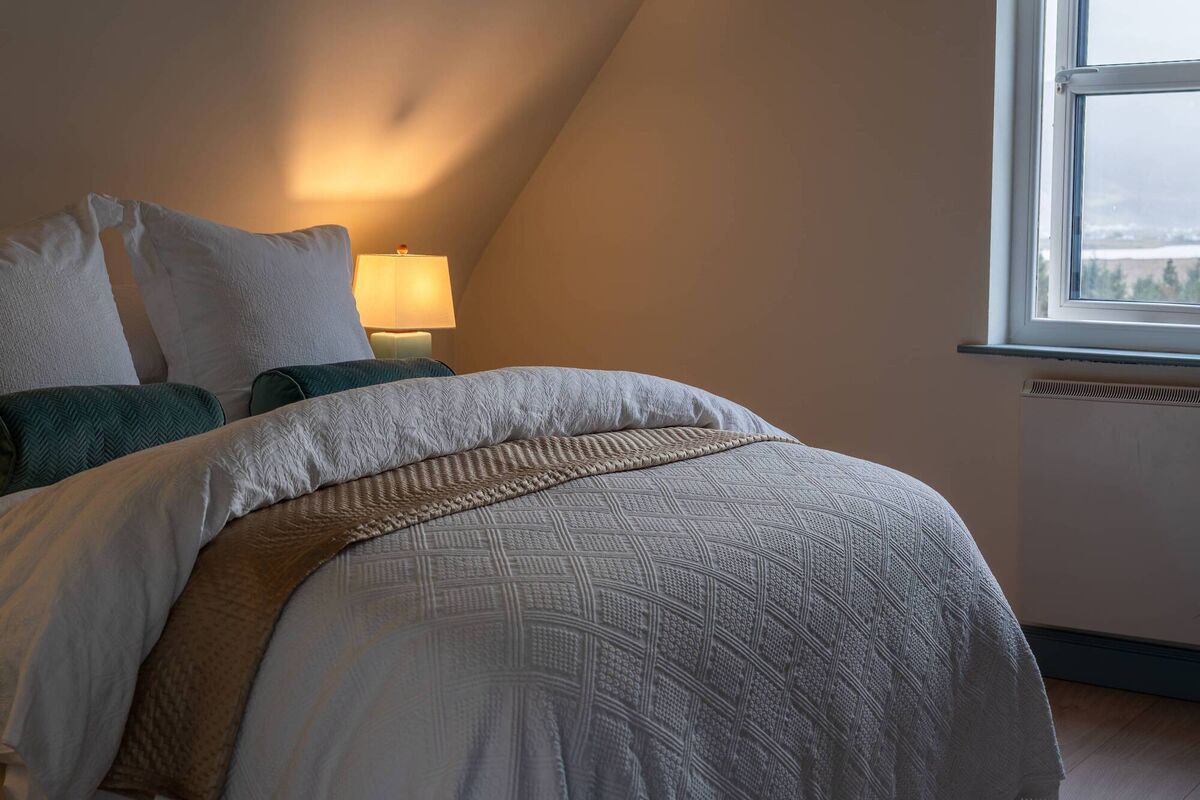
A bedroom at Achill Cottage.
“Beyond the physical details, I’m becoming increasingly interested in the impact design can have on people’s wellbeing. We’re currently working on a charitable project for a women’s recovery house in Limerick, and it’s a powerful reminder that good design isn’t just about how a space looks.
“A thoughtfully designed environment can support people emotionally, improve their daily experience and have a genuinely positive impact on their quality of life.”
At the same time, he believes “one of the biggest challenges is probably people, but that’s also one of the things I enjoy most about the job”.
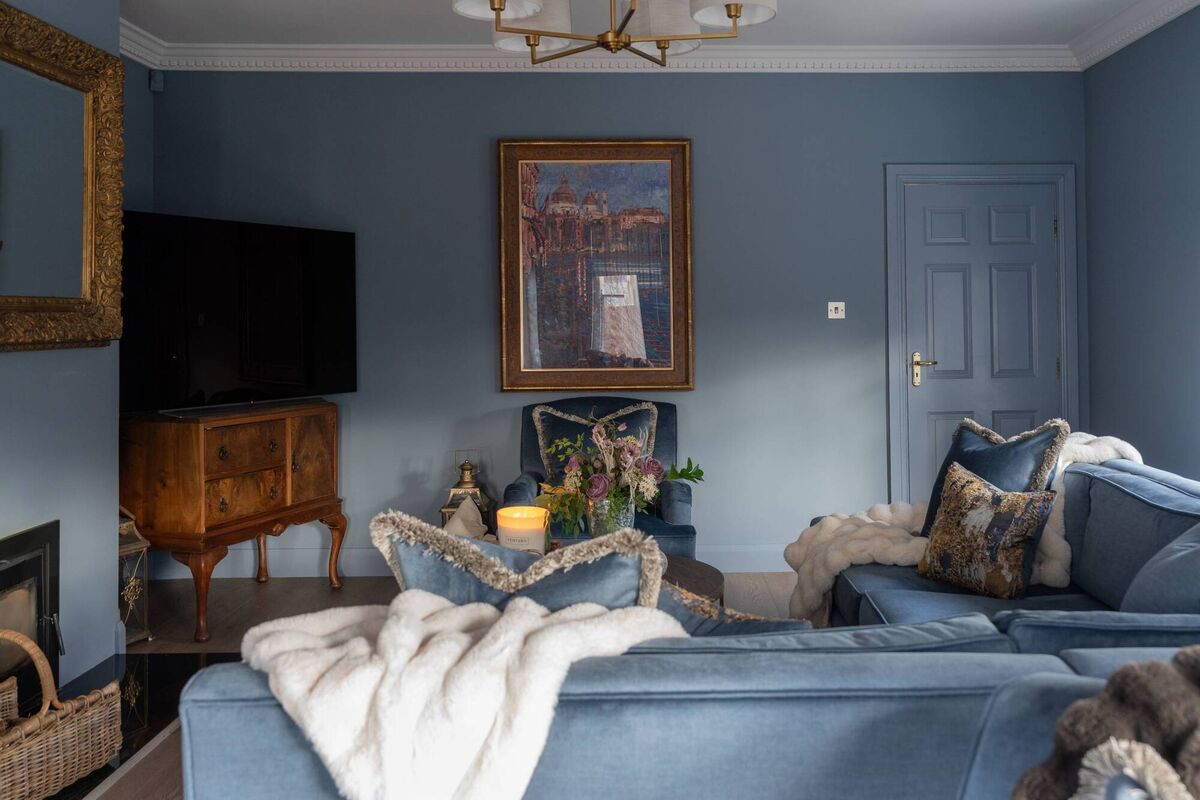
A recent living room project by James McNamara.
Because interior design “is ultimately a people business”, says James: “Every client, contractor, supplier and craftsperson brings a different perspective, personality and way of working, and part of the role is bringing all of those people together to achieve a common goal.
“People are wonderfully unpredictable, which means no two projects are ever the same. While that can be challenging at times, it’s also what keeps the work interesting.
“People often only see the finished photographs, but behind every completed project are months of planning, coordination, problem-solving and collaboration. Balancing creativity, budgets, timelines and practical realities requires constant adaptability, but that’s all part of the process.”
What spaces are your favourite to work with?
Residential projects are probably still my favourite because they’re so personal. You’re being invited into someone’s life in a way that doesn’t happen in many professions.
A home is often someone’s biggest investment, but it’s also where they make memories, spend time with family and retreat from the outside world. Being trusted with that responsibility is something I never take lightly.
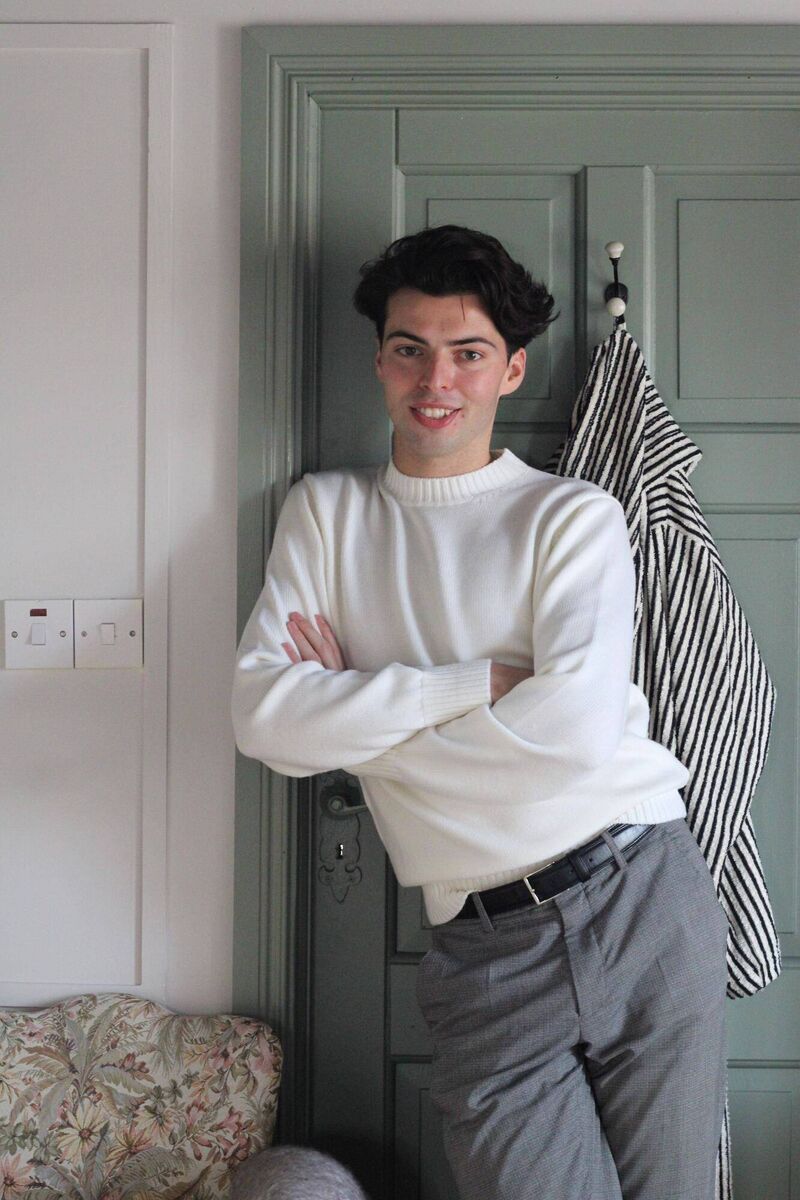
Interior designer James McNamara's favourite space is his bedroom.
Creativity has never really been confined to interiors for me. A few years ago, during a quieter period, I bought a sewing machine, taught myself pattern-making and started creating my own clothing. I even briefly started a clothing brand. While the project was short-lived, it reinforced something I’ve always believed: Whether it’s fashion or interiors, I’m fascinated by materiality, proportion, texture and how people experience design.
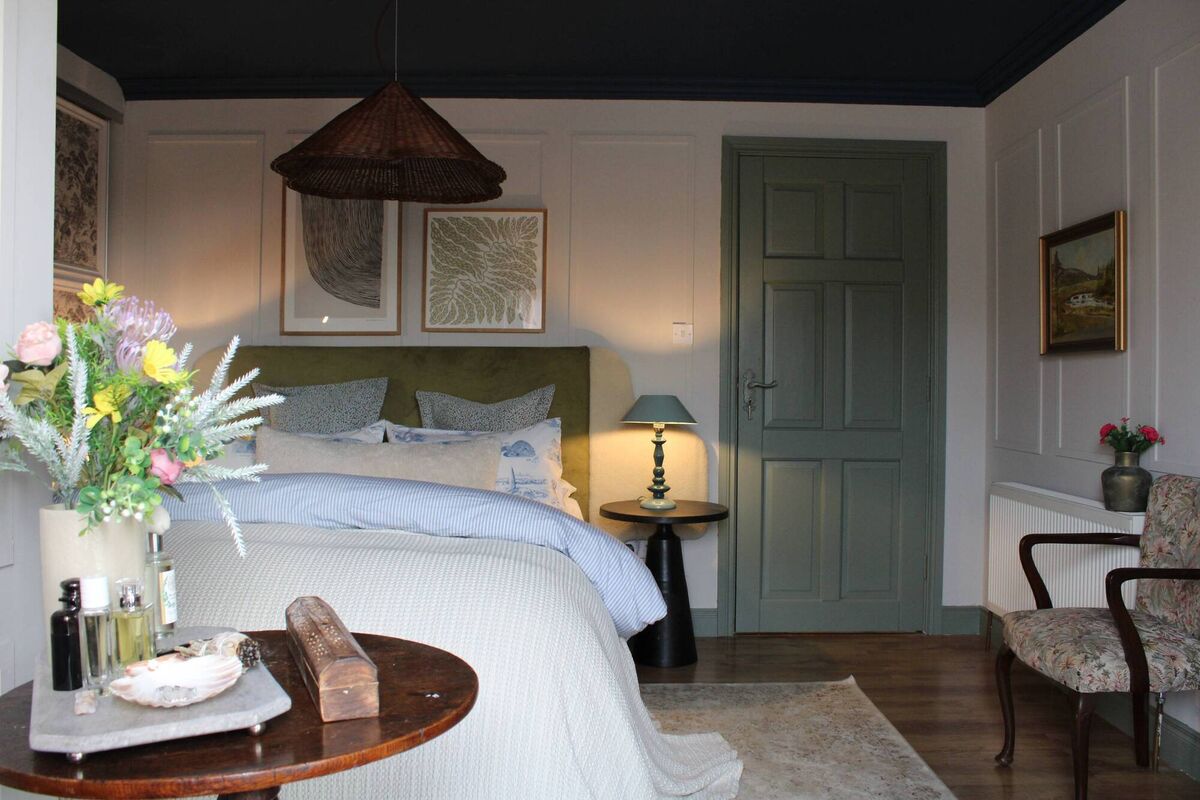
The designer's favourite space is his bedroom.
I would also like to think it’s timeless. For me, good design isn’t about following what’s fashionable at a particular moment in time. It’s about creating spaces that feel authentic to the people living in them.
Take your time, order samples and live with them for a while.
If something doesn’t feel right, it’s often not the colour itself but an undertone that’s throwing it off.
Learning to identify whether a paint has warm, cool, pink, blue or yellow undertones can make the decision process easier.
Good lighting shouldn’t be reserved for the main rooms of a house. Hallways, bathrooms, dressing rooms and even storage spaces deserve the same level of consideration. If you’re renovating, think about lighting early.
More than anything, don’t rush. The best homes are rarely the ones where every decision was made in an afternoon.
One of my favourite finds was a beautiful, ornate mirror from the 1920s that we picked up in a second-hand shop for €10. It had an incredible iron frame, so much character and a story behind it. You simply couldn’t recreate that piece today for anywhere near that price.
See Jmcstudios.ietarget="_blank" rel="noopener noreferrer"> and @jmcstudiosltd.