
Remember me






Between Rolex glamour, Toyota triumph, and a Swiss podium finish: Genesis took part in the 24 Hours of Le Mans for the first time. finews accompanied the Korean brand and explored the phenomenon that is Le Mans.
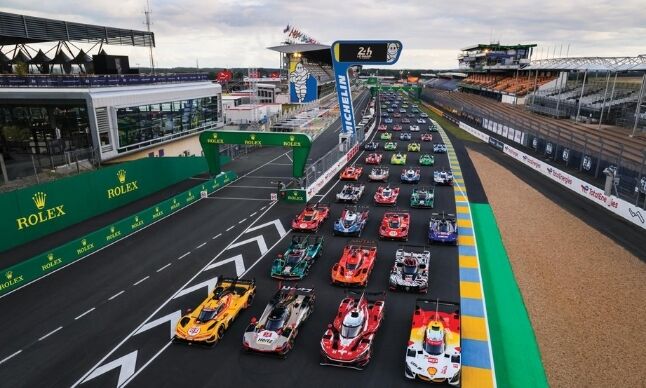
Saturday, June 13. At 1:30 p.m., the gates to the «Grid Walk» open. Sixty cars stand lined up like pearls on a string in their starting order.
The ticket for this close-up view costs 600 euros (650 dollars), and some guests fly in just for this one hour to the Le Mans airfield, located right next to the racetrack, look at the cars, and fly out again. Most, however, stay.
A Former Prime Minister on the Grid
The sun beats down on well over a thousand people pressing against the gates, waiting to see the cars up close.
An elegant older gentleman in light trousers, a dark blazer, and a tie strolls along the grid: François Fillon, once prime minister of France, born in Le Mans.
Rolex Is Everywhere
His younger brother Pierre Fillon, an ophthalmologist by training, has presided since 2012 over the Automobile Club de l'Ouest, the organization that has run the 24 Hours of Le Mans for 103 years and this year hosts the 94th edition.
Rolex has been devoted to this celebration since 2001: main partner of the race, with its own lounge at the best vantage point on the grandstand, while the start and finish area glows in a sea of yellow-green emblems.

Taking part for the first time: the Genesis GMR-001. (Image: Benjamin Bourguignon)
Pommery Flows Freely
In the surrounding boxes, Pommery champagne flows freely. Money and elite on one side, raw enthusiasm for the sport on the other: this combination is Le Mans' true trademark.
Le Mans is motorsport as a folk festival, unapologetic, proud, one continuous emotional glow on historic ground.
A Newcomer From Korea
Across from the Porsche Experience Center, the permanent outpost of the sports car maker from Zuffenhausen, a newcomer set up its hospitality lounge this year: the Korean luxury brand Genesis from the Hyundai group.
It is competing for the first time with two cars in the Hypercar category, with the GMR-001, built together with the French racing specialist Oreca.
A Meeting With the Europe Chief
It is an ironic coincidence of timing: just as Porsche has withdrawn from the top class of Hypercars at Le Mans, a manufacturer that has never set foot on this stage is pushing in.
In the Genesis lounge sits Peter Kronschnabl. He has been president of Genesis Europe since last August and previously worked at BMW. Le Mans is no new territory for him. Ten years ago, he already stood here at the track, in a different role.

Opening ceremony with the Marseillaise and the National Guard. (Image: finews)
A Promise of Premium and Performance
«Le Mans grows every year,» he says, and for a brand still young in Europe, this stage is ideal: it shows who Genesis is, and it links the promise of premium with proof of performance.
The race start itself is ceremony. A National Guard formation plays the Marseillaise. Blue, white, and red flags fly everywhere. The cars then complete a leisurely warm-up lap in their starting order before gunning their engines as they cross the line at four p.m., hoping to advance as far and as fast as possible.
A Stage for Epic Contests
What follows are 24 hours in which machines, nerves, and teams face exactly the kind of strain that made Steve McQueen (Porsche versus Ferrari) in «Le Mans» and Matt Damon (Ford versus Ferrari) in «Le Mans '66» into legends: the format of this contest rewards technology, durability, and perseverance.
Even ahead of the race, José Muñoz, chief executive officer of Hyundai Motor Company, put expectations for newcomer Genesis into perspective: the goal was to finish the race, not to win it.
Hyundai Investors Flown In
For Genesis and Hyundai, taking part in the «24 heures du Mans» is a major communications event. Roughly a hundred journalists from around the world were flown in. An attractive race program was also arranged for Hyundai's major shareholders.
Four hours before the finish, with the three rotating drivers having circled the track for 20 hours, the picture from Genesis' perspective is mixed. The car with start number 17 retired overnight after a suspension failure. The second car, number 19, remains in the classification. «I am satisfied,» says Europe director Kronschnabl.

A test of endurance for team, nerves, and machine. (Image: finews)
A Story of Ascent
This marks the third season of participation for Genesis Magma Racing, as the team is officially known, and its first-ever 24-hour race.
Le Mans, both Muñoz and Kronschnabl emphasize, is also meant to tell the story of an ascent for Genesis. The manufacturer reached the milestone of one million vehicles sold faster than any other luxury brand before it, faster than Lexus, faster than Tesla.
A «Manufacturer's Contest»
By 2030, the business in Europe is meant to grow fivefold. Le Mans, Kronschnabl says, is the ideal format «as a manufacturer's contest» to give a premium brand its shine. Once production models become available as hybrids, likely from late 2027, that message should resonate even more strongly.
Anyone who commits to motorsport, Kronschnabl adds, has to pursue it consistently. «When we do something, we do it properly.»
UBS Makes a Quiet Appearance
UBS also made a small, almost incidental appearance this weekend: the bank sponsors a team in the Brazilian Carrera Cup, which held two races ahead of the big 24-hour race.
In the end, victory belonged to Toyota, and in dramatic fashion. The car with start number 7, driven by Mike Conway, Kamui Kobayashi, and Nyck de Vries, had started from 14th on the grid, the lowest starting position any Le Mans winner has ever come from.
The Winner Was Toyota
The two Toyota cars that finished first and third had fought their way to a sustained comeback from disappointing starting positions with a boldly early pit stop, gaining the momentum they needed. «Recouler pour mieux sauter,» as the French say: pull back to leap further.
One Toyota won by a margin of just 10.9 seconds over the BMW team of Robin Frijns, René Rast, and Sheldon van der Linde, the narrowest margin since timing began at Le Mans.

Peter Kronschnabl, Genesis' Europe chief, at Le Mans. (Image: Benjamin Bourguignon)
Superlatives Reflect the State of the Art
These superlatives after more than 24 hours of racing show how far technology has advanced. In earlier decades, a team could still potentially win the race even after a two-hour clutch change, as Swiss automotive journalist and entrepreneur Jorge Guerreiro recalled to finews.
From a Swiss perspective, the strong performance of the second Toyota, with start number 8, is a welcome result. Romandy-native Sébastien Buemi, who piloted the car in rotation with Brendon Hartley and Ryo Hirakawa, drove to third place on the podium after a drive-through penalty, just 20 seconds behind the winner from the same team.
Genesis: Arrive, Learn, Draw Conclusions
And Genesis? The car with number 19, crewed by Mathieu Jaminet, Paul-Loup Chatin, and Daniel Juncadella, crossed the finish line in 13th place after 372 laps and just over 5,000 kilometers (3,100 miles) driven.
For Kronschnabl, that means the goal was met: arrive at Le Mans, learn, and draw the right conclusions.