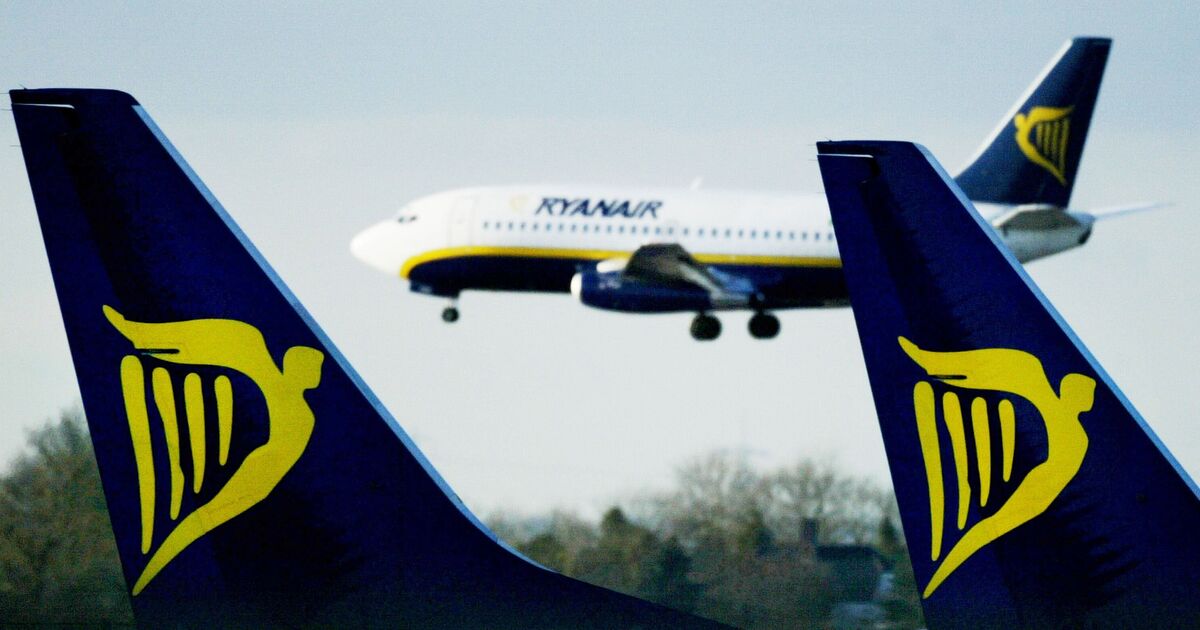
Some Ryanair passengers were stranded in Greece after their flight to the UK left without them. The Ryanair flight from Athens International Airport to London Luton on Sunday left without some of its passengers in what appears to be the latest incident since the introduction of the EU's Entry Exit System (EES).
Ryanair confirmed that "a number of passengers" did not board in time "due to delays caused by border control at Athens airport". Their statement to the BBC also added: "All passengers that were at the boarding gate when this flight from Athens to London Luton boarded, travelled without incident." The airport told the broadcaster it had been experiencing congestion linked to "additional processing requirements". Neither the airline nor the air hub directly blamed the EES.
An airport spokesperson said there had been "periods of congestion at passport control in the departures area due to high passenger volumes and the additional processing requirements associated with travel to non-Schengen destinations".
They added: "As is currently the case at many European airports, passenger flows on certain routes may experience increased processing times as new border-control procedures continue to be implemented and refined."
The EU's Entry/Exit System (EES) is a digital border system that replaced manual passport stamping. It requires non-EU travellers to register their biometrics (fingerprints and a facial photo) at self-service kiosk or booths on their first entry to the Schengen Area.
The bloc says this has been introduced to improve border security within the EU and its neighbouring countries, and reduce illegal migration in the Schengen area. It automates border control checks to help the EU stop visitors overstaying their visa.
This new system is now in place in popular destinations such as Spain, Portugal and Greece. Some travellers have reported being stranded in three-hour queues, as the registration system adds additional steps for travellers at the border. In some countries, passengers have missed their return flights after failing to clear the digital system in time.
Greece, in particular, attempted to temporarily pause biometric checks for UK tourists, but the Greek Foreign Ministry confirmed they are fully implementing the EES system this summer.
The EES has had criticism from the travel industry, with the British Travel Association ABTA calling on destinations and border authorities to develop more robust plans for peak travel periods.
Mark Tanzer, chief executive of ABTA, said: "The ambition of a project like EES means it was never going to go completely smoothly, and we were prepared for that.
"However, what is frustrating is that border authorities have it within their power to ease queues and deal with issues as they arise – but that doesn't seem to be happening across the board.