The hundreds of skeletons in a frozen Himalayan lake were blamed on one ancient disaster, until DNA showed some of the dead came from the eastern Mediterranean and died about a thousand years apart
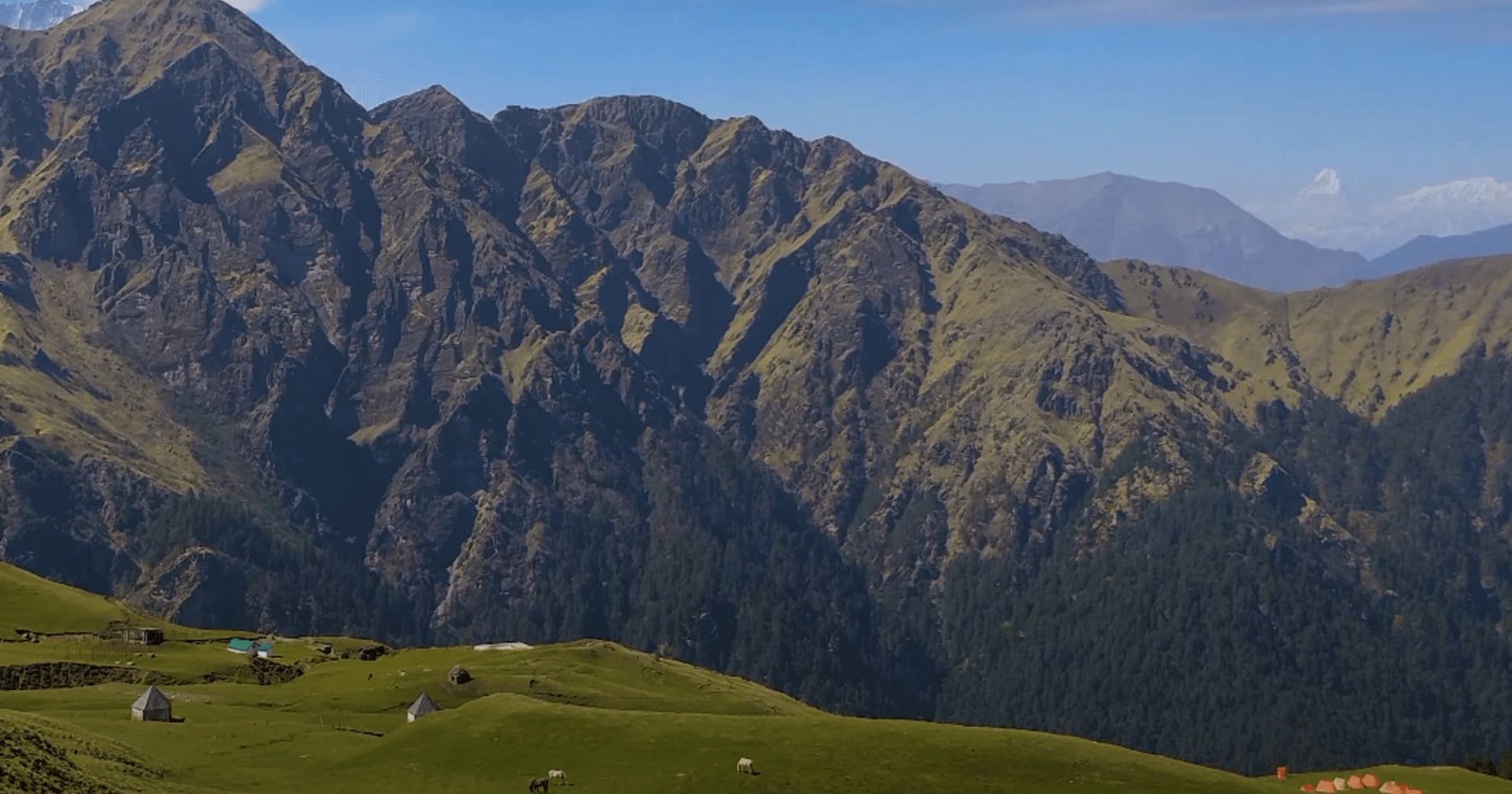
Roopkund Lake sits more than 5,000 metres up in the Indian Himalayas, a shallow body of meltwater that stays frozen for much of the year. When the ice and snow retreat, bones appear: skulls, ribs, and limb fragments belonging to several hundred people, scattered along the shore and resting on the lake bottom. For most of the twentieth century, the favoured explanation was a single disaster, often told as a sudden, violent hailstorm that killed a group of travellers in one terrible afternoon.
A 2019 genetic study took that story apart. Researchers recovered genome-wide ancient DNA from 38 of the skeletons and found that the dead did not belong to one population, and did not die at one time. They fell into three genetically distinct groups, and radiocarbon dating placed two of those groups roughly a thousand years apart. One group carried ancestry typical of the eastern Mediterranean, thousands of kilometres from a remote Himalayan shrine.
What the bones actually held
The team reported ancestry that clustered cleanly into three sets. Twenty-three individuals had ancestry that falls within the range of present-day South Asians. Fourteen more had ancestry typical of the eastern Mediterranean, the kind seen today in people from places such as Greece and Crete. A single individual carried Southeast Asian-related ancestry.
The radiocarbon dates were the surprise that reframed everything. The South Asian group dated to around 800 CE, with evidence that they were deposited in more than one event rather than all at once. Every other sampled individual dated to around 1800 CE. Two clusters of dead, separated by something close to a thousand years, had come to rest in the same small lake.
That single result rules out any explanation that depends on one moment. A storm, a battle, a mass illness: whatever happened at Roopkund, it did not happen once.
The split showed up in more than the genes. Stable isotope measurements, which read the chemical traces of a person’s diet from their bones, revealed distinct dietary profiles for the two main groups. The DNA and the chemistry agreed: these were different people, living different lives, who happened to end up in the same place.
Where the hailstorm story came from
The disaster version was not invented from nothing. An earlier bioarchaeological survey of the site identified three individuals with unhealed compression fractures, injuries to the top of the skull and shoulders consistent with a sudden blow from above. From this, investigators floated the idea of a violent hailstorm, the sort that does occur near Roopkund, while openly noting that other scenarios were plausible.
The same survey had already sensed that more than one kind of person lay at the lake. It described both very robust, tall individuals, outside the range of almost all South Asians, and more gracile ones, and suggested at least two distinct groups were present. The genetics later confirmed that intuition, and then went further than any survey of bone shape could.
Crucially, even if a hailstorm did kill some of the people whose remains date to around 800 CE, it cannot account for a separate group who died near 1800 CE. The compression-fracture evidence, real as it is, covers a fraction of the dead and a fraction of the timeline.
A group from the far side of the ancient world
The hardest finding to explain is the Mediterranean-ancestry group. These were not local people, and the study found no genetic signal that they had mixed substantially with South Asian populations. Their chemistry pointed the same way: a predominantly terrestrial rather than marine-based diet, which suggested they had lived somewhere inland before travelling to the mountains.
Why they came remains genuinely unresolved. Local folklore tells of a pilgrimage to the shrine of the mountain goddess Nanda Devi, and pilgrimage is a real and recurring feature of the region. But the study’s authors point out that it would be surprising for a large group of eastern Mediterranean travellers to be undertaking a Hindu pilgrimage, in a tradition where such practices have not been common. Whether they were pilgrims, or were drawn to the lake for some other reason, the paper calls a mystery.
The explanations that do not fit
Other tidy stories failed too. One long-standing guess was that the dead were a single party travelling together, perhaps a family group or a military expedition caught by disaster. The genetics found no relative pairs of the third degree or closer among the sequenced individuals, which is evidence against the idea that the skeletons represent groups of families, and it sits awkwardly with the notion of one tight-knit company dying together.
The Mediterranean ancestry also tempted a romantic explanation: that these were descendants of Indo-Greek populations established in the region after the campaigns of Alexander the Great, the same deep history that left a genetic mark on some present-day groups such as the Kalash. The study found this unlikely. A community with that history would be expected to carry South Asian admixture built up over many generations, and the eastern Mediterranean individuals at Roopkund show no such mixing. Genetically, they look less like long-settled locals of distant Greek descent and more like people who arrived from the eastern Mediterranean not long before they died.
What this does and does not prove
It is worth being precise about what the DNA settles and what it leaves open. The genetics firmly establish that the Roopkund dead are not a single population and were not deposited in a single event. That much is hard to argue with once the radiocarbon dates are on the table.
It does not, however, tell us how any of these people died. Ancient DNA reports ancestry and, in some cases, kinship; it does not record a cause of death. The team also tested for disease and found no evidence that the individuals carried bacterial pathogens, which offers no support for the idea that they died in an epidemic. The authors add the honest caveat that absence of pathogen DNA in bone powder can simply mean it was present at too low a level to detect, so even “not an epidemic” is a soft conclusion rather than a closed case.
The site itself works against certainty. Roopkund is frequently disturbed by rockslides, and for many years visited by pilgrims and hikers who have handled the bones and carried off artifacts. Much of the context an archaeologist would normally rely on has been scrambled. The study analysed 38 individuals out of several hundred, so the three-group picture may yet gain a fourth or fifth as more remains are sampled.
What is left standing
Strip away the parts that cannot be confirmed, and a stranger story survives than the one it replaced. A high, frozen lake on a Himalayan ridge collected the dead across at least a thousand years. Some were South Asians who died around the ninth century, possibly in more than one episode. Others, centuries later, were people whose ancestors lived near the eastern Mediterranean, who somehow ended their journeys at the same waterline.
The neat single-disaster ending turned out to be the easy version. What the DNA left in its place is messier, older, and harder to close.