A Train Caused the Deadliest Elevator Disaster in History. No One Was at the Controls.
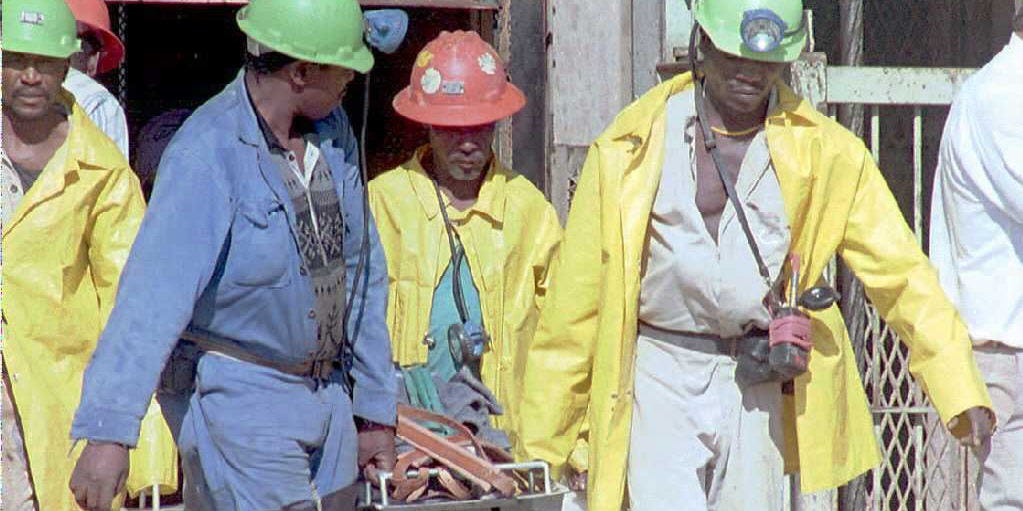
Here’s what you’ll learn when you read this story:The Vaal Reefs mining disaster of 1995 killed 104 miners who were crushed when a locomotive hit the elevator cage they were traveling in.The entire episode occurred more than a mile below ground, and everyone inside the elevator died.The tragic event is still the world’s deadliest elevator accident on record.At the end of their shift, 104 miners crowded into an elevator cage deep inside Vaal Reefs’ No. 2 shaft near Orkney, a gold mining town in South Africa’s North West province. They were at least 5,500 feet below ground, on the mine’s 56th level, waiting to ride up toward daylight. It was a routine they had repeated hundreds of times. None of them could have known that something was already moving toward them in the darkness.Somewhere above, a battery-powered locomotive sat parked in a restricted area. Its driver was nearby. And then, without warning, the machine lurched forward.What happened next would produce the deadliest elevator accident in recorded history. The disaster was so violent that Pil Botha, the Mineral and Energy Affairs Minister who surveyed the site immediately afterward, said it was something he would never forget. “It is the most gruesome sight I have ever seen,” he told The Independent.More than 30 years later, the event still holds that grim distinction. But for years, investigators wrestled with a central question: how could a parked locomotive end up plunging down a mine shaft and onto a cage full of men?The answer lay in a cascade of failures. Investigators found that a faulty electrical circuit in the locomotive failed to engage its brakes. The machine rolled forward, unmanned, after its driver jumped off just before it broke through a barrier and entered the elevator shaft. That barrier, researchers determined, was never substantial enough to stop a runaway vehicle. The locomotive dropped onto the cage, crushing the tightly packed conveyance. Some men were killed instantly by the collision. But for others, the horror continued: a detaching hook in the elevator system opened on impact, releasing the cage from its rope and sending it plummeting to the bottom of the shaft, roughly 7,000 feet below the surface. According to the Minerals Council South Africa, a risk assessment later showed that if the hook hadn’t opened, the miners would have had some hope of survival. Final conclusions blamed brake failure, human error, and the lack of adequate safety barriers.During a service for 45 of the miners held at Oppenheimer Stadium and attended by 15,000 mourners, political leader Charles Ngcakula blamed the deaths on the negligence of the mine’s managers. The catastrophe spurred an update in South African legislation that resulted in the new Mine Health and Safety Act one year later, according to the Minerals Council South Africa. The act spelled out key regulations within the industry while offering up basic rights for mine workers. It required mining shaft elevators to withstand impact levels of 20 megajoules and masses of 5.5 tons without the detaching hook opening. It also helped establish the requirement for mining companies to compensate the dependents of miners lost to accidents.The Vaal Reefs Exploration and Mining company, part of the Anglo American Corporation, created the Vaal Reefs Disaster Trust to financially support the 431 dependents of the 104 miners who perished. But it’s only a modicum of solace for the victims of the world’s deadliest elevator disaster.Tim Newcomb is a journalist based in the Pacific Northwest. He covers stadiums, sneakers, gear, infrastructure, and more for a variety of publications, including Popular Mechanics. His favorite interviews have included sit-downs with Roger Federer in Switzerland, Kobe Bryant in Los Angeles, and Tinker Hatfield in Portland.