My friend’s disability from long COVID changed her view of faith and friendship
(RNS) — Life after the COVID-19 pandemic — with everything from higher prices to the rise of technology driving the ways we approach work, fitness and mental health — will never be the same as before.
But for some diagnosed with long COVID, a chronic condition continuing months and years after infection, the pandemic didn’t just change the world outside. It uprooted their entire existence.
My friend Anjum, a former avid traveler and elementary teacher, is now on disability leave from work and bedridden most days.
“I honestly thought after having COVID for five days, my life would go back to normal,” she said. “But it never did.”
As a Muslim woman who regularly attended her local mosque in Toronto not only for spiritual needs, but also — and primarily — social needs, Anjum says her perspective on faith and friendship has completely pivoted. Her life changed from being quite active socially — volunteering at the mosque’s various charitable programs and attending weekly social outings with large groups of friends she’d made through its youth group — to texting and calling only a handful of close friends. While losing many friendships through this illness, she also lost the opportunity to connect with her religious community — a key part of her mental health and overall well-being.
The isolation of being homebound has taught her hard lessons on letting go, being patient and accepting that many, if not most, things in this life are out of our control. As a result, she believes that her connection with God has increased.
“Being a Muslim means that my goal in life is to connect with God,” she shared. “I have to have full trust in him and all my hopes about being healed are through him.”
Anjum developed long COVID in 2023. She noticed that her heart would race when she would sit or stand, causing severe dizziness, extreme fatigue and brain fog. At the time, she was diagnosed with postural orthostatic tachycardia syndrome, a disorder of the autonomic nervous system that causes abnormal increases in heart rate.
A few months later, her symptoms began escalating as she began to experience significant “crashes.”
“Anything I do has an energy cost,” she said. “On bad days, even tiny actions like brushing my teeth or going on the computer for five minutes causes me to become extremely exhausted and bedridden for literally days or weeks after.”
This energy crash is known as post exertional malaise, or PEM. Doctors officially diagnosed her with myalgic encephalomyelitis/chronic fatigue syndrome in 2024. ME/CFS is a neurological illness affecting multiple biological systems and is characterized by extreme physical and mental fatigue and cognitive impairment after minimal physical, cognitive, emotional or social exertion, such as showering, walking or reading.
But receiving a diagnosis that explained her myriad symptoms does not mean that Anjum is on the road to recovery. ME/CFS is a disease that is very poorly understood, despite the fact that its prevalence is rising rapidly, with one recent estimate indicating that ME/CFS rates are now 15 times higher than before the pandemic. In fact, one study suggests that quality of life among patients with ME/CFS is among the lowest from several debilitating diseases, including diabetes, arthritis, schizophrenia and various cancers.
With no cure for ME/CFS, current treatments are offered only to manage symptoms.
Three years in, Anjum has tried to manage her symptoms with major lifestyle modifications, adjusted expectations and a change in how she approaches her faith as a Muslim.
Islam’s tenets have a strong focus on the transient, temporary nature of this life, guiding submission (the literal meaning of the Arabic word “Islam”) and contentment with God’s will.
“I understand on a deep level that everyone is tested and challenged in different ways,” she said. “Everyone in life is going through something difficult and when you think of it that way, your problems don’t seem as overwhelming.”
Anjum lives with her parents, who have become her around-the-clock caregivers. Her focus is on survival. Some days she doesn’t even have enough energy to eat, she said. Any leftover energy she has after meeting basic needs usually goes toward spending time with her family.
She depends on her mom for most of her activities of daily living, especially on days she is completely bedbound, while her dad handles much of the administrative tasks at home. And for someone with a chronic medical illness or disability, the administrative tasks are endless. Filling out forms for insurance or medical appointments becomes incredibly daunting.
In these moments, she has tangibly felt the immense benefits of having a connected family and faith community.
“You really show your faith through your actions, not just through your words,” she said. “As Muslims, we are taught that acts of charity and kindness are very important. I truly believe that helping someone dealing with a hard time is as important as attending mosque regularly. A huge part of being a caring member of society is to sacrifice your time or energy to help somebody struggling.”
Anjum recalled instances when someone sent her a meal, helped fill out forms needed to secure disability pay and acquire new supports that could aid her during her day-to-day functions, or simply listened to her grieve when she was unable to function.
“It meant so much that they cared enough to help me out without me having to ask for it.”
And although Anjum watched as the world as she knew it shrank, she also witnessed how her faith and gratitude expanded in tandem.
“We go through life at such a fast pace without stopping to be grateful. Even the simple things in life can be somebody’s dream. I think having deep gratitude really puts things into perspective,” she said.
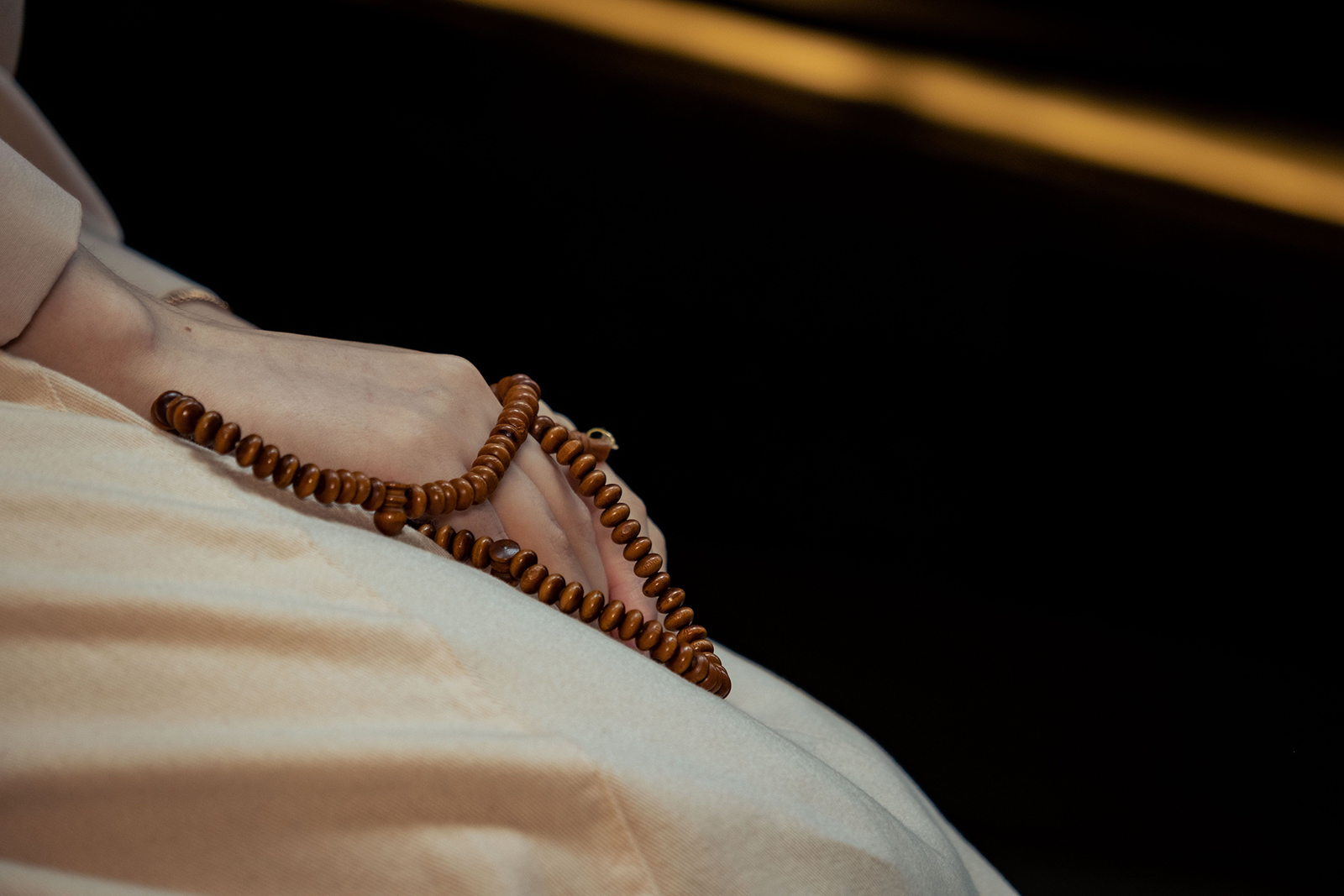
As Anjum continues to research treatments and consider various clinical trials for ME/CFS, looking forward to the day when she can return to a normal life again, she holds onto a deepened faith and a more enhanced hope to get through the hard moments of her new life — one day at a time, one whispered prayer at a time.
(Zehra Kamani is a Toronto-based freelance writer with a background in research. Her website is zehrakamani.com. The views expressed in this commentary do not necessarily reflect those of Religion News Service.)