Why European companies are turning to wellness retreat
As the world gets more ruthlessly competitive, European businesses are very much at a crossroads as to whether they should invest more in their people, or less.
Only 12% of European workers see themselves as engaged at work. For perspective, this is the lowest of any region in the world, and far lower than the US. Yet, European work standards are some of the best.
The conundrum is forcing organisations to think of new ways to tap into meaning and wellness as a means to get them on board.
When changing the venue isn’t enough
The problem with most offsites isn’t so much the intention, but the design. You can fly your leadership team to a rural hotel and fill the schedule with strategy sessions and a team dinner, yet still send everyone home mentally tired. Changing location doesn’t automatically create psychological distance from work. True recovery (the kind that actually restores performance) requires people to mentally disconnect and find meaning. A packed agenda in a nice hotel is still, cognitively speaking, a workday. Just one with better catering.
Co-creation, not curation
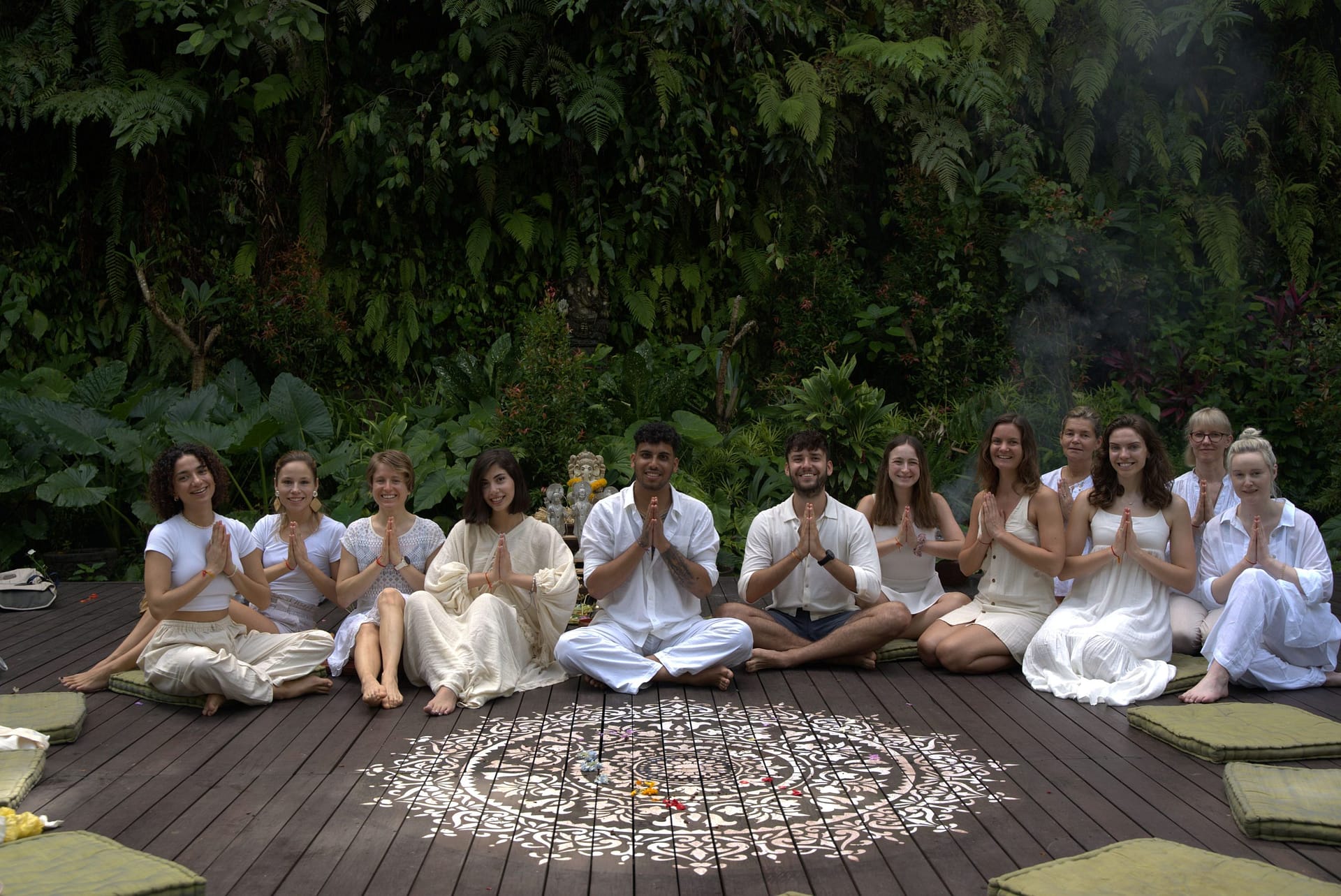
What all the big-impact retreat programmes share in common is that they’re not delivered to a team. They’re built with one. That distinction matters more than it sounds. Rather than offering a fixed agenda, the best providers shape the modality mix, pace, and intention of the experience around the group to match their size, their goals, their energy. More breathwork or more stillness. Plant medicine or none. Nature immersion or reflection. The growing range of corporate wellness retreats in Europe built on this adaptive model reflects how far the sector has matured into a dynamic, often spiritual, offsite.
The integration gap most companies overlook
This is where most organisations quietly lose their ROI. The retreat happens. People feel something real – and connected. Then they go back to their inboxes and stand-ups, and within a few weeks, the insight and connection has waned.
Structured integration is needed. Follow-up sessions, peer check-ins. The strongest providers build it in from day one, not as an optional extra. Avalon in fact builds both preparation and post-retreat integration into every programme as standard. It recognises that what happens before and after the retreat is as important as the experience itself.
From breathwork to plant medicine
So what actually happens at these retreats? Well, a lot of the time it’s yoga and mindfulness, though these are fairly traditional at this point. Some can go further, like Avalon, into conscious cuisine and cacao ceremonies. In fact, the complementary therapies are presented as a menu, not a rigid agenda.
Even plant medicine ceremonies are possible, where the legal department permits of course. The science is compelling, like a recent trial that reported a measurably higher number of novel ideas in the week following a guided psilocybin session. Not for every team. But worth knowing how far the spectrum goes.
The companies pulling ahead on talent and culture aren’t doing so by accident. They’re making deliberate investments in the conditions that allow people to genuinely perform. Ultimately, they’re trying to correct for the low engagement in European workers right now. That means going beyond the conventional offsite and beyond a half-day workshop on communication styles. People want connection and deeper meaning.