Nuclear-fusion firm says plant will deliver electricity to grid – but big questions remain
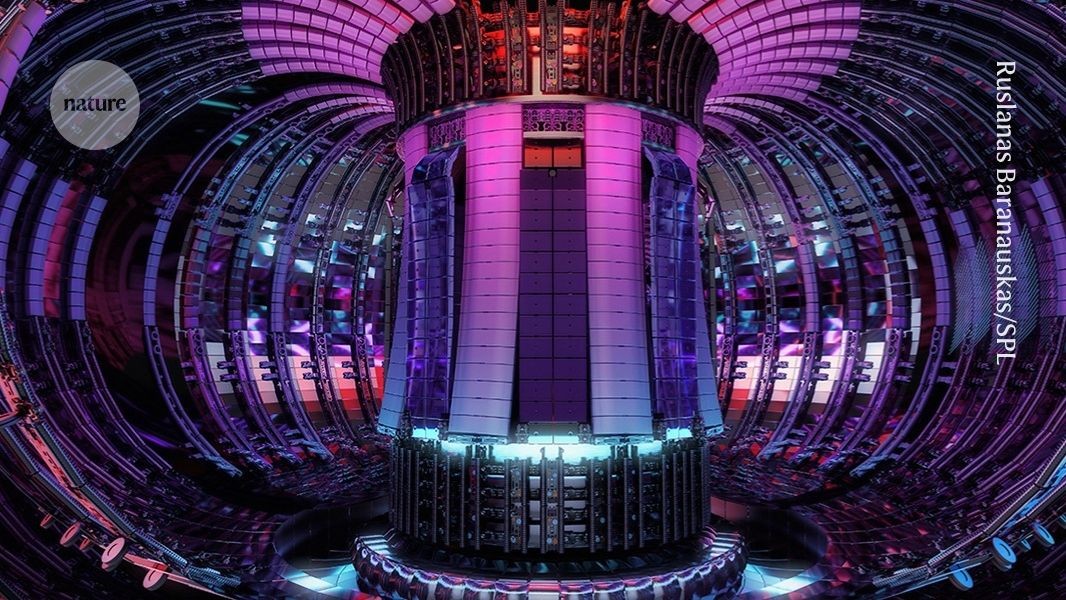
An illustration of a tokamak nuclear fusion reactor chamber.Credit: Ruslanas Baranauskas/SPLOne of the world’s leading private fusion companies, Commonwealth Fusion Systems (CFS), has published a suite of papers that the firm says “confirm” that its ARC power plant, if built as intended, will produce more electricity than it consumes. But some researchers say that results from an operational fusion reactor are needed to validate their predictions and that big engineering challenges remain to be solved.Private fusion firms have received almost US$10 billion of investments over the past decade, with the promise that fusion — the reaction that powers the Sun — could be harnessed on Earth to produce clean electricity. CFS, which is based in Cambridge, Massachusetts, and other firms including Helion Energy in Everett, Washington, and TAE Technologies in Foothill Ranch, California, say that they will deliver commercial fusion plants by the early 2030s.Physicists at the US National Ignition Facility in Livermore, California, created the first fusion reaction that briefly produced more energy than it consumed in 2022. But no team has made a reactor that can produce energy continuously, or enough to leave a surplus, or proved that a reactor can be run in an economically viable way.US nuclear-fusion lab enters new era: achieving ‘ignition’ over and overOne paper was published on 14 April and another four were published on 4 June in the Journal of Plasma Physics1–5. The articles were authored by 58 researchers from CFS and its academic partner institutes. The authors lay out the design of the ARC power plant and the physics behind it — including modelling the expected behaviour of plasma, the superhot matter in which fusion takes place. The researchers emphasize uncertainties that must be addressed before the design is finalized.But, speaking to journalists at a briefing ahead of the papers’ publication, Brandon Sorbom — CFS’ chief science officer based in Devens, Massachusetts — seemed confident. He said the papers “confirm that when we build the ARC fusion power plant, it will work”.The team behind it are “some of the best in the fusion business” and their concept is based on “good work over many years”, says Tony Roulstone, a nuclear engineer at the University of Cambridge, UK. But because the company is funded by private capital “there is pressure to claim things before the evidence is fully in place”, he says.Workers at the Commonwealth Fusion Systems magnet factory.Credit: Commonwealth Fusion SystemsCFS was founded as a spin-off company from the Massachusetts Institute of Technology in Cambridge in 2018. The company has since raised almost $3 billion and is gearing up to begin operations of its prototype, a demonstration machine known as SPARC, next year. Results from SPARC will be used to hone much of the ARC power plant’s design, which could begin operations in the early 2030s.The company says that SPARC will demonstrate net energy, that is, produce more energy than it needs to confine and heat the plasma, but not necessarily more than the wider plant uses to run. Its successor, ARC, should produce enough energy to not only sustain plant operations but also to continuously deliver 400 megawatts of net electricity to the grid, an amount that could power around 280,000 average US homes, says the firm.