Tesla Full Self-Driving v14.3.3 driver monitoring: We tested it
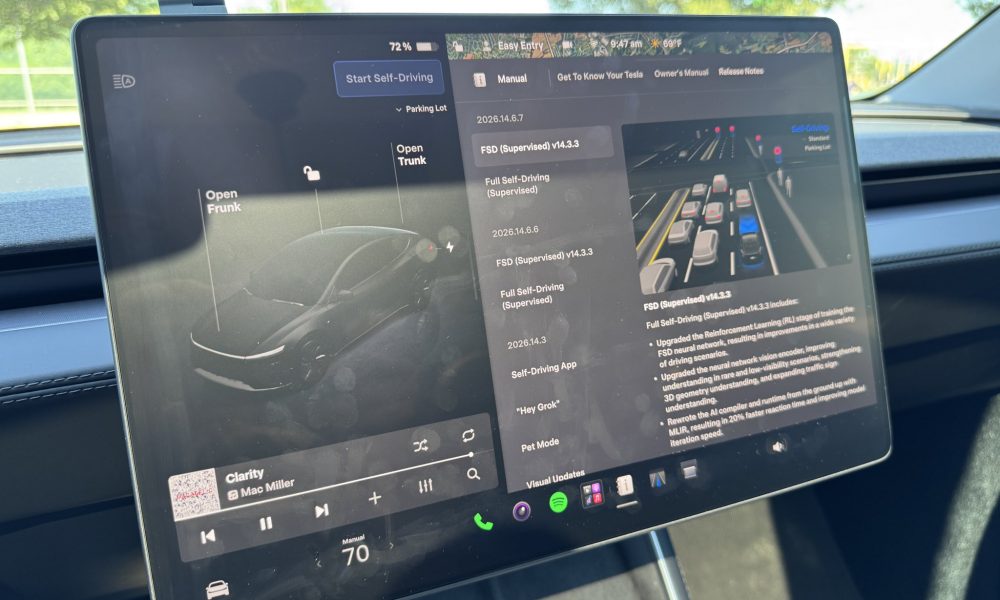
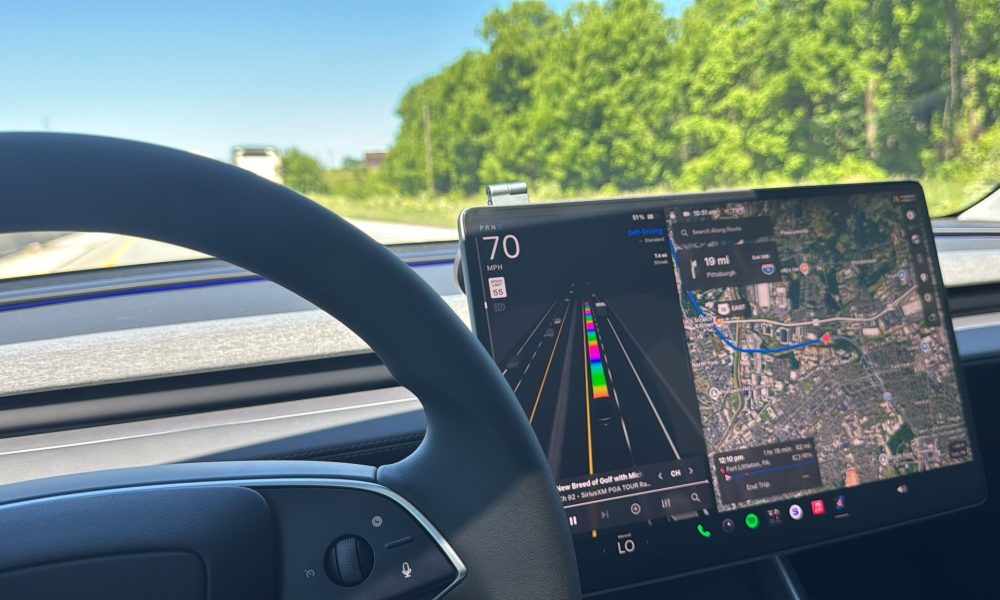
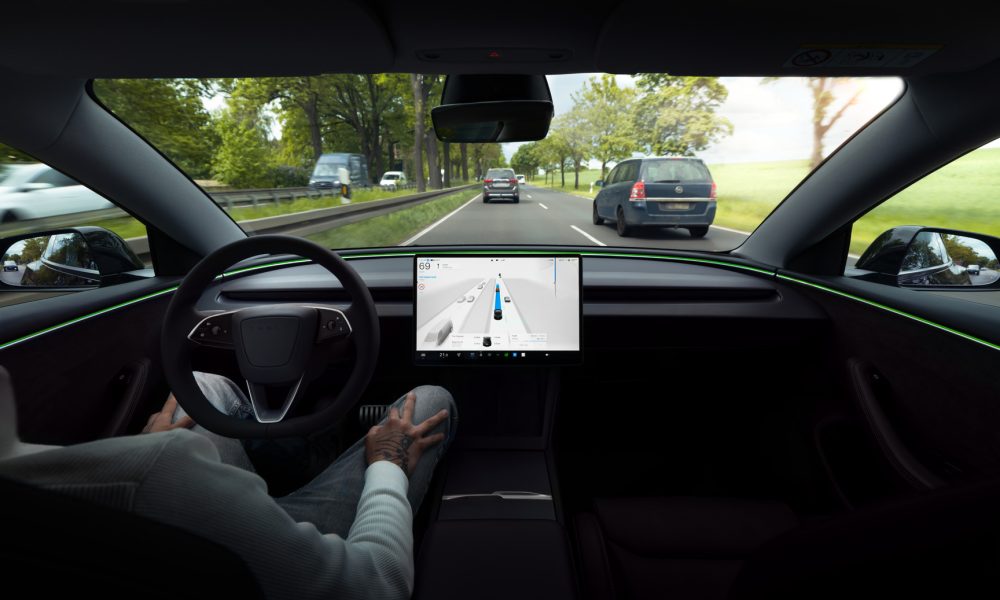
I recently took my Tesla Model Y running Full Self-Driving (Supervised) v14.3.3 over 150 miles on the Pennsylvania Turnpike in an effort to truly put the system under a stress test. There were a lot of good moments, and some bad, but overall, Full Self-Driving impressed me.
Last Thursday, I decided it was time to visit the Flight 93 National Memorial near Shanksville, PA. I go a few times a year, and it was a beautiful day. Others have taken some pretty lengthy drives using FSD, but I haven’t had the opportunity to really do something lengthy in quite a few months on an older version. I decided it was the perfect opportunity to try some things out.
I recorded the entire ride there on a GoPro, edited to highlight the crucial moments, and shared them on our social media accounts. If you want to watch them, I’ll share them throughout the piece, but I did not get to do a real breakdown of what I felt about its performance.
Overall Thoughts
I realize it is probably better to do a summation of its performance toward the end of the piece, but I feel like it is also reasonable to lead with this because I was overly impressed with how well it handled everything. The only moments where I felt a little bit of reason to touch the wheel, at least while traveling on the Turnpike and Rt. 30, were due to other drivers and their behaviors.
I have taken many drives to the Memorial over the past several years, and although it’s not incredibly long, it is a tiring drive. It’s about five hours both ways, close to 300 miles, and I think most of the exhaustion comes from the toll of sitting in the car and then visiting something that is pretty heavy to take in.
This was the first time I’ve ever taken the ride and not felt like I needed to avoid my vehicle after I got home. In the past, I could not even think about driving after I finally arrived at my house, but this was simply different.
It was nice to have something else take the drive for me, while I still had the freedom to take over if I chose to. It made the entire trip more enjoyable.
Full Self-Driving Recognizes Lane-Ending Arrows on Road
After traveling in the fast lane for a little while, FSD noticed the arrows on the road indicating the lane was coming to an end ahead. The car was also in the process of making a pass on a slower vehicle in the middle lane, but aborted this maneuver and backed off to get behind the vehicle.
I was really impressed by this because I thought that the car would absolutely try to make the pass, only to get in front of the other car, and then slow back down to 75 MPH:
Full Self-Driving Notices Veering Tractor Trailer, Adjusts Lane Positioning
My two rules of the road are never cruise in the fast lane and never drive next to a tractor-trailer. This clip is a perfect example as to why.
FSD v14.3.3 recognized this tractor-trailer attempting to change lanes while we were still next to it. The car shifted its lane positioning to the shoulder slightly to make room for the merging semi, executed the pass safely, and on we went.
I will admit this one made me a little nervous, but more so because of the 18-wheeler, and not because of the Tesla:
Full Self-Driving Follows the Rules of Tunnel Travel
Many people who are not familiar with Full Self-Driving and its capabilities are pretty limited in what they know about the really simple things it does well. Part of supervising FSD is being aware of things it might make mistakes with, and anticipating maneuvers it might want to make at the wrong time.
Entering the Blue Mountain Tunnel on the Turnpike, I was ready for FSD to attempt to get back into the right lane after making a pass on a tractor-trailer, but I was pleasantly surprised. Several signs outside the tunnel advise drivers to stay in the lane they’ve chosen while driving through the tunnel; this eliminates the possibility of an accident caused by lane changes, which would impede traffic on a crucial logistics route.
I was happy to see that Tesla Full Self-Driving v14.3.3 did not make this mistake:
Full Self-Driving Navigates Toll Plazas with Ease
I was interested to see how FSD would handle toll plazas, including the speed at which it would travel through them, and whether it would stop on the Turnpike at these booths, which have since been transitioned to a “Toll by Plate” system, which mails you a bill.
It was flawless:
Full Self-Driving Still Struggles with Parking from Time to Time
Since I took delivery in late August, I’ve never had a single instance of my Tesla struggling to park at a Supercharger. Other spots at the mall, market, or gym are another story.
This was the first time it did such a terrible job of backing into a spot. This required me to take over and manually park at another charger:
Full Self-Driving Gets Confused After Arriving at Its Destination
This was the first time I have ever experienced FSD getting confused and just circling the lot. The navigation continued to reroute to try to resolve the issue, but after four laps, I decided it was time to overtake the car’s controls and park manually:
This was a baffling behavior that I truly couldn’t explain. Other owners communicated that they have also experienced this issue.
Final Thoughts
I am so incredibly impressed by FSD that it has really made traveling stress-free. The two issues related to parking were not ideal, but to be fair, I usually take over when arriving at parking lots. However, this shortcoming is something Tesla has to make some serious progress with, because parking has truly stumped FSD at times.
Solving that will be a major breakthrough for autonomy, but Tesla has struggled with it for some time.
All in all, FSD v14.3.3 is unbelievably accurate and handles many of the more stressful maneuvers with ease, one of them being avoiding merging traffic on highways, which was shown above.
Some things that would be great to see improvements on are parking, Speed Profiles, which are relatively tough to adjust (I stayed in Standard for the duration of this drive), and, of course, navigation.