Families affected by homicide 'held up' by SAH service
In the last three years, more than 700 people annually have availed of the services provided by Support After Homicide (SAH).
The organisation, which is marking three decades of offering free nationwide services to families bereaved by homicide, currently has fewer than 15 volunteers.
While it said it has never had a waiting list for its services, it is looking to recruit volunteers, especially in areas where they have few or none.
These areas include west Cork and Kerry, Tipperary, Galway and Mayo, Sligo/Leitrim/Donegal and Cavan/Louth/Monaghan.
SAH was set up in 1996 following a number of murders in the 1990s highlighted a gap in victim support services.
"We realised something more was needed, more particular to needs of families in the aftermath of homicide," said founding member Ann Meade.
Ann Meade speaking at the even marking 30 years of the organisation
Homicide is the killing of one person by another, and it includes criminal deaths including murder and manslaughter and non-criminal deaths, such as accidental or unintentional killings.
SAH is a national voluntary organisation funded by the Department of Justice.
Trained volunteers provide emotional support and practical information to people whose lives have been affected by homicide.
In 2022, its volunteers supported 680 people, while in 2023, the number of people being supported grew to 793.
It has remained above 700 in the years since, with SAH supporting 705 people in 2024 and 270 people in 2025.
"We're a bit like a scaffold, that sort of hold them up, are there listening if they want that, finding out about the court system if they want that, maybe helping with the victim impact statement which is very personal and it is their only chance to say anything (in court) which is terrible hard," said SAH chairperson Helen Kealy Dunne.
As a volunteer, Ms Kealy Dunne worked with Sharon Lynn who lost her only brother in a one punch attack in 2023.
Siblings Martin and Sharon Lynn
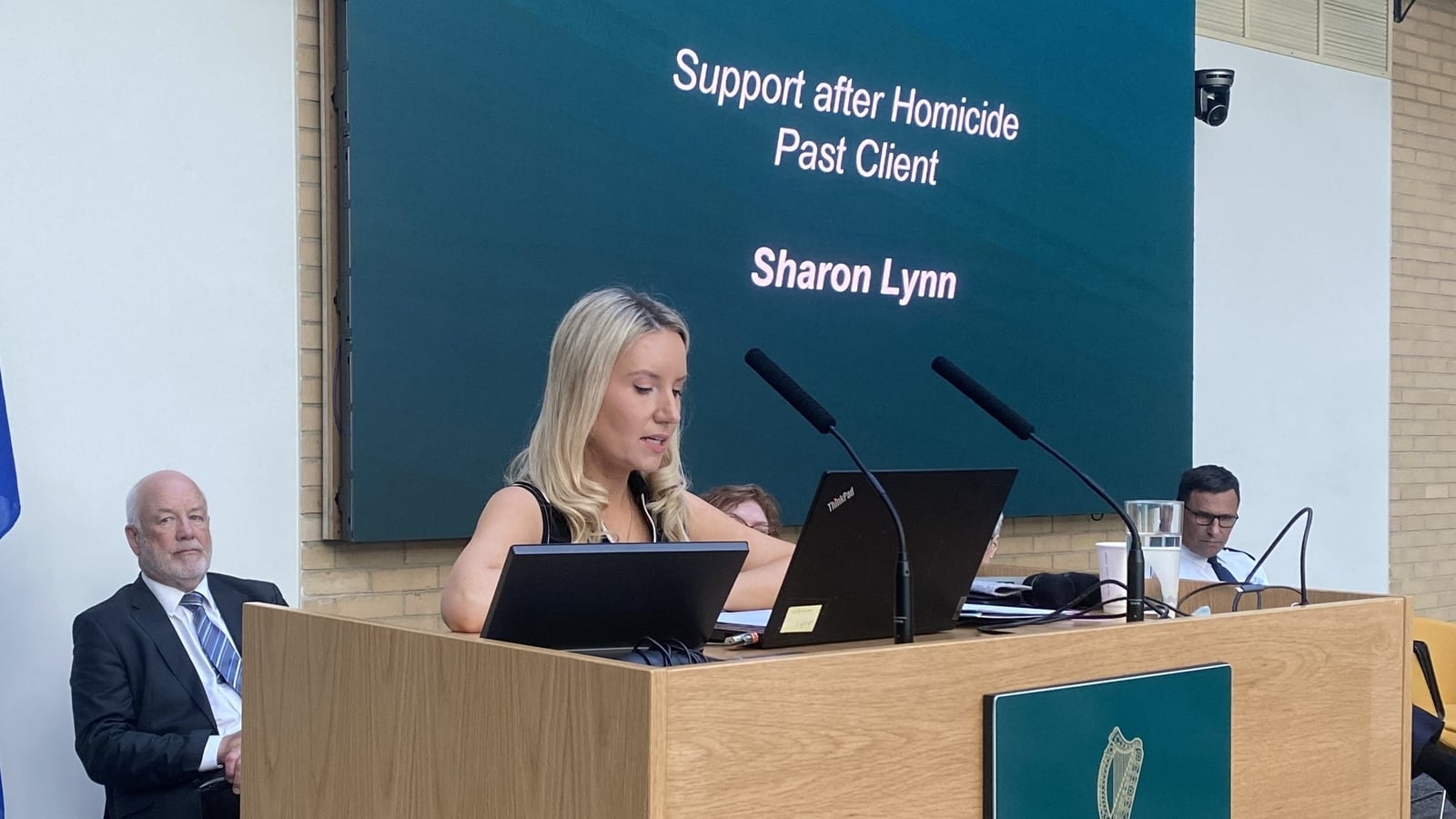
Speaking at an event to mark the 30th anniversary of SAH, Ms Lynn said that "2023 was supposed to be the best year: the baby I dreamt of for years had finally arrived, my partner and I had just moved into our dream home by the sea, there was such excitement and hope in our family."
When her daughter Lily was born, she asked her younger brother to be Lily's godfather.
"We were very close," Ms Lynn said.
But in "one punch, one moment" everything changed.
Ms Lynn described how she was given a leaflet for SAH by a garda days after her brother Martin had died.
"It takes a few months before you are ready to reach out for support, you're generally in shock in the early stages," Ms Lynn said.
Support After Homicide Chairperson Helen Kealy Dunne
She described how Ms Kealy Dunne drove from Carlow to visit her in her home and how she attended Martin's inquest with the family, and was in court alongside them as the man who pleaded guilty to his manslaughter was sentenced.
Ms Lynn said that while something like an inquest might "seem like a simple administrative process," it was daunting and difficult for her family.
"It is very surreal when you're talking about your own family member and going through that process, so to have somebody there that can tell you in advance what to expect, how long it is going to be, and just to have someone sit with you through it, that’s so important," Ms Lynn said.
Martin Lynn with his goddaughter Lily
Three decades in, SAH founder Ms Meade said that there had been many changes over the years, "all for the better."
Among them, she cited the introduction of Garda Family Liaison Officers and the EU Victims' Rights Directive, which established minimum standards on the rights, support, and protection of victims of crime, and their families, across the European Union.
Founding member of Support After Homicide Ann Meade
However, campaigns to improve the legal system for victims and their families in other ways continue.
Disappointed at the six-year sentence handed down to the man who killed her brother, and the Director of Public Prosecution's decision not to appeal that sentence, Ms Lynn is currently campaigning for sentencing reform.
"It is very hard for families to understand how these sentences are calculated.
"There needs to be a proper framework put in place around how things like aggravating factors and mitigating factors are calculated and to have that clearly communicated to the families as well," Ms Lynn said.