Cannes Film Festival Says the Wall Street Journal Is Wrong: It’s Not Debuting an AI-Generated Feature Film This Week
Sign up to see the future, today
Can’t-miss innovations from the bleeding edge of science and tech
This week, the Wall Street Journal ran a provocative story claiming that a fully AI-generated movie called “Hell Grind” was being screened at the iconic Cannes Film Festival, dropping a nuclear bomb in the middle of the already-heated debate on the tech’s intrusion into the art and business of cinema.
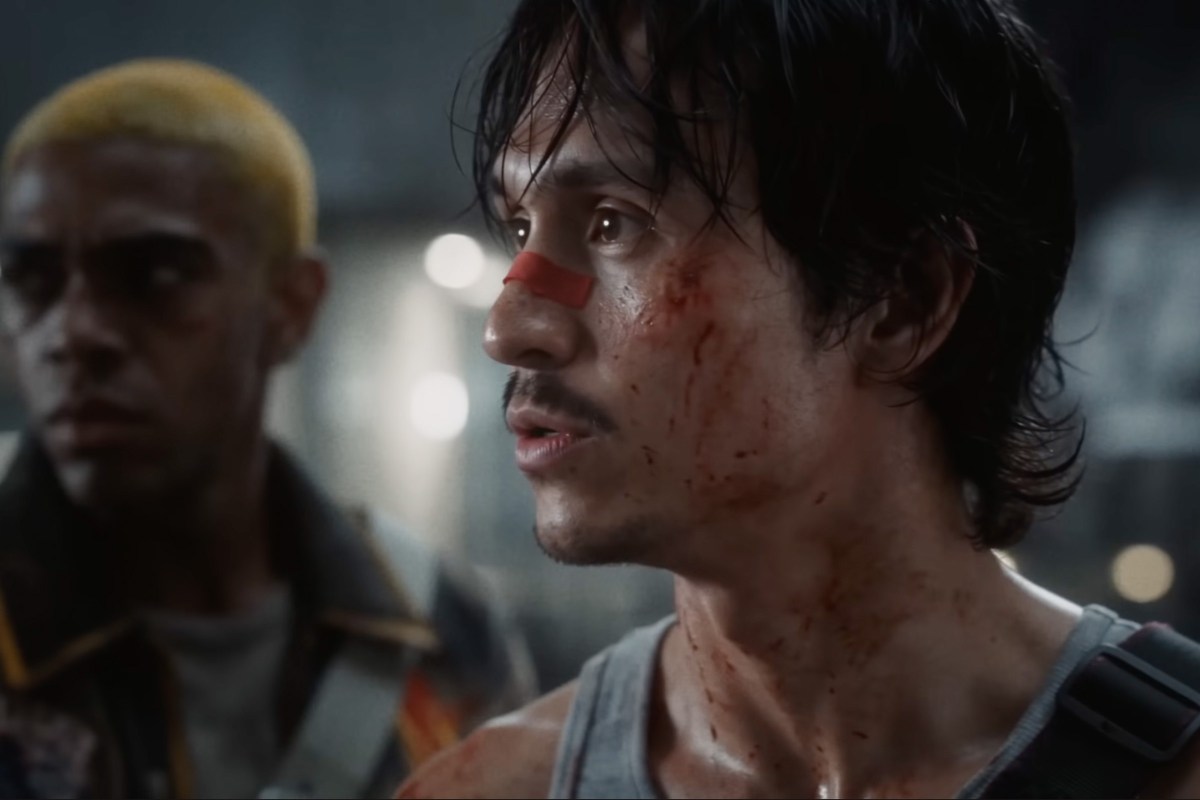
“Four street thieves are on the road to hell, literally, in an action-adventure movie debuting at the Cannes Film Festival Thursday,” the newspaper wrote. “But what’s compelling about ‘Hell Grind’ isn’t the campy plot: It’s that every character, setting and prop in the 95-minute movie was generated by AI.”
But we couldn’t find the AI movie on the official schedule of the prestigious event, which is held every year on the French Riviera. So we reached out to the organizers of the festival, who denied that they’re showing it at all, saying instead that the film was presented in a third-party screening at a local theater in the town of Cannes.
“We can confirm that ‘Hell Grind’ was not screened as part of the official Festival de Cannes program,” a Cannes spokesperson told us. “As publicly reported by Screen Daily and other media outlets, the project was presented during an industry event organized by third parties in Cannes.”
The company behind the film, Higgsfield AI, doesn’t seem interested in clarifying the confusion. When the company’s founder Alex Mashrabov posted on LinkedIn this week that “we just premiered at Cannes our first 95-minute feature film” — and boasted that “for decades, Cannes has been the room where new cinema gets legitimized” — certain reactions were sharp.
“This isn’t screening at the Festival de Cannes, which is what you’re implying,” director John Washburn shot back in the replies. “The [Cinéma Olympia] is a movie theatre that happens to be in the town of Cannes but it isn’t a venue for the festival. The suggestion that paying for a screening at some random theatre in the same town and at the same time as a major festival is somehow the same thing as being selected by that festival — the actual ‘room’ where new cinema gets ‘legitimized’ — is misleading at best. Spurious bullshittery, really.”
Neither the WSJ nor Higgsfield replied to requests for comment, but we’ll update if they do.
This kind of chicanery is not an uncommon tactic for filmmakers trying to hijack some of the buzz of one of the most paid-attention-to events in cinema every year. But it’s also emblematic of the misleading hype that AI companies feed off, making grand claims and awing the public with exhibitions that aren’t quite what they seem. That a major newspaper bought the hype and reported it was showing at Cannes when it wasn’t is a testament to where things are at.
The tentacles of AI have ensnared themselves in all manner of industries, but the tech has an especially strong hold on film. AI video generators promise to upend traditional modes of filmmaking as we know it, a sentiment glibly expressed by the common AI bro refrain that “Hollywood is cooked.” No longer will you need expensive actors, cameras, or sets to make that story idea you’ve had rolling around in your head since you were a teenager a reality. You just need to know what to whisper to an AI model.
And since film is a popular medium, it’s easy for AI boosters to show something that on a surface level appears to transform it. Earlier this year, a purportedly AI-generated video of Tom Cruise and Brad Pitt fighting on a rooftop went viral for its blockbuster-like quality that had even Marvel screenwriters prophesying the death of the industry. It turned out, however, that the video was an AI-reskin of existing footage of two human performers fighting in front of a green screen. In other words, it was pure theater.
The creators of “Hell Grind” are also making striking claims. The film supposedly took just two weeks and $500,000 to make, per the WSJ. A full 80 percent of that went to compute costs; its creators describe it as a proof-of-concept for how AI can empower creatives who wouldn’t otherwise have the means to make a movie, a common pro-AI spiel. Of course, given the specious marketing around it being shown in Cannes, all of these should be taken with a grain of salt.
“The main aim as a filmmaker is I just wanted to tell stories,” Adilet Abish, an in-house director and creative producer at Higgsfield who worked on the film, told the WSJ. “This is the case where AI can give you the tool to show the world your story.”
Right off the bat, it’s clear that “Hell Grind” isn’t the type of flick designed to garner awards at prestigious festivals like Cannes. It’s a 95-minute sci-fi action movie heavy on epic slow-mo shots and irreverent dialog — or that’s what the three minute trailer Higgsfield released this week suggests, at least. It follows a perennially blood-soaked dude named “Roco” and three other street thieves we care about whose “heist goes catastrophically wrong when an ancient artifact tears one of them into the underworld.” Battles against demons with overwhelming odds ensue.
“Hell Grind,” in other words, is exactly the kind of cheesy spectacle you’d expect AI bros to make. While the visuals are impressively shiny at times, they can’t cover up the aesthetic predilections of generative AI or the people who use it. Roco’s love interest looks like every other “photorealistic” but bordering-on-anime AI-generated waifu, less a character and more an amalgamation of attractive features that an algorithm averaged together. Ditto for the generic demon antagonists.
Its creators at Higgsfield insist that a lot of work and skill goes into making an AI film. The company makes a tool that harnesses other video generating models like Google’s Veo 3 to fine tune their outputs and ensure their images remain consistent across the thousands of short, 15-second clips they churn out that the tool later stitches together.
“You have to understand camera composition, which shots are changed. Like you can’t have two close-ups back to back, you have to start with an establishing shot,” Adil Alimzhanov, a content lead at Higgsfield, told the WSJ. “You still need those filmmaking skills.”
It’s entering a polarizing atmosphere on AI in the industry broadly, and at Cannes specifically. Some big names at the festival have come out in support. “The Substance” star Demi Moore declared that “AI was here,” calling on filmmakers to “find ways that we can work with it.” Nicolas Winding Refn, the director of “Drive” (2011) and this year’s “Her Private Hell,” compared AI to a painter’s brush, saying it came down to the artist to figure “what you’re going to do with it.”
Others were fiercely opposed. “AI doesn’t have a chance,” actress Tilda Swinton said, adding: “Humans make cinema, right?”
Guillermo Del Toro, the director of “Pan’s Labyrinth,” favored brevity.
“F*ck AI,” he said, to thunderous applause.
More on AI: AI-Generated Film Pulled From AMC Cinemas