Sam Altman Won in Court Against Elon Musk. But, Really, We All Lost
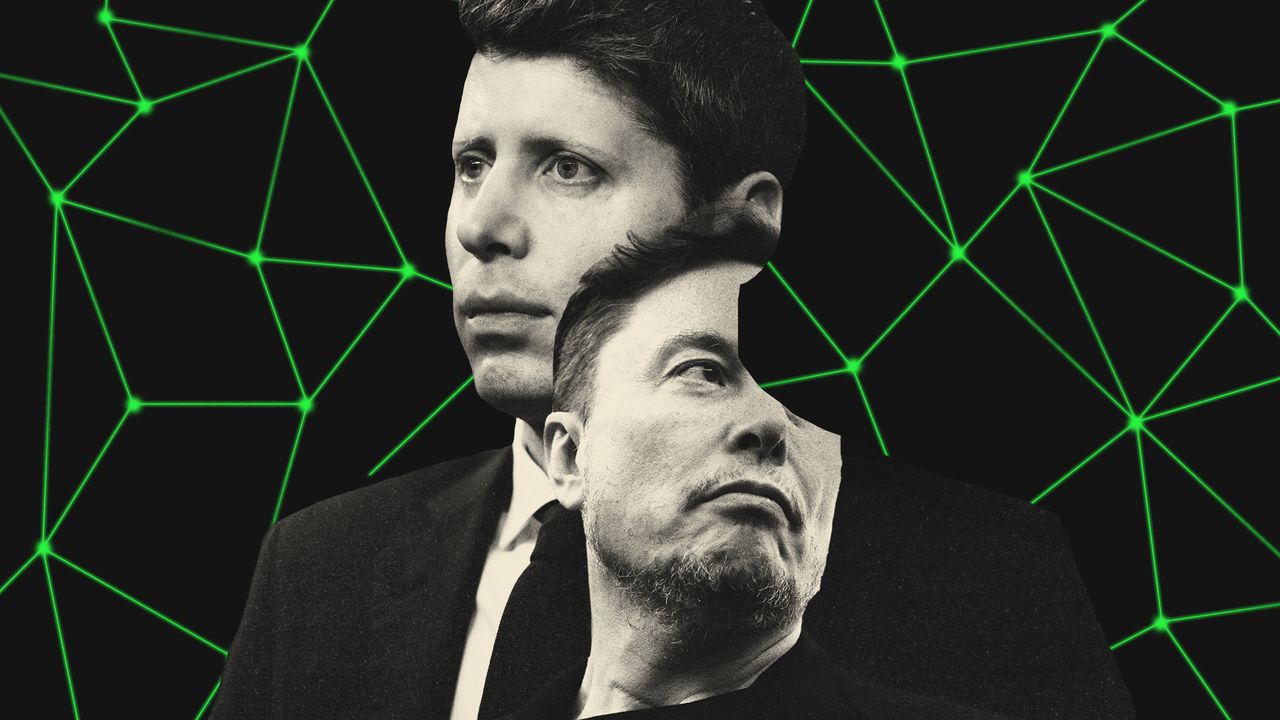
Had Musk v. Altman merely been a petulant matter of injured vanity, it might have played as a diverting farce. It was instead a travesty. The underlying issues—of how A.I. ought to be governed, and by whom, and how—are of great consequence. But in this trial, to root against Tweedledum was effectively to root for Tweedledee. It was a no-win situation.The butt pillow might have begun as a symbol of the trial’s frivolity, but it was clear soon enough that it was also a powerful metaphor for the collective failures that got us here. It was difficult, sitting in the unyielding pews, not to feel personally implicated. These were the leaders our society had somehow been assigned. Mike Isaac, a veteran tech reporter for the Times, wasn’t ashamed to admit that Brockman had inspired him to secure his own butt pillow. Isaac, a magnanimous man who looks like the actor Wilford Brimley styled as a member of the hardcore band Minor Threat, offered to share the cushion, but it struck me as somehow more appropriate to sit in the docks as a penitent. The courtroom filled up quickly in anticipation of Sam Altman, who was set to appear on the stand that day under oath. The OpenAI C.E.O. has long been known for his boyishness, but the past few years have coarsened his features and frosted his spiky hair with gray tips. He looked like a lesser vocalist for ’N Sync on a reunion tour. His presence in the courtroom had the mournful air of someone who no longer qualified as precocious.The basic question of the case, which is also the basic question of Altman’s career, is whether the transmogrification of OpenAI from a safety-minded nonprofit into a ravenous corporate behemoth was cynical in intention or merely in outcome. Recently, my New Yorker colleague Andrew Marantz appeared on a podcast to discuss the alternative ways to model his behavior: the “always-a-master-plan, 3-D-chess view” and the “improvisatory-checkers-all-along view.” There was a clever bit of trollery in Altman’s decision to hire as lead counsel the lawyer William Savitt, who had earlier forced Musk to follow through on his impulse to buy Twitter. Over hours of direct questioning, Savitt elicited from his brow-furrowed client a defense narrative that combined the most flattering elements of each version of the story. The part of the scheme that involved the creation of what he praised as “one of the largest charities in the world”—the nonprofit parent, by virtue of its equity stake in the for-profit subsidiary, has assets valued at more than two hundred billion dollars—was the result of what Altman repeatedly called “hard work” or “incredible work.” But the part of the scheme that involved the creation of one of the largest and most powerful for-profit companies in the world was extemporaneous—the by-product of having been “open to creative structures.” Altman said, “So this sounds a little silly to say now, but at the time, we almost didn’t start this effort because we thought Google was so far ahead that it might be hopeless to compete.”The decision to stand up a profit-making entity was a matter of facts on the ground: the future of humanity required that OpenAI prevail in an existential battle against Google; this battle could not be fought without access to enormous pools of capital; it was impossible to court investors without the promise of returns. On these three points, everyone involved was in agreement: a dinky donor-funded charity would be taking an abacus to a data-center fight. It was acknowledged only in passing that the introduction of a fiduciary motive might create perverse incentives, and even then the worry was primarily about optics. As one of Musk’s consiglieri wrote in an e-mail, “I’m a super fan of capitalism and making tons of money doing great things, but not sure if this correlates with the ‘noble cause for humanity, not doing it to make money’ narrative.” What divided Musk and his lieutenants, on one side, from Altman, Brockman, and the OpenAI chief scientist Ilya Sutskever, on the other, was the unresolved issue of which special man got to wear the pants. In September, 2017, Musk e-mailed Sutskever and Brockman to describe a scenario in which he “would unequivocally have initial control of the company.” He insisted that he had no interest in retaining unilateral power over the destiny of the species. At some unspecified time, he continued, the authority vested in him, by him, would devolve upon an expanded board: “The rough target would be to get to a 12 person board (probably more like 16 if this board really ends up deciding the fate of the world).”