Justice Ketanji Brown Jackson Blasts Supreme Court's 'Political' Handling of Secretive Louisiana Voting Rights Emergency
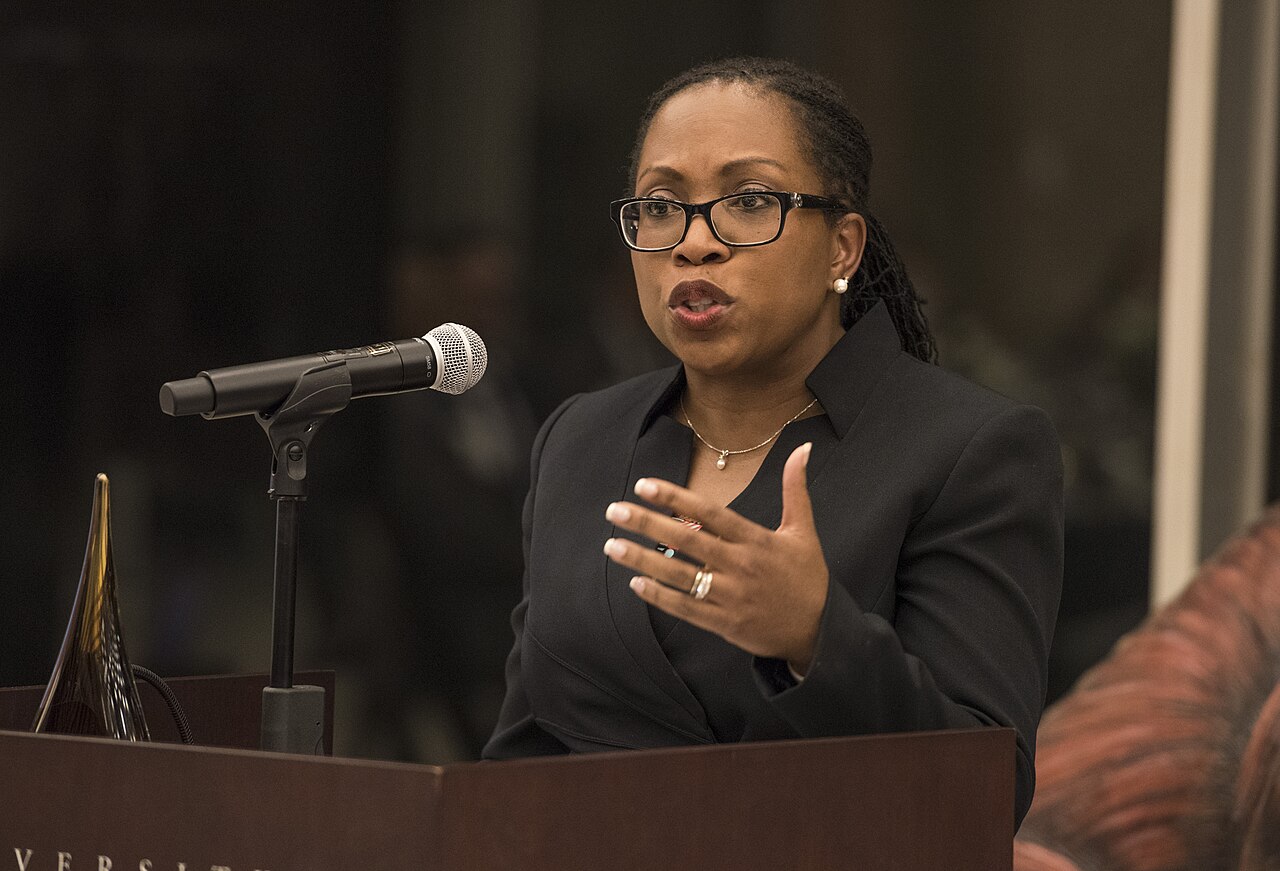
Justice Ketanji Brown Jackson says the Supreme Court fumbled in its ruling over Louisiana's redistricting, a decision that attracted controversy.Jackson said the Supreme Court risked being seen as partisan by fast-tracking an emergency order that allowed Louisiana to implement a new congressional map. She also warned the court to be 'really, really careful' ahead of the midterms, alleging that its actions could be perceived as politically motivated.'Courts are apolitical, not supposed to be issuing rulings that are in the political realm,' Jackson said, per CNN. 'We have to be scrupulous about sticking to the principles and the rules that we apply in every case and not look as though we're doing something different in this kind of context.'Louisiana Fast-tracks Redistricting After Favourable RulingJackson's remarks stem from the Supreme Court's alleged leniency with Louisiana, which urged the court to waive the usual one-month waiting period required to finalise its decision. This reportedly allowed Louisiana to expedite redrawing its congressional map, something US District Judge Richard Gergel also questioned.The Supreme Court ruling has severely weakened the Voting Rights Act, according to the outlet, setting an ominous precedent for this year's elections. The decision was also disclosed in one paragraph that didn't detail how the court voted.Jackson expressed her concerns on Monday in a written dissent, which focused on the dangers of the court being perceived as taking sides in a political dispute. She did not accuse the Supreme Court of the act or anything to that effect.Justice Jackson Appeals for Unbiased, Rules-Based Policies
'I think we have to be very constrained,' she asserted. 'My view was it would be a more neutral way to handle the matter to just stick with the rule that we always apply in situations like this.'The Supreme Court's majority recently reshaped how courts evaluate Voting Rights Act claims, by requiring clearer evidence of intentional racial targeting rather than relying primarily on effects.That approach has allowed states to press for immediate implementation where maps were found inconsistent with the Court's new framework, as demonstrated by the Louisiana ruling.Last year, Jackson also expressed concern over how the Supreme Court undermined the usual process for hearing cases by creating another lane of adjudication on the emergency docket. 'I think it's because the Supreme Court has shown a willingness to grant these emergency motions,' she said. 'It's not doing, I think, the court, the lower courts, or our country a service with that kind of procedure.'How the Supreme Court Ruling Impacts the Rest of the CountryThe Supreme Court struck down Louisiana's second majority-Black congressional district as an unconstitutional racial gerrymander in a 6-3 vote last April, drastically reshaping Voting Rights Act Section 2 protections.The majority opinion, authored by Justice Alito, now requires plaintiffs to prove intentional racial discrimination rather than discriminatory outcomes, forcing them to 'disentangle race from politics' with evidence officials can easily circumvent.This ruling sparked controversy after Louisiana Governor Jeff Landry suspended the 16 May primary just days before early voting and postponed it to 15 July, despite mail ballots already being sent to voters.Justice Elena Kagan's dissent warned that the Court added an intent requirement that was not in the statute, diluting minority voting power nationwide, and enabling GOP redistricting in Alabama, South Carolina, and Tennessee.