Australia's newest airline to compete with Qantas and Virgin would offer passengers ultra-low-cost flights
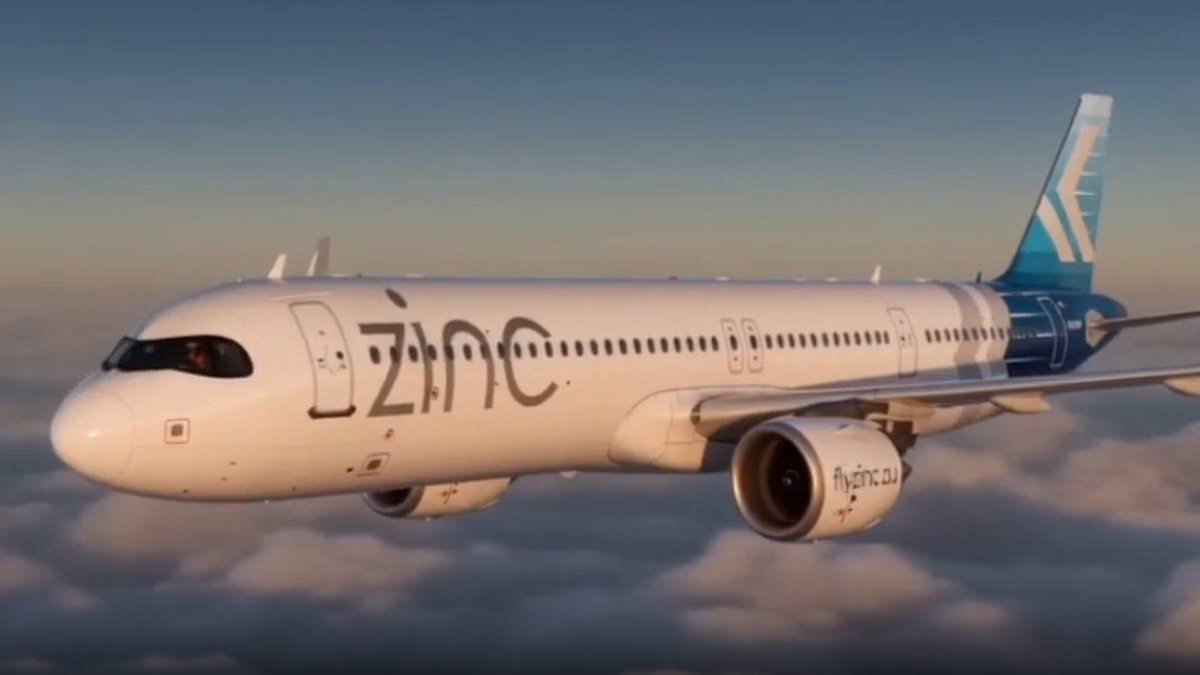
A prominent Australian aviation figure is fundraising to break the Qantas and Virgin Australia duopoly by creating a budget airline.Peter Kelly, who worked on Ansett's Golden Wing Club and Qantas' frequent flyer program, is looking to create his new airline, called Zinc, based on the world's most profitable low-cost carrier, Ireland's Ryanair.Mr Kelly is working to raise $200million for his airline, with $100million of that to be used to pay for aircraft deposits and fund operations.He claimed the airline would be ready to launch about 17 months after raising the money. Zinc would use Airbus A321neo planes, which use less fuel than Qantas' Boeing 737s, and fly between Sydney, Melbourne and Brisbane.Operations would later expand to the Gold Coast.Mr Kelly was also part of the team that helped create Jetstar and has extensively analysed Ryanair's operations to understand how they stay profitable while keeping costs low. 'One of the main features of an ultra-low-cost carrier model is its efficiency... Our model is about sweating the assets and running the planes for 12 hours a day minimum,' he told the Australian Financial Review. Peter Kelly - who previously worked at Qantas, Ansett and Jetstar - is fundraising to create a new airline, Zinc (concept render) Zinc would use Sydney's new Western Sydney International Airport (above) as a base Major construction on Western Sydney International Airport was finished in 2025Zinc's operations would differ from Jetstar's in that Attempts to introduce a third major airline to the Australian market have claimed several businesses over the last 40 years - including Bonza, Compass Airlines and a failed expansion by Regional Express.Koala Airlines is set to start flying in late 2026, pending the arrivals of three leased planes.Key to Mr Kelly's plan for budget-friendly fares is use of Sydney's new Western Sydney International Airport, with the airport set to launch operations in October this year.Documents circulated to prospective Zinc investors, seen by the AFR, said the airport would help free up Sydney's congested airspace.'Historically, the concentration of traffic at Sydney Kingsford Smith Airport, combined with slot scarcity, peak-hour congestion and a gate shortage, has created high structural barriers to meaningful new entry and has, in effect, protected incumbent operators from sustained new competition,' it read.'WSI materially alters this dynamic – not only within Sydney, but across the broader national network. The availability of unconstrained access to the Sydney market enables the establishment of a new domestic airline platform that was not practically feasible under a single-airport system.'Qantas, Jetstar, Singapore Airlines and Air New Zealand have all confirmed flights to and from the new Sydney Airport. Zinc would use Ryanair (above) as a model for operations to keep fares lowMr Kelly added the airport would serve as a base for Zinc, so its planes 'end up in the same place every night, reducing our cost with the overnight maintenance and deep cleaning'.The plans for Zinc closely mirror former Qantas chief economist Tony Webber's analysis of what a new airline would need to achieve success in Australia.'It should use WSI as an initial hub,' Mr Webber said in a presentation earlier this year. 'It shouldn't shy away from the thick trunk routes because they need these routes to build scale and these routes have high leisure content. The new [airline] needs to get its fleet utilisation above at least 10 hours per day.'Zinc is yet to appoint advisers for its fundraising and hasn't obtained certification from the Civil Aviation Safety Authority to begin operations.