Being Irish is more than a passport
As some of you will have seen, I had a number of exchanges with PC Ireland’s favourite Imam, Umar Al Qadri, on X this week after he bizarrely took it upon himself to tell the world what “Irish” means.
Al Qadri, a Pakistani like my father, basically said that anyone who says they are Irish simply is Irish, and we have to accept that.
Metaphorically, what he did was take the now-famous question, “What is a woman?” and reply with, “Whoever identifies as a woman”. He applied this to the very identity of the indigenous people of this island: “Anyone who identifies as Irish is Irish” is the logic he deployed.
I take great exception to this. Frankly, I see it as an insidious attempt to distort and erase the unique cultural heritage of the Irish people, which was fiercely defended over centuries at the cost of so much pain, bloodshed and anguish, in favour of the illusion of an open-borders utopian fantasy land.
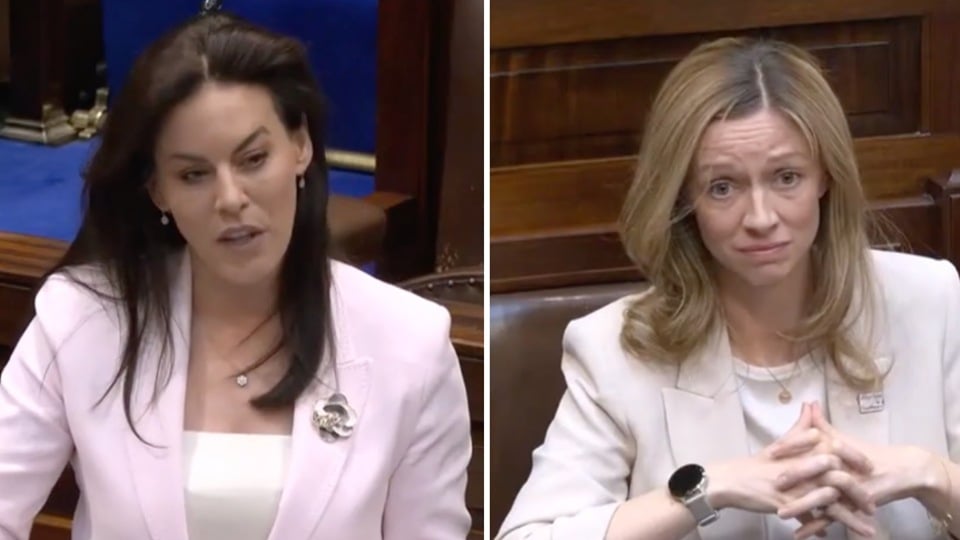
The conversation – such as it was – arose after Saud Mooge was selected to represent Dublin at the Rose of Tralee this year. I grew up watching the Rose of Tralee, and it’s very plainly obvious that the whole point of the pageant is to celebrate women from Ireland and around the world who have Irish heritage.
Al Qadri said, “Suad Mooge is not “the new Irish”, she is Irish. Born and raised in Ireland, shaped by its people, culture, humour, and values like countless others. Her appointment as Dublin Rose is a reminder that Irishness is not defined by skin colour, but by belonging, contribution, and shared identity. A proud moment for Ireland”, he said on X. The comments, of course, were turned off.
I find it incredible that someone who came to his country as an immigrant with his family has the cheek to lecture Irish people on what their identity means and who it applies to. The level of arrogance almost defies belief.
Saud Mooge is quoted in the Irish Times as saying, “I don’t have to prove to anybody how Irish I am,” which is a very convenient tactic when trying to advance a claim that one has no evidence for.
Before I go any further, let me be clear that anyone calling Saud names or making comments about her skin colour is despicable, and they are precisely the kind of useful idiots that those who wish to suppress open debate on the issue of migration love to point at as an excuse to call such conversations “hateful” or “dangerous”.
Saud is a beautiful young woman who was born to two Somali parents. She doesn’t have Irish heritage.
It seems strange to me that those who would call me racist for stating this simple fact don’t seem to sense the irony in their fury: It’s not like being Irish makes someone inherently better than a person from another land, but the strident and sometimes vicious way that some people insist that anyone can be Irish makes you think they might feel it does.
I don’t believe that I am ‘better’ than my Japanese or Brazilian friends because I have Irish heritage, and they don’t; the very idea is laughable to me.
The claim that “Irishness is not defined by skin colour” is also somewhat of a red herring, as someone who has Swedish parents is no more Irish than someone who has Nigerian parents. My colleague, Dr Matt Treacy, also deconstructed the myth that Ireland has long been a ‘melting pot’ of sorts, and that the Irish are “mongrels” by detailing the relative homogeneity of the island.
Ireland’s population becoming almost one quarter foreign-born over a very short period of time is not evidence of a “melting pot” or a “new Ireland” either – it’s evidence of a severely irresponsible immigration policy.
I think it’s important to understand that most of the people flooding to Ireland are coming from countries that are significantly bigger than our small island: such as India and Nigeria, for example.
Irish emigration is a story of people leaving this land to go somewhere bigger, even vastly bigger and much more able to absorb the newcomers, like the US, Australia, or Canada.
A person who was born to non-Irish parents is not Irish. They may have an Irish passport, but the Irish are an ethnic group which is thousands of years old, and simply being born and/or raised on Irish soil does not make one part of that group.
As many of you will know, in 2004, which was ironically the cusp of when the mass immigration project kicked off, the Irish electorate voted by a huge margin of 79.17% in favour of ending birthright citizenship.
This constitutional amendment restricted automatic Irish citizenship by birth, ensuring that children born in Ireland are only automatically entitled to citizenship if one of their parents is an Irish citizen or entitled to be one.
This is a clear sign as there could be that the vast majority of ethnic Irish people do, or at least did not, see simply being born in Ireland as not the same as being Irish; again, it’s not rocket science.
When people claim someone is Irish because they have an Irish passport, I wonder what they would call the pre-1922 natives? The Irish people are far, far older than the Irish state, after all.
I think the most obvious way to turn the idea that anyone born here or who has a passport is as Irish as the men who fought for freedom in 1798, is to consider in your mind if a child born to Irish parents in Beijing would be Chinese. Obviously not.
Forgive me for alluding to the trans debate again, but in much the same way as the DNA of a man who identifies as a woman, regardless of hormone treatments or surgeries, will test male if he is so examined, a person born of non-Irish parents will test as wherever their ancestors come from, and not simply where they were born or lived.
You don’t have to be a scientist to understand this.
I noted on X that I have a very dear friend who was born in Japan to English artist parents. This girl was raised in the countryside and didn’t have access to the usual international schools that a lot of expat (hint hint) children attend in Japan. She went to ordinary Japanese public schools and speaks Japanese at the level of a native.
Despite this, nobody sees my friend as a Japanese woman, not only because she is nearly 6 feet tall and has bright blue eyes and blond hair. She is an English girl born and raised in Japan: this shouldn’t be difficult to grasp.
The truth is that it’s not difficult to grasp at all, but stating the obvious is not always your friend in 2026.
When something doesn’t make sense, it’s often helpful to ask yourself, ‘Qui bono?’
Who benefits from the dilution of the nation-state in cases like that of Ireland? The most obvious beneficiaries are those who grow fat on cheap labour and the ever-spiralling scarcity and cost of housing.
If I owned a house, I’d be much happier about my margins of 100 people bidding on it instead of 10 or 20.
Ireland’s rapid intake of foreign nationals, as well as tens of thousands of foreign-born people who have now been naturalised, continues to place enormous pressure on critical services and necessities. The housing shortage is driving young Irish people overseas, and those (like me) who want to stay at home are often forced to live with their parents or rent rooms in shared houses.
The”Ireland is full” debate – which has been condemned by the holier-than-thou Dáil pontificators, who are only in their seats thanks to the blood and sacrifice of much greater men- is not about the number of people per square kilometre, but refers to the country’s infrastructural capacity to handle the growing population.
Many young Irish professionals simply cannot afford a home despite their economic efforts. It’s pretty grim stuff when many of us have little choice but to wait until our parents pass on to maybe have a home. This situation is a direct result of decades of irresponsible government policies, one of which is immigration.
It’s pointless saying ‘in a perfect world we could have x numbers of people’ when they’ve nowhere to go but drive prices up. When immigrants do come, they need houses as much as anyone else, and to claim that such large numbers of migrants flooding in does not affect the availability of housing is deeply dishonest; frankly, it’s bonkers.
Increasingly diverse societies also become atomised as large overseas cohorts stick together and fail to integrate with the native populations. You need look no further than the UK to see how Pakistani immigrants have stuck together to such a degree that now whole areas have been essentially given over to them as the native population in those areas decreases year on year. Luton, as just one quick example, is completely unrecognisable as an English town. Is that what we want for our homeland?
The Irish people have every right to discuss openly the charges that have taken this hard-fought-for nation by storm over the last few years, and should not accept any lecturing from people who have the cheek to try to tell them what their identity means.