Imminent Samsung Strike Could Be an Earthquake for AI
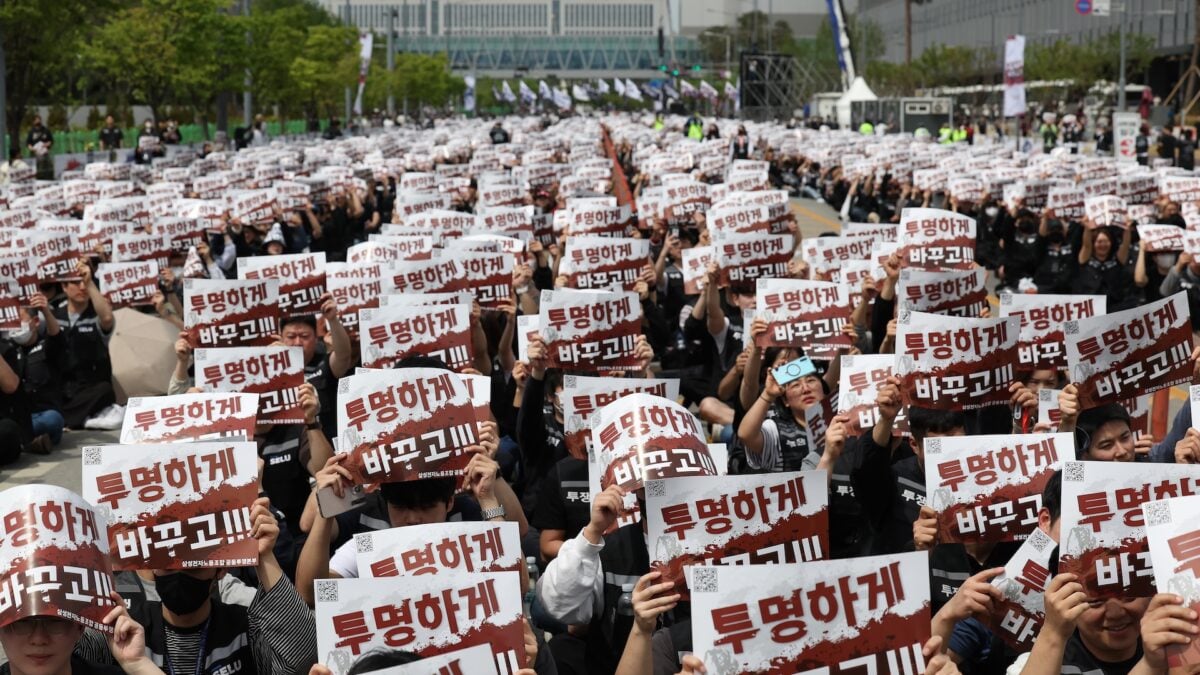
Samsung and a South Korean labor union left the table without a deal on Tuesday. With these negotiations part of a last-ditch effort to salvage relations ahead of a planned May 21 strike that would last two weeks, ripples across the AI biz globally are increasingly likely. The AI hardware world is no doubt holding its breath for what happens next since Samsung’s three manufacturing sites in South Korea, at Giheung, Hwaseong, and Pyeongtaek, all make components for cloud and high performance computing, including crucial AI memory manufacturing—which is at the heart of the labor dispute. Samsung and its bitter local rival SK Hynix are two of only three companies in the world that make it.
According to Reuters, union representative Choi Seung-ho said he regretted that “none of the agenda items requested by the union have been addressed.” At issue is a union demand that a cap on bonus pay be abolished. SK Hynix took the same action in 2025 and, per Reuters, employee bonuses at that company skyrocketed to three times what Samsung workers can receive. Widespread union activity at Samsung reportedly soon followed. How bad would a strike be for the AI business? Well, in April there was a one-day strike at Samsung led by this union, and production dropped right off. The output from its chip foundry reportedly plunged 58.1%, while its memory fabrication plants reportedly sank by 18% during the relevant shift.
One estimate from the union placed potential company losses from the full strike at an astonishing 30 trillion won—which would be about $20 billion. That’s a big number from what is admittedly far from a neutral source, but big numbers are merited here.
After all, Samsung’s recent revenue spike from AI components has been mind-boggling. In quarter one of 2026, Samsung reported an almost 50-fold year-over-year rise in income from chips. Samsung just crossed the $1 trillion valuation mark this month, and it is now the 11th largest company in the world by market cap. At the same time, SK Hynix actually exceeded it in terms of overall profits last year. SK Hynix invested heavily in AI-friendly high-bandwidth memory (HBM) technology in 2024, getting the jump on Samsung, and establishing itself as a crucial part of the AI memory supply chain. Even combined, the two companies can’t manufacture HBM fast enough to meet current demand.
Reuters notes that Shin Je-yoon, Samsung’s chairman of the board, said he was “worried about losing market leadership amid fleeing customers and falling competitiveness” in the event of a strike.