News24 | ANALYSIS | Can civilians fill the peacekeeping gap in eastern DRC?
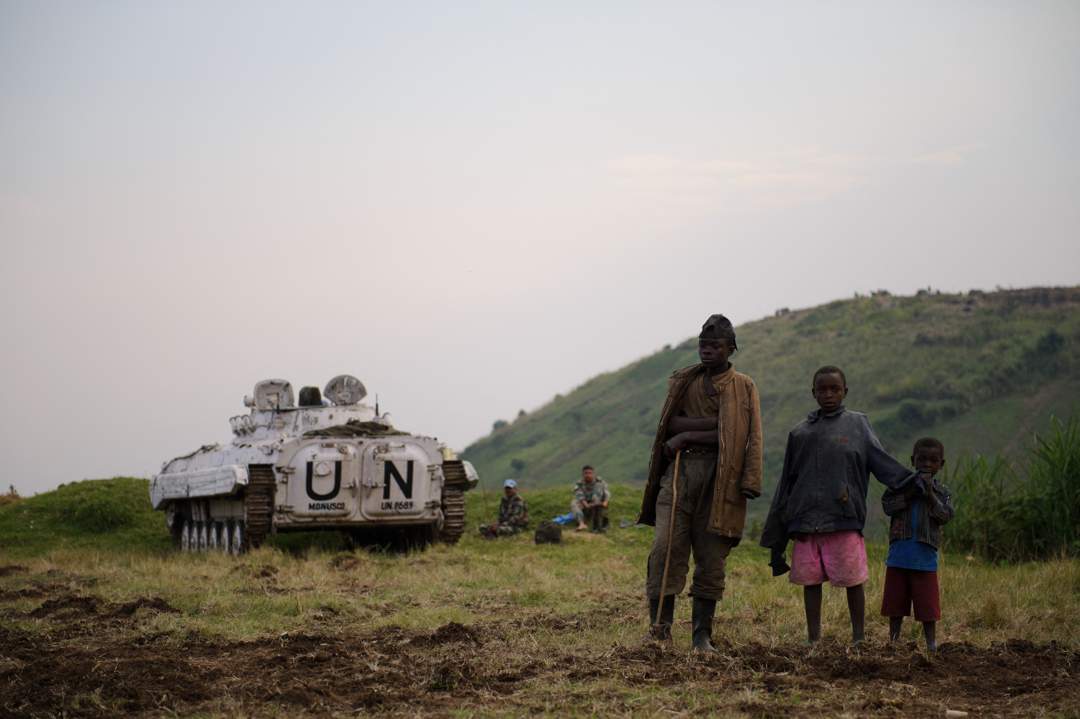
If formally recognised, unarmed civilian protection and community-based early warning can offer a path to sustaining stability and security amid troop withdrawals, write Nirvaly Mooloo, Imane Karimou and Tanya Wimsley in ISS Today.Civilians caught up in the eastern Democratic Republic of the Congo (DRC) conflict are developing mechanisms to protect themselves – even as civilian attacks are rising, and the United Nations Organization Stabilization Mission in the DRC’s (MONUSCO) footprint is shrinking.Since the mission’s 2024 withdrawal from the province, South Kivu has been left with an acute gap in civilian protection. Renewed under United Nations Security Council (UNSC) Resolution 2808 in December 2025, MONUSCO’s mandate still places civilian protection at its core. But international human rights groups have repeatedly highlighted the gap between high-level ceasefire diplomacy and realities on the ground.Human Rights Watch reported grave abuses, including abductions, executions and sexual violence, against civilians during the fall of Uvira in December 2025. Around 5 325 646 people were internally displaced from November 2025 to March 2026, with South Kivu accounting for 1 232 251 of them. Smaller numbers fled across borders into neighbouring states, with several hundred reportedly crossing into Rwanda, and tens of thousands into Burundi.Violence has spread from urban centres into highland areas such as Fizi, Mwenga and Kalehe territories, with restricted humanitarian access. Drone attacks killed at least 16 civilians and injured eight between February and April.Yet MONUSCO’s capacity to respond has steadily declined. In line with prior trends in UNSC resolutions 2717 and 2765, troop numbers have dropped from 13 500 to 11 500, due to financial constraints and the host government’s demands for the mission’s withdrawal.Armed groups are restricting the movement of peacekeeping forces, limiting what they can do operationally, and global peacekeeping budget cuts are eroding MONUSCO’s capacity.In the absence of consistent state security, South Kivu communities have developed mechanisms and practices for unarmed civilian protection, forming an informal yet active layer of security infrastructure. But civilian-led systems are under-resourced, fragmented, and weakly institutionalised, and their work remains largely disconnected from formal protection and verification systems.Local mechanisms such as peace committees and unarmed civilian practitioners are already active across the east. They negotiate local ceasefires to allow civilian evacuations, manage rumours about incoming attacks on WhatsApp groups to prevent mass displacement, and proactively engage armed actors to prevent violence.In areas such as Kalehe, Uvira and Walungu, women traders have organised networks to share real-time information on safe passage to markets. Women have reported fewer incidents of harassment and targeted attacks against international actors like Nonviolent Peaceforce.The pattern is not new. Communities navigating contested areas routinely build informal alert systems, negotiate with armed actors, and pool resources that formal protection mechanisms inadvertently neglect – in contexts as varied as Cameroon, Iraq and the Philippines.It works because civilian actors are often from the same communities as those who have taken up arms, sharing the same language and social codes. This proximity is difficult to replicate and gives them leverage in negotiations with armed actors, where formal actors may struggle.Such work is also prevention-oriented. Rather than responding to violence after the fact, actors focus on identifying early warning signals of incoming violence, especially in areas that international peacekeepers find hard to reach.Civilian protection dynamics in eastern DRC are also complex. Community-based systems can be co-opted by political and armed actors, skewed by local power dynamics, or used to exclude marginalised groups — all of which can undermine their neutrality and effectiveness.And while community monitors can detect threats and manage tensions, the information they gather rarely feeds into broader decision-making processes or triggers responses beyond local levels. Too often, civilian protection strategies at the national, regional and international levels do not adequately appreciate civilians’ roles in their own protection.A concrete entry point is through MONUSCO’s ceasefire monitoring mandate in South Kivu. The International Conference on the Great Lakes Region’s (ICGLR) Expanded Joint Verification Mechanism Plus (EJVM+) ceasefire monitoring arrangements lack a dedicated civilian component and contain no clear provisions for civilian, women, youth or civil society participation. MONUSCO’s role also remains largely logistical and supportive rather than directly protection-oriented within the ceasefire framework.Integrating civilian monitors into monitoring, verification and reporting processes could feed early warning data into ceasefire monitoring, providing real-time, localised insights that formal mechanisms often miss.This approach cannot replace formal processes, and doesn’t suggest that states are not responsible for protecting their own populations. But it does ground ceasefire monitoring in trusted local networks and strengthens civilian agency in a peace process that has largely excluded local voices.Civilian-led protection cannot replace the political engagement needed for a durable cessation of hostilities. Because they operate at the grassroots, these civilian networks may also face distinct risks. Local power dynamics can skew participation, exclude marginalised groups, or enable co-option by political and armed actors, undermining neutrality.Thus, the effectiveness of locally-driven early warning systems hinges on their credibility and legitimacy. Without strong verification, triangulation, safeguards against misinformation and support, they risk manipulation.Across the Great Lakes region, Lake Chad Basin, and Sahel, evidence shows that greater visibility can expose community actors to adverse risks. This is especially true in contested areas where they are caught between competing armed groups, state and non-state and accused of collaborating with one or the other side, which can trigger retaliation in kidnappings, extortion and targeting of civilian infrastructure.What is needed is structured, well-supported engagement rather than ad hoc reliance that leaves communities exposed and unrecognised.First, partnerships at a local and national level with community-based protection actors should be formalised through structured communication channels. A key advantage of these civilian-led systems is their flexibility and ability to respond quickly to changing local dynamics without the bureaucratic constraints that often limit formal mechanisms.This would allow early warning information collected at the local level to feed into the state’s and MONUSCO’s verification and analysis processes.Second, targeted support is needed to strengthen these systems. Training in mediation, early warning and safeguarding, alongside improved coordination, can enhance effectiveness while mitigating risks to civilian actors.Third, civilian-led protection mechanisms should be integrated into existing monitoring and verification frameworks such as the ICGLR’s EJVM+. This would expand situational awareness beyond the reach of peacekeepers and improve real-time responses to emerging threats.As protection gaps widen, the question is no longer whether these systems matter, but whether they will be recognised, supported and integrated in time. Only then will unarmed civilian protection networks, often the first and last line of defence for populations at risk, be recognised as the strategic asset they already are.Nirvaly Mooloo is a Research Officer at the Institute for Security Studies (ISS), Imane Karimou is a UN Representative and Tanya Wimsley is a Consultant at the Nonviolent Peaceforce.This article was first published by ISS Today.