Bear euthanized after visiting Alberta summer village
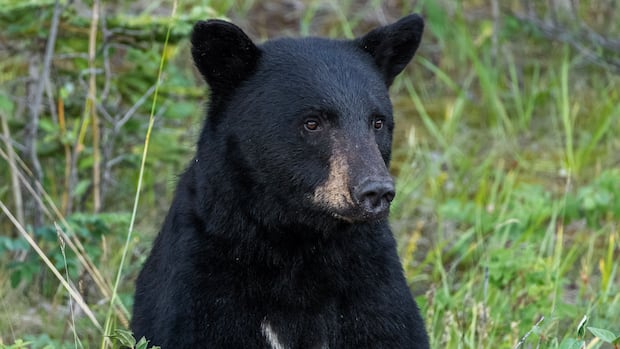
Listen to this articleEstimated 4 minutesThe audio version of this article is generated by AI-based technology. Mispronunciations can occur. We are working with our partners to continually review and improve the results.A black bear was killed by Alberta Fish and Wildlife Enforcement Services last week after reports of it frequenting a populated area.The bear was euthanized May 6 after repeatedly being seen in the west-central Alberta summer village of Burnstick Lake in Clearwater County, about 80 kilometres southwest of Red Deer.In a statement sent to CBC News, the province referred to the bear as "habituated," meaning it had showed little or no reaction to the presence of humans, and as such was considered a potential risk to public safety."The incident remains under investigation, and no additional information is available at this time," the province said in a statement. Officials with Burnstick Lake did not respond to requests for comment ahead of publication.Burnstick Lake is bear countryBear sightings in the summer village of Burnstick Lake are monitored by Mountain View BearSmart, which tracks sightings of bears and other large carnivores in the counties of Clearwater and Mountain View, while offering resources and hosting events to promote peaceful wildlife co-existence. Society chair and wildlife biologist Paul Fraser said the bear had been hanging out in the area for about a week."There's obviously some attractant that's keeping it there, whether it's bird feeders, barbecues, garbage, whatever. We're not sure. They never said," Fraser said.WATCH | Food-conditioned black bear put down in Waterton:Parks Canada officials say everyone has to play a role when it comes to keeping wildlife safe, especially not leaving garbage or food around national parks because it can lead to dangerous behaviour from animals like the black bear they recently put down after it was deemed a risk to public safety for seeking out food from humans."Eventually, at some point that bear becomes a public safety issue and then they have to do something about it," he said. "They cannot move the bear, because all they're doing is they're going to move that problem somewhere else. And so the only thing they can do is euthanize that bear."He said food attractants need to be removed to stop bears from entering populated areas like the summer village in the first place — and that once the bear has become food-conditioned, relocating it is unlikely to help.He said relocating a black bear in that part of the province isn't likely to be an effective solution."If you move the bear to another area, all you're doing is putting it into an area where there already are bears," he said. "And so that bear may get pushed out by the territorial bear that lives there already."The area supports a healthy black bear population, and is also home to grizzly bears, Fraser said.Burnstick Lake, located south of Rocky Mountain House in Clearwater County, photographed in 2020. (Google Maps)Further south, multiple warnings and area closures have been put in place by Alberta Parks due to bear activity in Kananaskis Country. Last summer, a high number of bear encounters in provincial parks led to a blanket bear warning for the entirety of Kananaskis Country — the first time such an advisory was issued since 2016. 'It's all about food'The decision to relocate a problem bear or kill it typically comes down to guidelines laid out in the province's detailed black bear response guide.Under that framework, bears are classified based on factors such as age, whether they have cubs, and their specific problematic behaviour — whether that's becoming habituated to the presence of humans, learning to associate humans with food, or preying on livestock, pets or humans.The Alberta government's black bear response chart outlines the fate of bears after capture by Alberta Fish and Wildlife Enforcement Services. The chart only applies to bears that have been captured, as preventative action (hazing, scaring the bear away, removing food attractants) is expected to be the initial response before officers decide to capture the bear. (Government of Alberta/Screenshot)"Why was the bear there? Was it a garbage thing? Was it defensive? Was is a bear protecting its cubs, or predatory?" said retired Alberta Fish and Wildlife officer John Clarke.Clarke said the root cause of bears entering populated areas is their search for food, particularly when food attractants like garbage or fruit trees are present."The big thing about bears: it's all about food," he said.And with bears across Alberta recently emerging from torpor, they'll be scouring the landscape for high-calorie food at this time of year.WATCH | Black bear tranquilized and relocated in southwest Calgary:Alberta Fish and Wildlife captured a black bear in the southwest Calgary community of Oakridge on Oct. 9, after receiving reports of what's believed to have been the same bear in the area over the last few weeks. The agency told CBC News the bear was successfully relocated outside of the city.Black bears can be found in about 75 per cent of Alberta, where they inhabit most forested areas, according to the province.Black bears live in every Canadian province except Prince Edward Island. They're not considered at-risk throughout their range, while grizzly bears are a threatened species in Alberta."Obviously grizzly bears get a lot more attention," Clarke said. "Black bears don't get a lot of protection compared to grizzly bears."