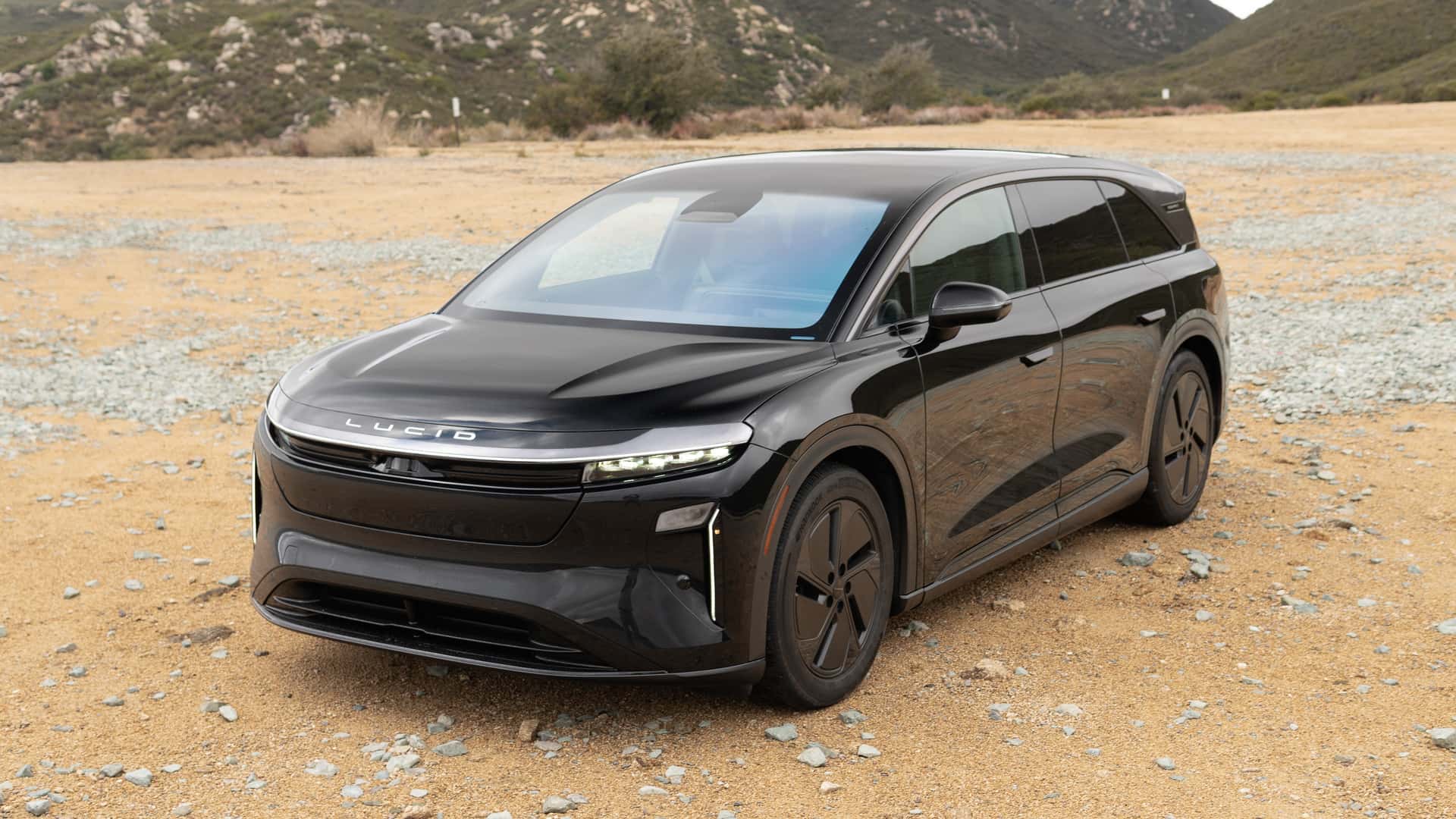
Lucid Gravity Robotaxis Get California Permit That Tesla Doesn't Have Yet
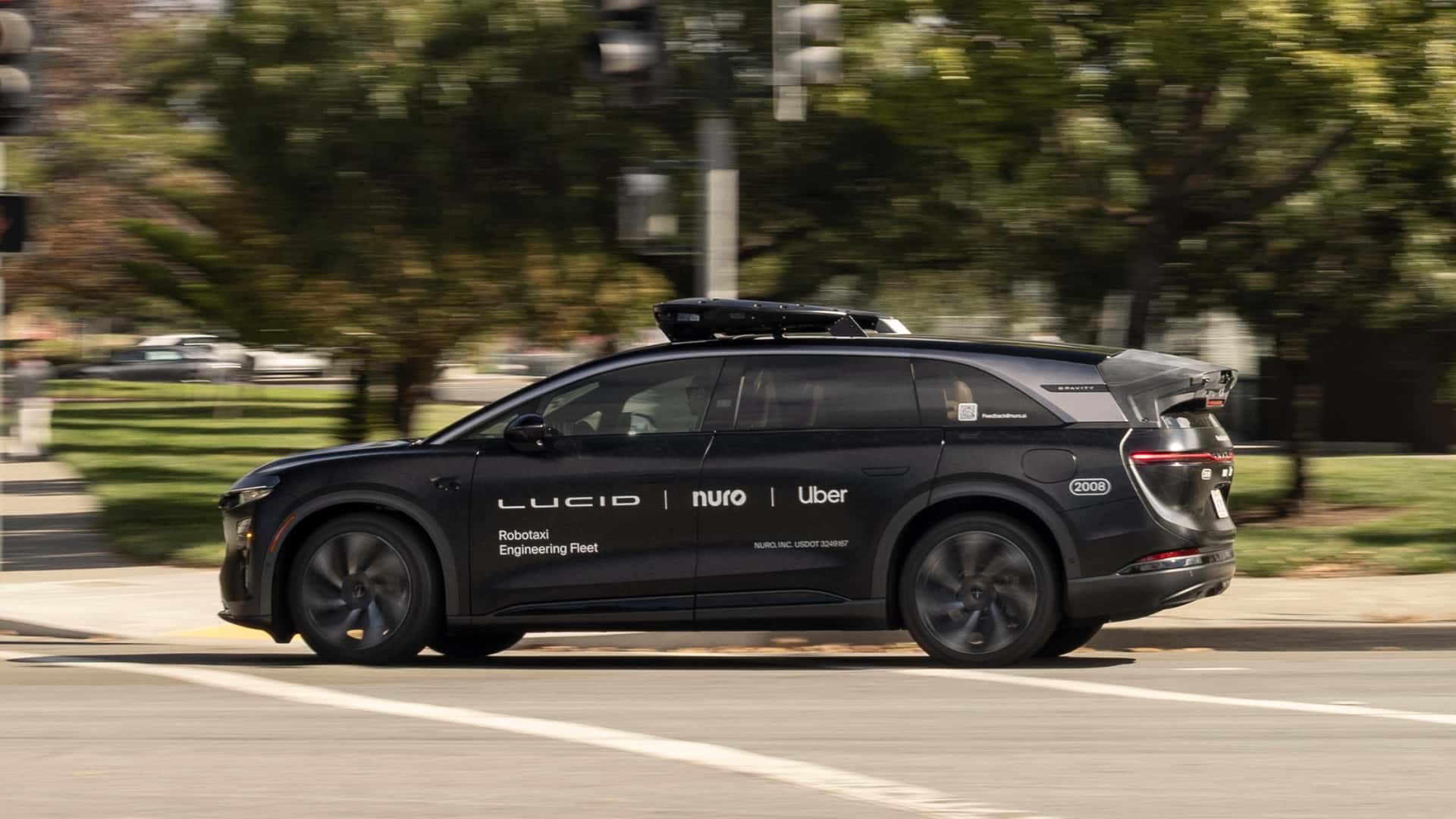
Nuro has secured permits from two California government agencies to begin testing the Lucid Gravity robotaxis.
The company is authorized to begin testing in Santa Clara and San Mateo counties, including in light rain and fog.
Nuro, the autonomous vehicle technology company that has teamed up with Lucid and Uber to deploy Gravity robotaxis in the U.S., has obtained two crucial California permits that will pave the path towards commercial driverless ride-hailing operations by the end of the year.
The company said Friday that it had secured a permit from the California Public Utilities Commission (CPUC) to test the Gravity robotaxis with a safety monitor on board, along with passengers. In April, the company also obtained a permit from the state’s Department of Motor Vehicles (DMV) to begin truly driverless testing on public roads, without a safety monitor on board. The company, however, isn’t authorized to begin paid rides just yet.
22
Source: Patrick George
Robotaxis are at the center of a new arms race in the automotive industry, promising to make our roads safer by eliminating human error. California has long been their proving ground, and overcoming some of the state’s bureaucratic hurdles is a major boost for startups to begin gathering real-world testing data and ironing out operational kinks before they’re cleared for broader deployment.
The Gravity robotaxis currently have driverless testing permits in Santa Clara and San Mateo counties, according to the California DMV. That includes dry or wet pavement, asphalt, and even light rain and light to moderate fog. Maximum speed is capped at 45 miles per hour. They will join several other companies testing robotaxis in California, including Amazon-backed Zoox and WeRide, which is already operational in China and the Middle East.
Waymo is the only one operating at scale in the Bay Area with truly driverless paid rides. Tesla also operates its Model Y Robotaxi service in California with paid rides, but all of those have safety monitors on board. Tesla hasn't obtained the necessary permits to test its taxi service without a driver. As of February, the company had not yet applied for a driverless permit, a DMV spokesperson told Reuters.
It does have a few unsupervised robotaxis operating in Austin, Texas, where regulatory hurdles are far fewer than in California.
The three-way partnership between Lucid, Nuro, and Uber aims to put autonomous ridehailing vehicles on the road in San Francisco by the end of this year. Uber is investing $500 million in Lucid and purchasing a minimum of 35,000 Lucid vehicles for its fleet, including Gravity SUVs and EVs based on its upcoming midsize platform. They will use Nuro’s autonomous software and hardware and will be available to order on the Uber app.
Contact the author: suvrat.kothari@insideevs.com
We want your opinion!
What would you like to see on Insideevs.com?
Take our 3 minute survey.
- The InsideEVs team