The Can That Pays for Your Recycling Bin
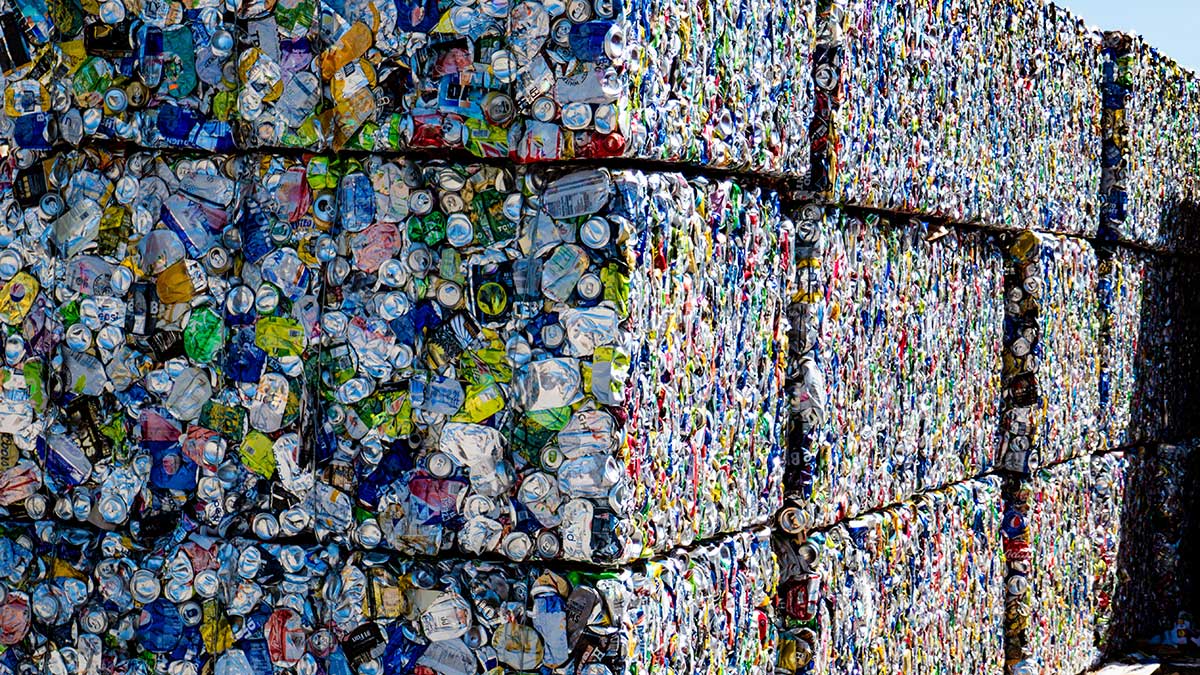
A used aluminum can is worth more, pound for pound, than almost anything else you put at the curb. In late 2024, a ton of crushed and baled cans was selling for around $1,338. Glass, by comparison, sells for roughly, well, nothing. Mixed plastics often cost the recycler money to handle. A single bale of cans, about the size of a small refrigerator, can be worth $40,000 in scrap. In a lot of towns, that one bale is the reason the whole truckful of recyclables is worth picking up.
That makes aluminum the quiet engine of curbside recycling. And right now, fewer Americans are putting cans in their bins than at any time since the early 1990s. According to a 2024 report from the Aluminum Association and Can Manufacturers Institute, the U.S. consumer aluminum-can recycling rate fell to 43 percent in 2023, well below the 30-year average of about 52 percent. Consequently, more than half of every can you finish ends up buried in a landfill instead of back on a store shelf as a new can.
How a recycling plant makes its money
Your bin doesn’t go straight to a recycling factory. It goes to a sorting facility called a MRF, pronounced “murf,” short for material recovery facility. A MRF is essentially a giant conveyor belt with magnets, screens, optical scanners, and people, all pulling the stream into separate piles: cardboard here, paper there, plastics by type, glass, metal.
Each of those piles becomes a bale, a compressed cube of a single material wrapped in wire. The MRF sells the bales to processors, who melt or pulp them into raw material for new products. That sale price, minus what it cost to sort, is the MRF’s revenue.
Most of the bales barely break even. Glass usually loses money. Mixed plastics sometimes make a loss, and sometimes don’t. The bale that consistently makes money is aluminum. A used can returned to a mill is back on a shelf, full of soda or seltzer, in as little as 60 days, using about 95 percent less energy than making aluminum from raw ore. And the metal doesn’t degrade. The same atoms can be recycled over and over, forever, with minimal losses of material during the recovery process.
That combination of high value and infinite recyclability is why aluminum is the only material in your bin that the recycling system genuinely wants. The rest of the content rides on the can’s profit.
Why fewer cans are getting back to mills
The 43 percent national rate hides a sharp split between two kinds of states.
Ten states have a system called a deposit-return scheme, more commonly known as a bottle bill. You pay an extra five or 10 cents when you buy a canned drink and get it back when you return the empty to a store or a redemption center. Those states are California, Connecticut, Hawaii, Iowa, Maine, Massachusetts, Michigan, New York, Oregon, and Vermont, where return rates run from 65 to 90 percent, with Michigan and Oregon — both at $0.10 deposits — consistently reporting the highest recovery rates, according to Container Recycling Institute data.
The other 40 states rely solely on curbside collection. Their rates are about half as high.
The reason is simple. A deposit turns a can from “trash” into “money I’m holding.” It doesn’t take an environmental conviction to bring it back; it takes ten cents on the table. Curbside recycling doesn’t create that signal. It depends on people remembering to rinse and toss every can in the right bin, week after week, with no immediate reward. A lot of cans don’t make it.
What this costs your community
When cans miss the bin, the cost is spread across three areas.
The first is your municipal budget. Many city and county recycling contracts include aluminum revenue as a line item. When that revenue shrinks, somebody covers the gap — usually you, through a slightly higher trash bill or property-tax allocation. According to the Aluminum Association, roughly $800 million worth of cans are landfilled in the U.S. every year. That lost value has to come from somewhere; the gap shows up in your trash bill or your property taxes.
The second is energy. Every can made from raw bauxite ore rather than recycled metal requires far more electricity. Across the volume the U.S. landfills annually, the difference is the equivalent of several large coal-fired power plants’ worth of generation, every year, lit up to make new metal we already have above ground.
The third is the recycling system itself. The aluminum bale is what subsidizes the rest of the bin. When fewer cans go in, the cost of recovering everything else rises — and pressure builds on cities to drop materials they can’t afford to handle. Glass is usually first to go, and it has been abandoned by many municipalities over the last decade.
Why bottle bills are coming back
For most of the late 20th century, the beverage industry fought bottle bills hard. That has flipped. Both the Aluminum Association and Can Manufacturers Institute now back well-designed deposit programs, because the industry has set a 70 percent recovery target by 2030, and the arithmetic doesn’t work without deposits in more states.
Washington State has considered a bottle bill in several recent legislative sessions. Tennessee and Rhode Island also have active or recurring proposals. Since 2019, Vermont, Connecticut, and Oregon have expanded or updated their programs by adding wine and spirits containers, raising deposit amounts, or installing reverse-vending machines that process returns automatically.
Whether recycling scales to your community’s needs depends largely on how loud and informed the local civic conversation gets in the next five years.
What You Can Do
At home
Rinse and recycle every can. Make sure it’s empty and dry before putting it in the bin. A little residue is okay, but food waste lowers the value of the bale.
If you live in a bottle-bill state, don’t crush your cans. Reverse-vending machines need to scan the barcode, and a crushed can can’t be read, so you lose your deposit.
Aluminum foil and trays can be recycled too, but they are sorted separately.
If your state has a deposit system, return your cans for redemption. Cans returned this way go straight to mills with almost no loss during sorting. Curbside cans take a longer route and more are lost along the way.
In your community
Support bottle-bill legislation if your state is thinking about adopting one.
Encourage updates to deposit programs in states with older systems. A five-cent deposit set in the 1970s doesn’t motivate people like it used to. Ten cents is now the standard that works.
Ask your city council how recycling revenue is used. It’s a real part of the budget and directly affects your trash bill. Most people never ask, but those who do usually get answers.
Post navigation