Putin’s Victory Day parade downsized to avoid offending Ukrainian drones
Vladimir Putin’s flagship Victory Day celebrations are set to be scaled back this year, in a move that will be read in Western capitals as a sign of heightened security concerns inside the Russian capital amid sustained Ukrainian strikes deep into Russian territory.
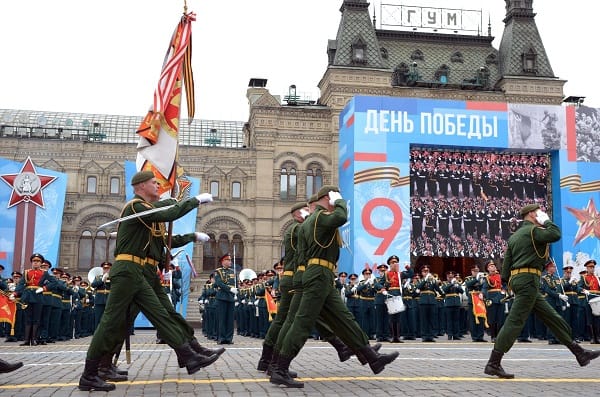
The traditional military spectacle in Moscow’s Red Square will proceed on May 9, but without the display of tanks, missiles or other heavy equipment that normally form the centrepiece of the parade marking the Soviet Union’s defeat of Nazi Germany.
Russia’s defence ministry said the decision reflected the “current operational situation”, while Kremlin spokesman Dmitry Peskov insisted the adjustments were purely precautionary.
He said the “Kyiv regime” was engaged in what he described as “full-scale terrorist activity”, adding that “all measures are being taken to minimise the danger”.
The tone of the remarks underscores the increasingly defensive posture being adopted around one of Russia’s most symbolically important national events, which President Vladimir Putin has long used to project military strength and national unity.
Read more related news:
Russian emergency services extinguish refinery blaze then Ukraine helpfully restarts it
The parade has historically served as a carefully choreographed display of Russian firepower, featuring tanks, artillery systems and intercontinental ballistic missile launchers rolling through Red Square in front of senior officials and invited foreign leaders.
Last year’s event, marking the 80th anniversary of the Second World War victory, was among the largest since Russia’s full-scale invasion of Ukraine, with more than 11,500 troops and over 180 military vehicles taking part, including equipment deployed in the war.
This year’s pared-back format will still include marching troops, veterans of the Ukraine conflict and a flypast. Still, the absence of armoured vehicles will mark a notable departure from recent precedent.
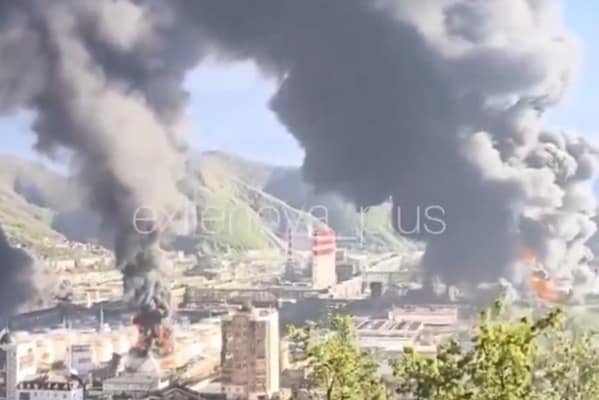
The adjustment comes against the backdrop of an intensified Ukrainian strike campaign targeting infrastructure inside Russia. In recent months, Ukrainian drones have repeatedly struck military and energy sites far beyond the front lines, including oil facilities and industrial targets.
Overnight, Russian officials reported a further strike on an oil pumping station in Perm, adding to a growing list of attacks on energy infrastructure that Kyiv has sought to disrupt as part of its wider war strategy.
The Kremlin has also been forced to contend with repeated drone incursions into Russian airspace, with Moscow and surrounding regions placed on heightened alert during periods of intensified activity.
Against this backdrop, an adviser to Mr Putin said the Russian leader had told US President Donald Trump that Moscow was prepared to consider a ceasefire during the Victory Day period. This proposal would temporarily pause hostilities.
Russia has previously used Victory Day not only as a commemorative occasion but also as a political instrument, with Mr Putin frequently invoking the Second World War to frame the conflict in Ukraine, including repeated and widely disputed claims that Ukraine is governed by “neo-Nazi” forces.
Ukrainian strikes on Russian territory have increased in both frequency and range, placing pressure on domestic security arrangements and forcing adjustments to major public events that were once used to showcase military confidence.
Analysts will therefore interpret the decision to limit the display of weaponry in Red Square as a rare instance of restraint in a setting traditionally designed to project unchallenged strength.
For now, the Kremlin maintains that the parade will proceed as planned, albeit in a modified form. But the contrast between previous years’ displays of military hardware and this year’s stripped-back procession is likely to be noted far beyond Moscow — not least for what it suggests about the shifting balance of pressure inside Russia itself.