Ukraine’s drone war reaches deep into Russia as Kremlin’s ‘strategic depth’ turns to liability
Today marked a small but symbolic shift on the ground, Winter tyres off & thermals gone. Long johns worn through months of -30°C, finally ditched, even burned in quiet celebration. It’s a seasonal change every soldier understands, but this year, it carries something more.
Because while the weather turns, so too has the war.
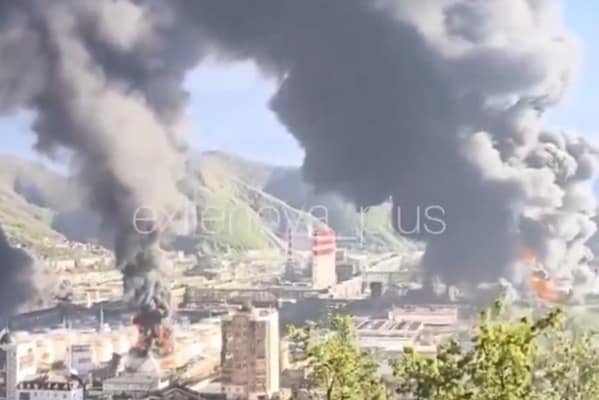
Speaking with Kate Gerbeau of Frontline and Times Radio yesterday, I touched on a growing reality that has since sharpened further. Overnight, Russia’s Tuapse oil refinery was struck for a fourth time. It reinforces something increasingly unavoidable for the Kremlin, this war is no longer contained to the front line.
For both sides, the seasonal rhythm of war remains familiar. Russia’s campaign cycles are predictable, winter targeting energy infrastructure & power, spring shifting to training areas and staging grounds, summer pushing battlefield gains, before autumn consolidation ahead of the freeze, a recycled Soviet style doctrine, a rhythm, now broken by Ukraine.
Read more related news:
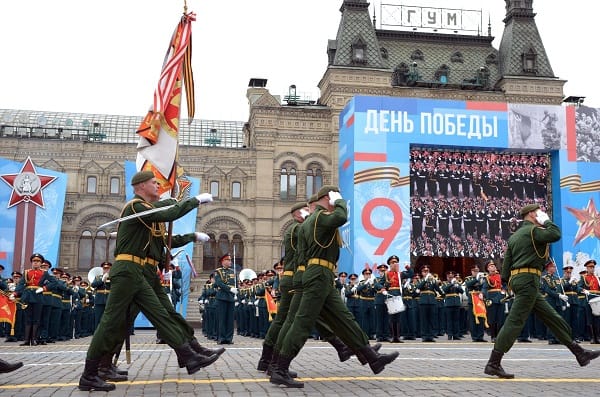
Putin’s Victory Day parade downsized to avoid offending Ukrainian drones
The war Russia started is now reaching deep into its own industrial heartland with increasing regularity. For President Vladimir Putin, this is no longer a tactical irritation, it’s sustained strategic pressure, exposing vulnerabilities Moscow long assumed geography would shield.
And that shift is being driven by data, innovation, and scale.
💥🔥 Tuapse, for a fourth time. In Perm, the landscapes are now in incredible colors. pic.twitter.com/f77kJFr07X
— Shaun Pinner (@ShaunPinnerUA) May 1, 2026
Under Mykhailo Fedorov, Ukraine has transformed its battlefield approach since 2022. What began as a reactive, largely defensive drone capability has evolved into an industrialised, data-driven strike network. In 2022, drones were scarce, often improvised, crowdfunded, and limited in reach.
Today, Ukraine is producing and deploying tens of thousands of drones per month, with ambitions exceeding one million FPV systems annually. These are not just tactical tools anymore. Long-range variants are now striking targets 500–1,000 kilometres inside Russia, hitting oil refineries, logistics hubs, airbases and critical infrastructure, & crucially, Ukraine is now launching more drones in certain sectors than Russia itself, a reversal that would have been unthinkable just two years ago.
This is not just about technology, but about outcomes.
Fedorov has been explicit about the direction of travel: scale production, shorten the kill chain, and use real-time battlefield data to drive targeting. He has even framed ambitions for Russian losses reaching up to 50,000 per month, a stark indicator of a strategy built on attritional dominance through precision and mass combined.
This is warfare by algorithm as much as by artillery, and it is working.
Russia’s vast size, once seen as strategic depth, is now being exposed as its Achilles heel. Critical infrastructure is spread across enormous distances, impossible to fully defend, while air defence systems are stretched, gaps are appearing, and Ukraine is exploiting them.
Even the Black Sea Fleet has been forced to relocate, pushed back by a country without a traditional navy, but a modern one nonetheless. Ukraine has unlocked what was once the West’s greatest fear: that striking inside Russia would trigger uncontrollable escalation. Instead, it has revealed something far more significant, limits.
Limits to Russia’s ability to defend itself, limits to its ability to dictate tempo., and increasingly, limits to the Kremlin’s own narrative.
Because while Moscow projects control, public sentiment tells a different story. Russian social media reactions to repeated strikes point to growing unease, questions about air defence, leadership, and why the war is now reaching their homes. That reality also sits uncomfortably against the rhetoric of Donald Trump, who continues to frame the war in terms of Ukrainian defeat or inevitability, while the data on the ground tells a very different story, one of adaptation, resilience, and increasing offensive reach.
Meanwhile, Russia’s upcoming Victory Day parade is expected to lack heavy military hardware, a symbolic absence that speaks volumes. A nation that once showcased its strength through endless columns of armour now finds itself quietly conserving what’s left. If you grew up in the 80s like I did, watching those vast Soviet parades, lines of men, rockets, missiles rolling through Red Square as a statement of power, this shift feels forced, almost embarrassing. What was once theatre of dominance now risks looking like an empty stage and for a Kremlin built on projection, that’s more than awkward, it’s deeply concerning.
Because in Russia, optics matter, lack of them, even more so.
This war was meant to be decisive. A “three-day operation” to reshape Ukraine, instead, it has become a grinding conflict deep into its fifth year, with Moscow increasingly reacting rather than dictating. Tuapse burning for the fourth time is not an isolated incident. It is part of a pattern now of oil refineries, export terminals, logistics hubs, all are being targeted with increasing frequency and precision.
What Ukraine has done is flip one of the West’s long-standing fears, Russia’s size, into a liability.
The same geographical sprawl that once made Russia difficult to invade now makes it incredibly difficult to defend in a modern age, the result is a slow but visible erosion of Russian control over its own rear and near rear areas.
Tuapse is not just another strike, it is a signal. A signal that Russia can no longer act its will unchecked, and that Ukraine is not only holding the line, but reshaping the battlefield in ways now felt politically and economically by ordinary Russians.
A war once defined by mass is now being decided by precision, data, and innovation.
Russia’s so-called juggernaut is no longer rolling forward. In many areas, it is stalled.
It’s being picked apart.
And the balance has shifted.