Tesla Semi hits the port: drayage operator MDB launches 3-week freight pilot
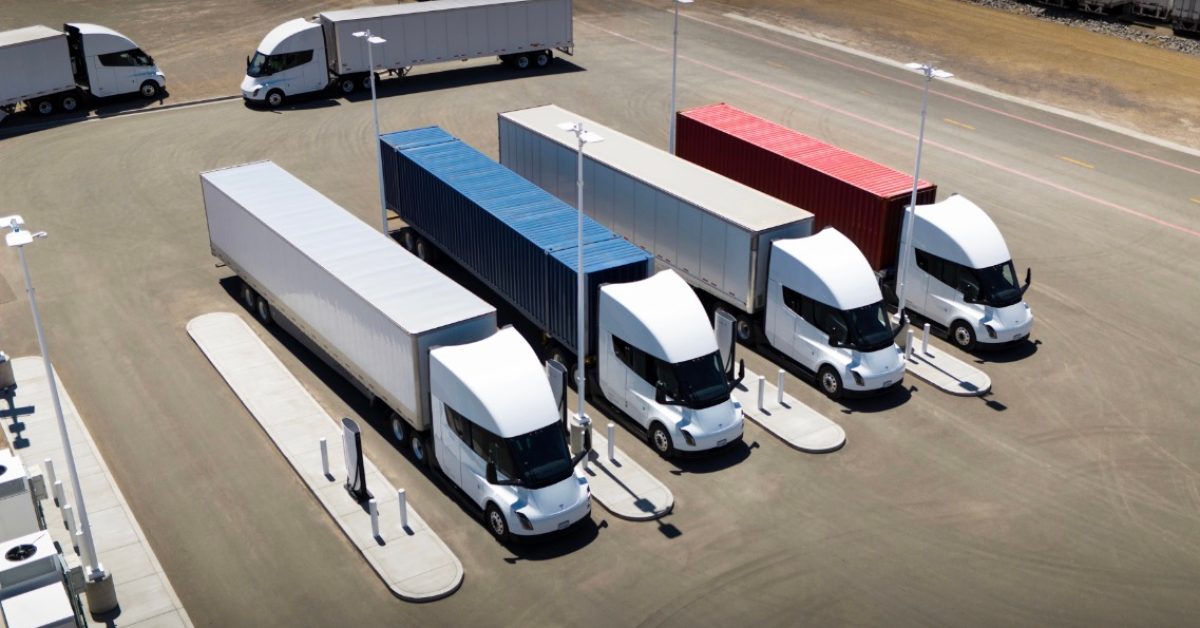
MDB Transportation, a Southern California drayage operator, has launched a three-week pilot running a Tesla Semi on active port freight lanes — marking the second port trucking company to put the electric Class 8 truck to work hauling containers.
The Compton-based carrier is testing the Semi in one of the most demanding urban freight environments in the country, tracking energy efficiency, cycle time, and driver experience throughout the deployment.
Port drayage is the Tesla Semi’s sweet spot
Port drayage, the short-distance hauling of containers between ports and warehouses, is arguably the ideal use case for electric trucks. Routes are short, repetitive, and return to a home depot frequently, making charging logistics far more manageable than long-haul operations.
MDB specializes in exactly this kind of work, running container moves out of the Ports of Los Angeles and Long Beach. Founded in 2002, the company is a fully asset-based carrier handling port and rail drayage, dedicated services, and full truckload transportation across the Southwest. Advertisement - scroll for more content
“We’re proud to be operating the Tesla Semi, the future of freight isn’t a concept — it’s in motion,” said Haig Melkonyan, MDB’s Director of Operations.
The Tesla Semi being piloted is the production version rated for 82,000 lbs gross combination weight with up to 500 miles of range, consuming less than 2 kWh per mile. Tesla says the truck can recover up to 60% of its range in 30 minutes using its Megacharger network. Three independent motors on the rear axles deliver instant torque and maintain speed under load.
MDB joins a growing list of port drayage operators testing electric semis
MDB isn’t the first port trucking company to take the Semi for a spin. Hight Logistics, a Long Beach-based drayage company, took delivery of a Tesla Semi earlier this year and plans to add more to its fleet. Hight already operates 25 electric trucks — mostly Volvo VNR Electric models — and has installed six dual-charging stations at its facility capable of charging up to 12 electric trucks simultaneously.
The charging infrastructure to support these trucks is ramping up in parallel. Tesla opened its first Megacharger station in Ontario, California, in the heart of the Inland Empire freight corridor connecting the ports to major distribution centers. The company has mapped out 66 Megacharger locations across 15 states, with the first Pilot truck stop locations expected to open by summer 2026.
Meanwhile, NFI Industries is running 50 electric Class 8 trucks — 30 Freightliner eCascadias and 20 Volvo VNR Electrics — out of its Ontario warehouse facility for dedicated port drayage services through the $27 million JETSI initiative backed by CARB and the California Energy Commission.
Tesla Semi production is ramping
The timing of these drayage pilots coincides with Tesla ramping production of the Semi at its new 1.7-million-square-foot factory adjacent to Gigafactory Nevada. Tesla revealed the final production specs in February, offering two trims — a 325-mile Standard Range and a 500-mile Long Range priced at $290,000.
Analysts optimistically project Tesla will deliver between 5,000 and 15,000 Semis in 2026, with annual output eventually ramping to 50,000 trucks. Tesla claims the Semi’s battery can last a million miles, which would be a significant selling point for fleet operators running high-mileage drayage routes.
Electrek’s Take
This is exactly the kind of deployment that makes the Tesla Semi’s value proposition click. Port drayage is the low-hanging fruit of freight electrification — short routes, frequent returns to base, and high fuel costs that make the economics of going electric compelling even at a $290,000 price point.
The fact that MDB is a traditional asset-based carrier, not a Tesla-aligned fleet or a sustainability showcase, is the more interesting signal here. When operators whose entire business is moving containers as efficiently as possible start piloting electric trucks voluntarily, it tells you the economics are getting close enough to warrant serious evaluation.
The competition is real, though. NFI already has 50 electric trucks running drayage with Freightliner and Volvo hardware. Those manufacturers have a head start in terms of service networks and fleet familiarity. Tesla’s advantage is the Megacharger network and the Semi’s range — 500 miles is overkill for drayage, but it means drivers never have to think about range anxiety during a shift, and that operational simplicity matters.
What we’re watching for is MDB’s data at the end of this three-week pilot. Energy efficiency and cycle time numbers from a real drayage operator will be far more telling than Tesla’s own marketing specs. If the numbers hold up, expect more port trucking companies to follow.
FTC: We use income earning auto affiliate links. More.