"Watership Down" Still Has the Most Badass Quote In Young Adult Literature
54 years later, the "Prince With a Thousand Enemies" speech from Watership Down is still the most badass moment in the canon of Young Adult literature. Let's take a closer look at the role this unforgettable moment plays in the story of Watership Down, and unpack why it hasn't lost any of its edge half a century later. Richard Adams' 1972 novel raised the bar for children's fiction. It was part of a wave of books that helped to establish YA as a viable, long-term literary market. Watership Down is the story of a tribe of wild rabbits, who are fully anthropomorphized in the text. That is, they act human, and their society mirrors human civilization. That includes their own language, literature, and legendary history.
The "Prince With a Thousand Enemies" is the protagonist of rabbitkind's mythological origin story, El-ahrairah. He's revered as the progenitor of the rabbits, but also the one responsible for making it so that "all the world will be their enemy," because of an act of hubris that offended Frith, the rabbits' God.
Watership Down's Creation Myth For Rabbitkind Is Still Peak Young Adult Literature
A Children's Novel That Doesn't Pull Punches
Watership Down 20th anniversary cover
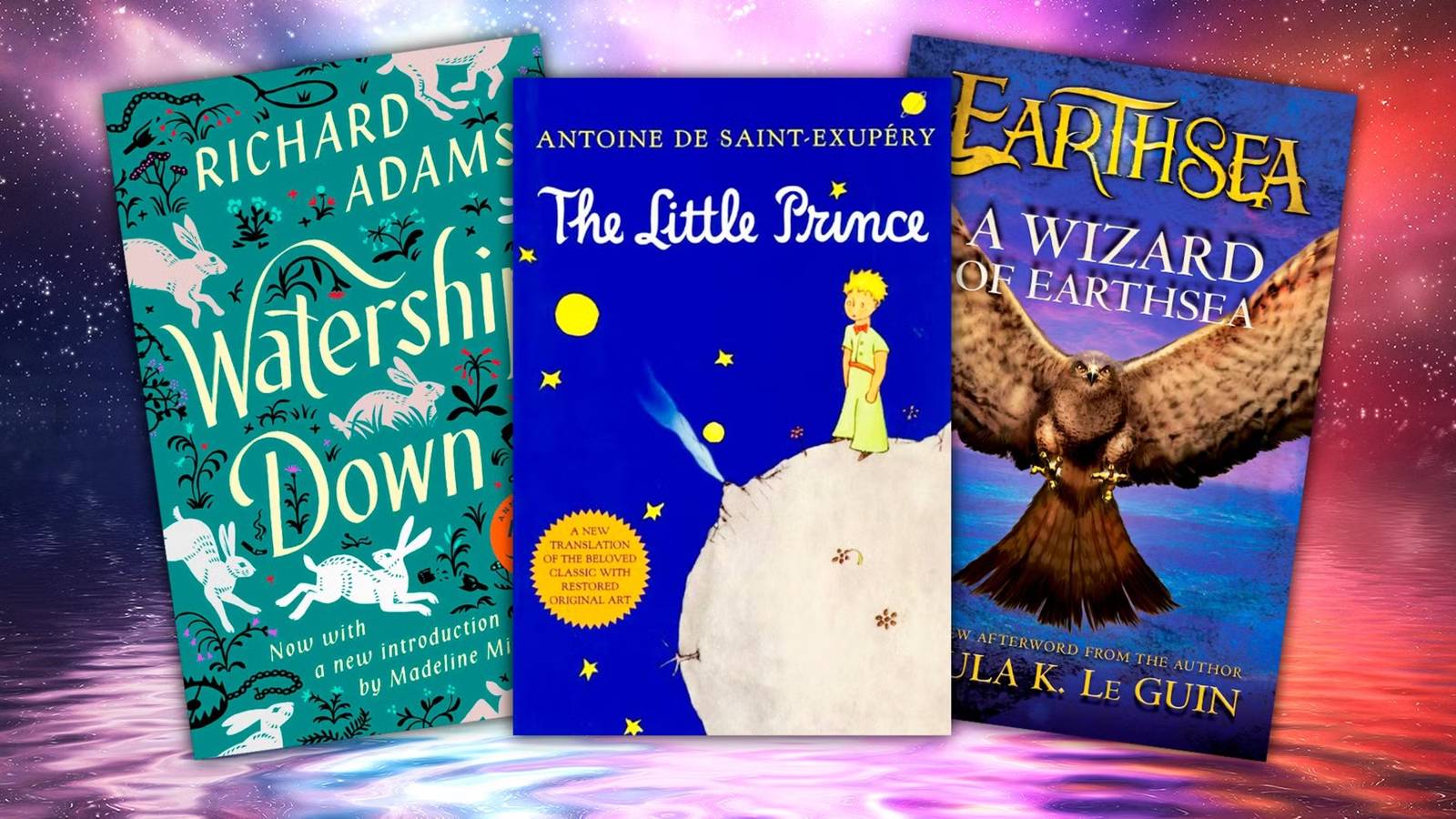
Watership Down was published in 1972. Young Adult literature was going through its own sort of puberty at this time, if you'll excuse the analogy. On the more realistic side of things, Judy Blume was just starting her prolific career. In children's fantasy, books like Ursula K. Le Guin's Earthsea and Richard Adams' Watership Down doubled-down on the idea that serious dramatic works could be written for a young audience. Watership Down is closely analogous to J.R.R. Tolkein's Lord of the Rings. Adams created a functional language for his rabbit characters, and gave them a fully-realized society. The quote we're focusing on today comes in Chapter 6, "The Story of the Blessing of El-ahrairah." It starts with the line: "Long ago, Frith made the world." Immediately, we know to strap for a creation myth. Frith, for his part, is depicted as a finicky, "Old Testament"-style deity. He likes El-ahrairah, but punishes his entire species when the world's rabbit population gets out of hand, and "Prince Rabbit" refuses to stop breeding. In what we might call an overreaction, Frith gives the rest of the world's animals "the desire to hunt and slay and eat the children of El-ahrairah." Yet this isn't a death sentence for rabbitkind. As Frith explains:
All the world will be your enemy, Prince with a Thousand Enemies, and whenever they catch you, they will kill you. But first, they must catch you: digger, listener, runner, prince with the swift warning. Be cunning and full of tricks, and your people will never be destroyed.
In other words, the rabbits might be part of a food chain now, but Frith still wants them to have a fighting chance.
"The Story of the Blessing of El-ahrairah" Highlights The Thin Line Between Triumph & Tragedy For Rabbitkind
Watership Down's Pivotal Early Moment Of Mythmaking Defines The Book
Watership Down: The Graphic Novel Cover Featuring the Rabbits
Watership Down is a story of survival, and "The Story of the Blessing of El-ahrairah" establishes that this is a core motif of rabbit civilization. Note the title of this mythological tale; Watership Down's rabbits look at what they've inherited from "Prince Rabbit," including their cotton-tails, as a blessing, not a curse. For them, survival is a holy, literally God-given pursuit.
But it's also a tragedy. To exist to be hunted. To never fully know peace. Watership Down doesn't try to reduce the dissonance between these ideas. Instead, it is integral to making the novel's rabbits feel like a truly foreign and unique culture. It's a huge achievement for any fantasy novel, and it's what makes Watership Down still a remarkable example of the genre all these years later. Readers of all ages, we want to hear from you. If this isn't the GOAT Young Adult literature quote, what is? Tell us in the comments!
Release Date
November 1, 1978
Runtime
91 Minutes
Director
Martin Rosen, John Hubley