About That $3,000 Bag of Groceries in Your Trash
Editor’s Note: This is the first article in a new Earth911 series, Where Waste Comes From, examining the largest sources of waste in the typical American household, what each category costs the family, what it costs the country, and what it costs the climate. We begin with food because food is the biggest category, because every household touches it every day, and because the lever any one family can pull on it is unusually large.
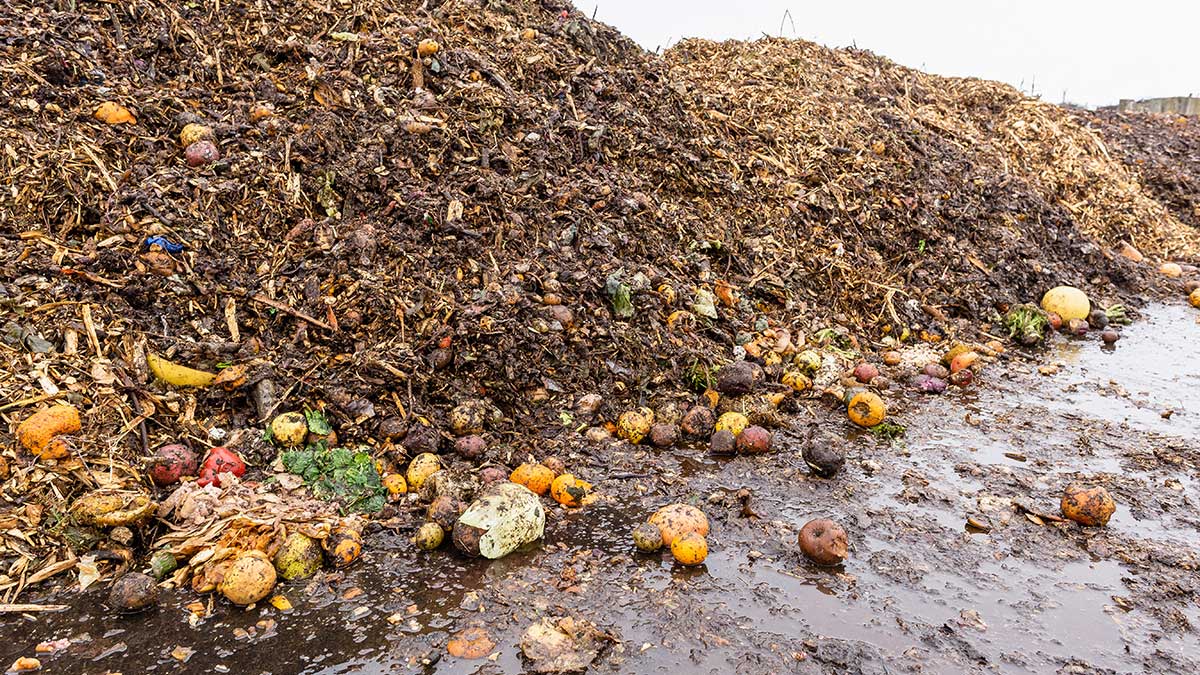
A family of four in the United States throws out more than $3,000 worth of food a year. Not “wastes” in the vague sense of eating too much or buying the wrong brand. We mean “throws out” — into the trash, into the disposal, or scraped off a plate into the bin, according to the 2026 ReFED U.S. Food Waste Report, the most current accounting of the problem.
Between uneaten groceries at home and plate waste at restaurants, American consumers discard roughly 35 million tons of food every year, about $259 billion in purchased calories, or $762 per person. Households pay for all of it, and bear most of it at home: residential food waste is the single largest slice of the consumer total.
The climate bill is equally devastating. All of that uneaten food carries an annual greenhouse gas footprint of 154 million metric tons of CO₂-equivalent, the same as driving 36 million passenger vehicles for a year. That food also required about 9 trillion gallons of water to grow — water that was never consumed by a human being. None of these resources made it to a table.
The waste stream inside the house
Food is the single largest component of landfilled material in the United States by weight, based on the EPA’s most recent sustainable materials accounting. EPA discontinued the comprehensive series after that December 2020 release; budget and staffing cuts under the current Trump administration have kept the report from being revived.
State waste studies provide continuing proof of the food waste epidemic, and the potential for progress. Washington’s 2020-2021 Statewide Waste Characterization Study found food waste accounted for nearly 20% of residential garbage. California’s 2021 Disposal Facility-Based Waste Characterization Study found organics, which includes food and yard waste, made up 28.4% of landfilled material, down from 34.1% in 2018, with the reduction credited largely to SB 1383, a state law that requires curbside organics collection for composting.
Where does food waste come from inside the home? ReFED’s consumer-behavior research, published in July 2025, breaks it down into four dominant habits:
Produce that spoiled before it was used. Fresh fruits and vegetables lose freshness quickly, cost less per pound than animal proteins, and tend to be bought in larger quantities than households consume.
Prepared food left over. The restaurant-style portion has migrated into the home kitchen. Leftovers are forgotten, buried, or mentally written off the moment a newer meal enters the fridge.
Confusion over date labels. “Sell by,” “best by,” and “use by” mean different things, are not federally regulated except for infant formula, and are frequently treated by consumers as expiration warnings when they are shelf-life guidance.
Over-purchasing against oversize packaging. The family-size bag of spinach and the 48-ounce jug of milk are typically the lowest per-unit price, and the highest risk of spoilage for small households.
ReFED revised its residential-waste estimate downward in its 2024 report by roughly 40 percent, or 17 million tons — not because household behavior improved, but because earlier estimates double-counted some flows. The overall residential waste picture is still enormous. It is also not shrinking. Consumer waste rates rose in the most recent data year even as overall U.S. food waste edged down, driven by retail and manufacturing progress that the home has not yet matched.
Burning a hole in your family budget
Let’s break down the national number to look inside a single household. A U.S. family of four spending roughly $12,000 to $15,000 a year on groceries throws away, on average, somewhere between 20 and 25 percent of it. The equivalent dollar number — $3,000 a year lost in the kitchen — is larger than the average American household’s annual spending on home energy, larger than most families’ annual clothing budget, and comparable to an annual car insurance premium. It is, in most households, the biggest single lever the family has on its grocery budget, climate footprint, and water footprint simultaneously. Very few household sustainability choices compound this cleanly.
Beyond the grocery-bill number, food waste generates costs the household pays for through taxes, utility fees, and environmental damage whether it knows it or not:
Landfill tipping fees: The 2024 Environmental Research and Education Foundation’s national tipping-fee survey put the weighted-average U.S. landfill tipping fee at $62.63 per ton, which is up 10 percent year over year — the largest annual increase since 2022. Every ton of food scraps sent to landfill is a ton charged against the municipal solid-waste budget that residents fund through utility bills and property taxes.
Landfill methane: Food waste is the single largest contributor to the methane emissions from U.S. landfills, which are the third-largest source of anthropogenic methane in the country.
Food insecurity: The 35 million tons of consumer food waste translate to nearly 58 billion meals that could have gone to people in need, while roughly 14 percent of Americans (1 in 7) experience food insecurity. The waste is not just resources; it is a distribution failure with a public-health cost downstream.
Water: Nine trillion gallons is an abstract number. It is roughly the volume of Lake Okeechobee. Every drop required an energy input for pumping, treatment, and, in the western third of the country, an increasingly scarce supply.
Where the infrastructure works, and where it doesn’t
Curbside organics collection, the municipal programs that pick up food scraps along with yard waste for industrial composting or anaerobic digestion, is available in parts of California, Oregon, Washington, Massachusetts, Vermont, Colorado, Minnesota, and a growing number of metro areas in other states. Where it runs, compostable collection materially shifts the numbers. San Francisco’s mandatory program, the oldest and most cited, diverts the majority of residential organic material from landfill and produces commercial-grade compost that returns to regional farms.
Outside those states, most households have no curbside pathway. Backyard composting is the most widely available option. For households without the space or the desire to compost at home, a small ecosystem of digital services has grown up to fill the gap municipal programs don’t cover. MakeSoil and Peels operate peer-matching platforms that connect people who have food scraps with neighbors who already run a compost pile, worm bin, or chicken coop. CompostNow runs paid curbside pickup in a growing list of cities, including Atlanta, Asheville, Cincinnati, and the Raleigh-Durham area, and partners with municipalities on drop-off programs elsewhere. ShareWaste, the original neighbor-matching service and the one most commonly cited in earlier reporting, unfortunately, was shuttered at the end of 2024.
Most of the household lever on food waste is not composting. It is prevention. Composting turns discarded food into a lower-impact product. It still represents calories, dollars, and upstream water and energy that never delivered their purpose. The first line of defense is buying, storing, and planning to match the family’s actual consumption. The second line is composting what remains.
Take Action
At the individual and household level, some simple steps can make a difference:
Audit one week of your kitchen trash. Actually weigh or photograph a week of food-bin contents. Families who do this consistently identify their top three loss categories (usually produce, leftovers, and bread) within a single week, and those become the behavior targets.
Shop the fridge, then the pantry, then the store. Before writing a grocery list, list what’s already on hand. Plan at least one “use it up” meal per week built around what is about to spoil.
Learn date labels. “Use by” is the only label where food should not be eaten after the date, and only for a short list of products (infant formula, some deli meats). “Sell by” is inventory guidance for the retailer. “Best by” is quality guidance, not safety.
Freeze aggressively. Bread, cheese, cooked grains, leftovers, and most produce (with minimal prep) all freeze well. Most household waste is time-based; the freezer pauses the clock.
Start composting where collection exists, or set up a backyard or countertop system. Earth911’s recycling search tool lists local organics programs by ZIP code.
At the community and policy level, a little cooperation and activism can go a long way:
Support mandatory organics collection where your state or city is considering it, then use the services when available. Organics bans have now passed in California (SB 1383, mentioned above), Vermont, Connecticut, Maryland, New Jersey, New York, Rhode Island, and Washington. The programs work only when households participate.
Push for a unified federal date-label standard. Legislation has been introduced in every recent Congress. It has not passed.
Work on food insecurity in the same room as food waste. The two issues belong on the same municipal agenda. Rescue organizations — Feeding America, City Harvest, community food-pantry networks — need volunteers and advocacy as much as they need donations.
Post navigation